
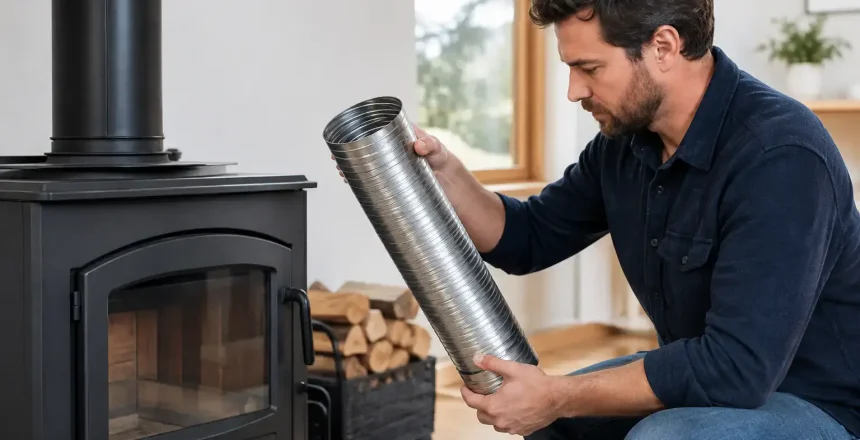
A stove can look perfectly at home in an existing fireplace, yet the hidden chimney above it may be the deciding factor in whether the installation is safe, efficient and compliant. So, are chimney liners always necessary? No – but they are required in many stove installations, and assuming an old chimney is suitable without a proper assessment can create expensive and avoidable problems.
A chimney liner is not an automatic add-on. It is a purpose-designed flue within an existing chimney, usually made from flexible stainless steel for a wood-burning or multi-fuel stove. Its job is to carry combustion gases safely outdoors while helping the stove establish a reliable draw. Whether you need one depends on the chimney itself, the appliance being fitted and the findings of a professional survey.
Are chimney liners always necessary in UK homes?
Not every chimney needs lining. A sound, correctly sized chimney with suitable flue performance may be capable of serving a stove without a stainless-steel liner. However, many older UK properties have chimneys that were built for open fires, not modern closed appliances. Those are very different systems.
An open fire sends a large volume of warm air up a wide chimney. A stove works best with a flue size matched to its outlet and a consistent flow of rising gases. If the chimney is oversized, uneven internally or allows air to enter through gaps, the stove may be harder to light, less responsive and more likely to produce smoke in the room.
For this reason, lining is often the sensible recommendation even where a chimney appears usable from the fireplace opening. It provides a controlled route for the flue gases and avoids relying on the unknown condition of brickwork and joints several metres above eye level.
The right answer comes from the survey, not from a rule of thumb. A HETAS-registered installer will assess the complete flue route before specifying the installation.
What determines whether your chimney needs a liner?
The chimney’s condition
The existing chimney must be structurally suitable and able to contain hot combustion gases safely. In older houses, internal surfaces can be rough, fractured or contaminated by historic use. Even a chimney that has not visibly caused concern may be unsuitable for a new stove.
A proper assessment considers the chimney from hearth to terminal. This may include a visual inspection and appropriate flue testing to establish whether the route is clear, continuous and drawing correctly. It is not enough to judge it by looking up from the fireplace with a torch.
Flue size and appliance requirements
The stove manufacturer’s instructions set out the required flue diameter and maximum permitted flue arrangement. These requirements are central to a compliant installation. A chimney that is too large can cool gases too quickly, weakening the draw and encouraging deposits within the flue. One that is too small can restrict the safe passage of gases.
A correctly selected liner creates a more consistent flue size for the appliance. This can support cleaner combustion, easier lighting and more predictable day-to-day operation. It must never be chosen simply because it is the cheapest or most readily available option.
Chimney height, route and draw
A tall chimney is not automatically a good chimney, and a short one is not automatically a bad one. What matters is the overall flue route, height, position and ability to create sufficient draw in real operating conditions.
Offsets, bends, changes in direction and exposed sections all affect performance. Nearby roofs, trees and taller buildings can also influence how wind moves around the chimney terminal. In some situations, a liner is part of the best solution; in others, the survey may identify that a different flue arrangement is more appropriate.
Fuel choice and how you use the stove
Wood-burning and multi-fuel stoves produce different combustion conditions depending on the fuel, moisture content and operating method. Burning properly seasoned or kiln-dried wood at the correct moisture level is essential, but it does not turn an unsuitable chimney into a suitable one.
If a stove is likely to be used regularly as a meaningful heat source, a dependable flue system matters even more. The installation should be designed for safe, efficient everyday use, not merely for a stove that lights successfully on its first test.
Why lining is so common for wood-burning stoves
Modern stoves are engineered to burn more efficiently than traditional open fires. That efficiency is a benefit for homeowners, but it means the flue must work as a properly considered part of the system.
A stainless-steel liner can help retain flue gas temperature, particularly where an old chimney is wide or cold. Warmer gases rise more effectively, which supports a stable draw. The liner also gives the installer a known, continuous path rather than asking a modern appliance to rely on a chimney of uncertain internal condition.
There is a trade-off. Lining a chimney adds cost to an installation, and access requirements can affect the work involved. Yet it can also prevent the poor performance, smoke issues and compliance concerns that arise when corners are cut. For many homeowners, it is the route to a more reliable stove installation and greater peace of mind.
When a liner may not be required
There are circumstances in which an existing chimney can be retained without a new liner. It may be correctly sized, demonstrably sound and suitable for the appliance proposed. The chimney must still meet the relevant requirements for a safe flue route, termination, clearance and performance.
This is more likely where a chimney has been purpose-built or previously upgraded for a stove, rather than being an original open-fire chimney. Even then, the installer should confirm suitability for the specific appliance, not just assume that a flue suitable for one stove is suitable for every stove.
If no suitable masonry chimney exists, a twin-wall insulated stainless-steel chimney system can provide a compliant route instead. This is a common solution for new-build homes, extensions and rooms where there is no usable chimney breast. It is a complete system designed to run internally or externally, subject to the property’s layout and installation requirements.
Compliance is about the whole installation
Homeowners sometimes focus on the liner as though it is the single safety decision. In reality, it is one element of a complete stove installation. The hearth, clearances to combustible materials, ventilation, flue route, terminal position and appliance output all need to be considered together.
In England and Wales, stove work must comply with Building Regulations, including the requirements that apply to combustion appliances and flues. Using a HETAS-registered installer offers a straightforward route to having eligible work self-certified, with the appropriate documentation issued once the installation is complete. That paperwork is valuable for your records and provides clear evidence that the work has been carried out correctly.
A professional installer should explain the recommendation in plain language. If a liner is needed, you should understand why it is needed, what specification has been selected and how it supports the safe use of your stove. If it is not needed, that decision should be based on evidence from the survey rather than a promise to keep the quote low.
Questions worth asking at your stove survey
Before committing to an installation, ask whether the existing chimney has been assessed for condition, size and draw. Ask whether the proposed stove is compatible with the flue arrangement, and whether any building work is needed to create suitable clearances or a compliant hearth.
It is also sensible to ask how certification will be handled and what is included in the quoted work. Clear answers at this stage make for a far more hassle-free installation later. A qualified installer will welcome these questions because they show that you are choosing safety and long-term performance over a quick fix.
Choose evidence, not assumptions
The best chimney liner decision is never based on what a neighbour has, what an old fireplace looks like or what seems cheapest at first glance. It is based on the appliance, the condition and geometry of your property, and the applicable safety requirements.
At Stove Specialists UK, our approach is to survey first, explain the practical options clearly and deliver a fully managed, HETAS-compliant installation. Whether your existing chimney can be used as it stands, needs lining, or calls for a twin-wall system, the aim is the same: a stove you can enjoy with 100% peace of mind.