
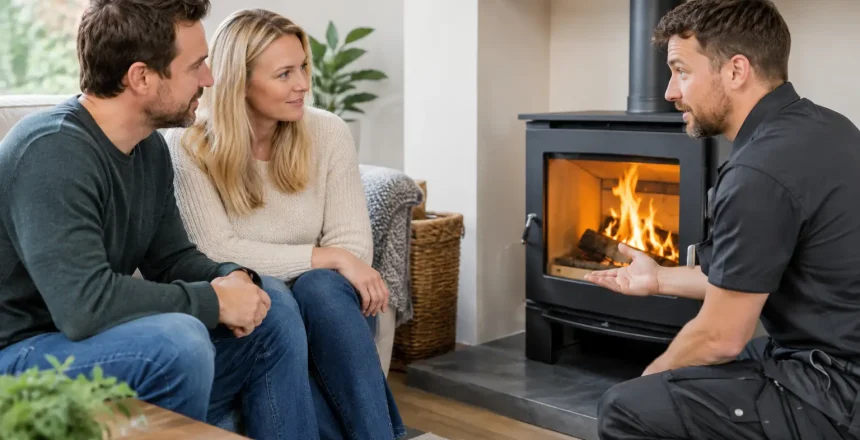
A stove can make a Warwickshire home feel warmer, more welcoming and less dependent on central heating during the colder months. But the best Warwickshire stove installers are not simply the ones who can fit an attractive appliance. They are the professionals who assess the property properly, specify a safe flue route, complete the necessary building work and leave you with the correct certification.
That distinction matters whether you live in a period cottage with an existing fireplace, a town property with a sealed chimney breast, or a newer home with no chimney at all. A wood burning or multi-fuel stove is a combustion appliance, so the installation must be designed around the room, the appliance and the route gases will take out of the building. The right installer makes that process clear from the first survey.
What Makes a Stove Installer the Right Choice?
A good installer should begin with the property, not with a one-size-fits-all price. The condition, height and location of the chimney or proposed external flue all affect what can be fitted safely. So do the size of the room, the construction of nearby walls and floors, ventilation, and the stove you have chosen or are considering.
HETAS registration should be high on your list. A HETAS registered engineer has demonstrated competence to carry out solid fuel work to the required standards and can usually self-certify eligible installations. This means you receive a HETAS Certificate of Compliance once the work is complete, giving you essential evidence that the installation has been notified correctly.
Experience also needs to extend beyond straightforward fireplace installations. Some homes need a new liner within an existing chimney. Others require a twin wall stainless steel chimney system because there is no usable chimney route. An installer who can explain both options, including the visual and practical trade-offs, is far more useful than one who only offers a single approach.
Start With a Proper Home Survey
The most reliable quotes follow a survey, rather than being based solely on photographs or an approximate fireplace measurement. Images are helpful, but they cannot always show the full chimney route, the condition of the opening, or the clearances required around the chosen appliance.
During a survey, a competent installer should consider the proposed stove output. Bigger is not automatically better. An oversized stove can make a room uncomfortably hot, encouraging low-temperature burning that is inefficient and can create unnecessary deposits in the flue. The goal is a stove suited to the heat demand of the space and the way your household uses it.
They should also discuss where air for combustion will come from. Modern, well-sealed homes may need a dedicated air supply, while older properties can present different ventilation considerations. This is not a detail to be decided on the day of fitting. It belongs in the plan from the outset.
Existing Chimney or New Twin Wall System?
If your property has a chimney, the installer needs to establish whether it is appropriate for use with a stove and whether it requires a correctly sized liner. Lining helps create a continuous, suitable route for flue gases and is commonly needed when converting an open fireplace to a stove.
Where there is no chimney, a twin wall insulated flue system can provide a safe alternative. It can often be routed internally and through the roof, or externally up an outside wall, subject to the property layout and regulations. Internal routes are often more discreet and can retain more heat within the building, but they may affect room layouts. External routes can suit certain homes well, although appearance, height and the position of windows or neighbouring properties all need careful thought.
The best Warwickshire stove installers will talk you through what is achievable at your address rather than making assumptions. Listed buildings, conservation areas and unusual roof structures can introduce additional considerations, so transparent advice is particularly valuable.
Compare Quotes by Scope, Not Just Price
A low figure can look tempting until you discover that it excludes essential work. To compare proposals fairly, make sure each quote states exactly what is included: the stove if it is being supplied, chimney liner or twin wall flue, hearth, fireplace opening work, flue connection, labour, commissioning and certification.
Ask whether the quoted price allows for the work identified at survey stage. A proper proposal should make clear any assumptions and explain what could change the cost. For example, creating or enlarging a fireplace opening, constructing a suitable hearth, or installing a new flue route can require more than a simple appliance fit.
A trustworthy installer will not pressure you towards the most expensive stove. They should be able to fit a customer-supplied appliance where suitable, or recommend options that meet your requirements for heat output, style and budget. The priority is that the final system works safely as a whole.
Finance options can help spread the cost of a larger project, but clarity still matters. Make sure you understand the total amount payable and what the installation package covers before agreeing to proceed. Free quotes are useful when they are detailed enough to support a confident decision.
Compliance Should Never Be an Afterthought
Stove installation is governed by Building Regulations, including requirements around hearth dimensions, clearances to combustible materials, flue performance, ventilation and carbon monoxide alarms. These are practical safety measures, not unnecessary paperwork.
Your installer should select and position a carbon monoxide alarm in line with the relevant requirements, commission the stove and explain its safe operation before leaving. They should also provide the documentation that confirms the installation has been completed correctly.
If an installer cannot clearly explain how certification will be handled, treat that as a warning sign. An uncertified installation can create difficulty when selling a property and may raise questions with insurers. More importantly, it gives you less assurance that the work has been checked against the correct standards.
Local smoke control rules are another reason to seek informed advice. Some areas have restrictions on the fuel or appliance that can be used. Your installer can help identify whether a DEFRA-exempt stove is appropriate, but homeowners should also confirm the current position with their local authority, especially if they are close to a town or built-up area.
Look for Clear Communication and Accountable Workmanship
Technical competence is essential, but so is the way an installer manages the job. You should know who will carry out the work, how long it is likely to take, what preparation is needed in your home and how the area will be left once the installation is finished.
Look for a company that can coordinate the full job where required. That may include chimney lining, twin wall flue installation, hearth creation, fireplace alterations and associated building work. A fully managed service avoids the uncertainty of arranging several separate trades and trying to establish where responsibility lies.
Reviews can be useful, particularly when they mention punctuality, cleanliness, explanations at handover and how the company dealt with an unusual property layout. A satisfaction guarantee adds further confidence, but it should sit alongside evidence of training, registration and a clear written scope of work.
Questions Worth Asking Before You Book
Before choosing an installer, ask how they will assess your chimney or proposed flue route, whether they are HETAS registered, and who will issue the Certificate of Compliance. Confirm the proposed stove output, hearth arrangement, ventilation provision and carbon monoxide alarm position.
It is also sensible to ask whether your preferred appliance is suitable for the room and whether it meets any local smoke control requirements. If you are supplying the stove yourself, provide the exact model details early. This allows the installer to check the manufacturer’s clearance and flue requirements before the work is scheduled.
Finally, ask for the quote in writing and check that it covers commissioning and certification. A professional will welcome these questions. They show that you are making a considered investment in your home, rather than choosing on price alone.
A well-planned stove installation should feel straightforward to the homeowner, even when the property presents challenges. Stove Specialists UK can provide practical advice, a free quote and a 100% Peace of Mind installation approach, so you can choose a heating feature that looks right, performs properly and is installed with safety at its core.