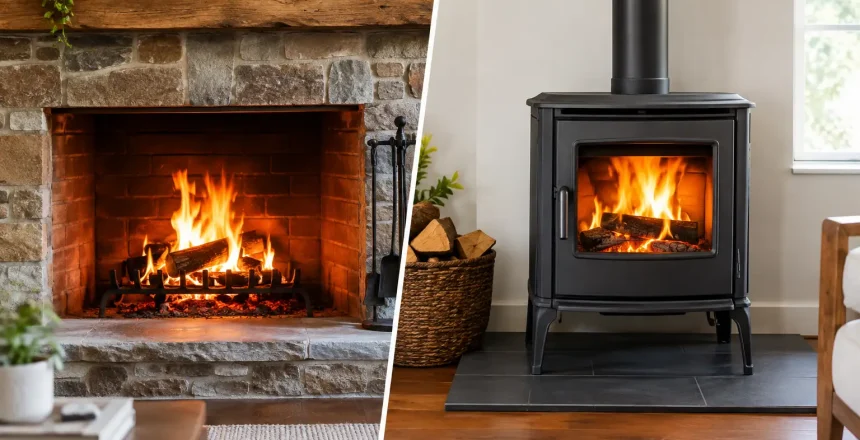
A fireplace can completely change how a room feels on a cold evening, but the choice is not simply between traditional charm and modern practicality. When comparing an open fire vs wood stove, the real questions are how much usable heat you want, how your home is laid out, what work is needed to install it safely, and how you plan to use it day to day.
An open fire creates an unmistakable focal point. A wood-burning stove offers controlled, efficient warmth. Both can work beautifully in the right property, but they are very different heating solutions. Getting the decision right before work starts can save disappointment, avoid unnecessary building work and give you a feature you will enjoy for years.
Open fire vs wood stove: the main differences
The biggest difference is where the heat goes. With an open fire, much of the heat produced rises up the chimney. You will feel strong radiant heat when sitting close to the hearth, but the overall room heating effect is often modest. An open fireplace can also draw warmed air from elsewhere in the house towards the chimney, particularly in older or draughtier properties.
A modern wood stove has a closed firebox and controls that regulate the air supply. More heat is retained and released into the room rather than being lost through the flue. Many modern stoves are designed to deliver efficiencies of 70% or more when operated correctly, whereas an open fire is substantially less efficient.
That does not make an open fire the wrong choice. If your priority is the sound, smell and visible drama of an exposed flame for occasional use, it may be exactly what you want. If you are looking for dependable supplementary heating, a stove is usually the more practical option.
Heat output and comfort
A stove gives you greater control. Once the fire is established, you can adjust it to maintain a steady, comfortable temperature over several hours. This matters in a well-insulated lounge, where an oversized appliance can quickly make the room uncomfortably hot. Choosing the correct kilowatt output is as important as choosing the style of stove.
Open fires are less predictable. They need regular tending and their heat can vary noticeably as the fuel burns down. They suit people who enjoy the ritual of making and maintaining a fire, but they are less convenient for regular heating.
A professional survey should consider room size, insulation, ceiling height, ventilation and the rest of the property. Bigger is not automatically better. A correctly sized stove is more likely to burn cleanly and comfortably than an oversized model run too slowly.
Running costs and fuel use
Because a wood stove converts more of its fuel into room heat, you will generally burn fewer logs to achieve the same level of warmth. That can make a meaningful difference across a heating season, especially if you intend to use the appliance often.
Whichever option you choose, fuel quality matters. Burn dry, properly seasoned wood with a moisture content of 20% or below. Wet wood produces more smoke, less heat and more deposits in the flue. It can also make an otherwise well-designed installation perform poorly.
An open fire may appear cheaper to create where a usable fireplace already exists, but the lifetime cost is not only the initial work. Consider fuel consumption, the warmth you will actually receive and whether the room will need other heating running at the same time.
Appearance and the view of the flame
This is where an open fire has a genuine advantage for some homeowners. There is no glass between you and the flame, and a traditional grate within an original chimney breast can suit period homes exceptionally well.
A stove brings a different kind of appeal: a contained, bright flame, a clean hearth area and a broad choice of traditional or contemporary designs. It can sit in an inglenook, within a newly formed fireplace opening or against a suitable wall with a twin-wall chimney system. That flexibility is especially useful in newer homes or rooms with no existing chimney.
Safety, ventilation and UK compliance
Solid-fuel heating is not a cosmetic project. It involves high temperatures, combustion gases, structural clearances and specific Building Regulations requirements. The appliance, hearth, chimney or flue system, ventilation and surrounding materials all need to work together.
A wood stove installation requires a suitable hearth and compliant distances from combustible materials. The flue route must be correctly specified and installed, whether it uses an existing chimney lined for the purpose or an insulated twin-wall system. The chimney also needs to be assessed for its condition, size and suitability before any assumptions are made.
Open fires have their own requirements. The fireplace opening, flue and hearth need to be suitable for an open appliance, which has different airflow demands from a closed stove. Altering an existing fireplace without considering these details can create smoke problems or leave the installation non-compliant.
For both choices, a carbon monoxide alarm is required in the room where a fixed solid-fuel appliance is installed. Adequate ventilation may also be necessary, particularly in modern, airtight homes. Extractor fans, air vents and the way the property is used can all affect how a chimney draws.
Using a HETAS-registered installer means the work can be assessed, carried out and self-certified in line with the relevant requirements. You should receive the appropriate certification on completion, which is valuable for your records, future insurance queries and a later house sale.
Smoke Control Areas and local considerations
If you live in a Smoke Control Area, the appliance and fuel choice require particular care. A suitable Defra-exempt stove may be used with authorised fuel or dry wood, subject to the applicable local rules. An open fire can be more restrictive in these areas, so it is worth checking the position before settling on a fireplace design.
This is one reason an early survey is so useful. It identifies whether your preferred look is compatible with the property, the location and the way you want to use the fire, rather than finding limitations after building work has begun.
Which option suits your home?
Choose an open fire if it will be an occasional feature, the character of an exposed flame matters most, and you accept that it is not the most efficient way to heat the room. It can be a fitting choice for a period property where preserving a traditional fireplace is central to the project.
Choose a wood stove if you want reliable heat, better fuel economy and more control. It is normally the stronger option for homeowners who expect to light it regularly through autumn and winter. It also offers more installation possibilities when there is no working chimney, as a correctly designed twin-wall flue can create a safe route through the building and roof.
There is also a middle ground. Some homeowners retain the visual character of an original chimney breast while fitting a stove into the opening. You keep a strong focal point, but gain the practical benefits of a closed appliance. The feasibility depends on the opening dimensions, the chimney and the necessary clearances, not just the appearance of the finished room.
Start with a proper survey, not a product choice
It is tempting to choose a stove based on a showroom image or select an open fireplace from a renovation mood board. The better starting point is a site survey. This establishes what your property can safely accommodate and what work is genuinely required.
A good survey will look at the chimney route, fireplace structure, hearth requirements, ventilation, room heat demand and any need for a new flue system. It should also give you clear advice on stove output and compliance, with the scope of work explained before installation begins.
Stove Specialists UK provides fully managed, HETAS-registered installations, from chimney lining and hearth creation to complete twin-wall chimney systems. Whether you supply your own stove or need guidance on a complete supply-and-fit solution, the aim should be the same: a safe, compliant installation that delivers the warmth and look you expected.
The best choice is the one that fits how you live. If you want the theatre of a fire on special evenings, an open fireplace may earn its place. If you want controllable warmth you can depend on throughout the colder months, a correctly specified wood stove is likely to make your home more comfortable every time you light it.