
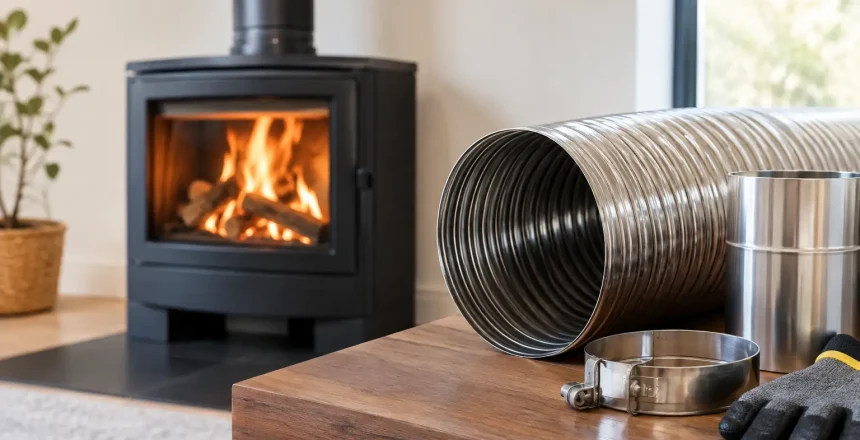
A flue liner that is too small can restrict the stove and make lighting difficult. One that is unnecessarily large can cool the smoke too quickly, weakening the draw and increasing the likelihood of deposits in the flue. So, when homeowners ask what size flue liner needed for a new wood burner or multi-fuel stove, the right answer is never just a guess based on the fireplace opening.
The correct diameter depends on the appliance, its manufacturer’s instructions, the fuel being burned and the chimney itself. A professional survey brings those details together before any installation begins, giving you a safe, compliant system that works as it should from the first fire.
What Size Flue Liner Is Needed in the UK?
For most wood burning and multi-fuel stove installations, a 150mm (6-inch) flue liner is the standard starting point. This is the usual minimum diameter for a solid-fuel appliance under UK guidance.
There is an important exception. Some approved clean-burning stoves may be installed with a 125mm (5-inch) liner, but only where the appliance manufacturer expressly permits it and the installation meets the relevant requirements. A 5-inch liner is not simply a cheaper or easier option. It must be suitable for that exact stove and its intended use.
The liner must also be at least the same diameter as the stove’s flue outlet, unless the manufacturer provides specific written instruction allowing a different arrangement. Reducing a 6-inch outlet to a 5-inch liner without that approval can compromise performance and compliance.
In practical terms, the stove manual is the first reference point, while the property survey confirms whether the proposed route, chimney and terminal can support the design. This is why two apparently similar stoves in neighbouring houses may need different solutions.
Why Flue Liner Diameter Matters
Your flue is not just a route for smoke to leave the house. It is a working part of the heating system. As the stove warms up, hot gases rise through the flue and create the draw needed to bring combustion air into the appliance.
If the liner is undersized, gases may struggle to pass through freely. Symptoms can include smoke entering the room when the door is opened, poor flame control and a stove that is difficult to get going. It may also prevent the appliance from operating in line with its tested performance.
An oversized liner has a different problem. The gases can spread out, slow down and lose heat before they reach the top of the chimney. Cooler gases draw less effectively and can leave more condensation and deposits inside the flue. In a tall or exposed chimney, this effect can be particularly noticeable.
The aim is not to fit the biggest liner that will physically go down the chimney. It is to install the diameter specified for the appliance, then ensure the complete flue system has the right height, route and insulation for dependable draw.
The Main Factors That Decide Your Liner Size
The stove manufacturer’s instructions
Every stove has a tested flue specification. This normally states the required outlet diameter, any permitted reduction and the minimum flue height. These instructions take priority over assumptions based on the stove’s heat output or the size of an existing fireplace.
A smaller stove is not automatically suitable for a 5-inch liner. Equally, a 6-inch outlet does not necessarily mean a reduction is allowed. The manufacturer’s requirements must be followed to protect safety, performance and the appliance warranty.
The fuel you plan to burn
Wood burning stoves, multi-fuel stoves and appliances intended for authorised smokeless fuels can be subject to different requirements. A stove that is approved for clean-air areas may be eligible for a 125mm liner in the right circumstances, but that does not apply to every appliance.
If you intend to burn logs, use properly seasoned wood with a moisture content of 20% or below. Dry fuel helps the flue reach operating temperature, improves efficiency and reduces deposits. No liner size can compensate for consistently wet logs.
The chimney height and route
A straight, suitably tall chimney normally draws more reliably than a short route with several changes of direction. The effective flue height is measured from the stove outlet to the top of the flue, and the installation must achieve the minimum height set out in the appliance instructions and building guidance.
A chimney that runs through the centre of a house tends to retain heat better than one exposed on an external wall. Where a chimney is unusually tall, cold or offset, the installer may need to consider the overall design carefully rather than relying on a standard diameter alone.
The condition and dimensions of the existing chimney
An old masonry chimney may be too large, rough internally or poorly sealed for a stove to perform well without lining. A correctly sized stainless-steel flexible liner creates a continuous route for the gases and helps the flue warm up more quickly.
Before lining, the chimney must be surveyed to establish its route, available space and suitability. The installer needs to confirm that the proposed liner can be installed safely without forcing it through a restrictive bend or choosing a size simply because it is easier to fit.
5-Inch or 6-Inch Flue Liner: Which Is Right?
For many homeowners, this is the key decision. A 6-inch liner is the common choice for wood burning stoves and is often required by the appliance manufacturer. It provides the capacity needed for standard solid-fuel installations and remains the dependable option where there is any uncertainty about the stove’s approval for a smaller flue.
A 5-inch liner can be appropriate for certain approved appliances. It may be useful where a chimney has limited internal space, but it is only suitable when the stove is designed and certified to use it. It should never be selected solely to make an installation fit.
There are also occasions where a larger liner is specified. This can apply to larger appliances or particular flue designs, although bigger is not automatically better. The correct size is always the size that matches the appliance instructions and the assessed chimney system.
Do You Always Need a Flue Liner?
Not every chimney requires a new flexible liner, but many do. Older chimneys can have inconsistent internal surfaces, oversized voids or a route that does not suit the efficient operation of a modern stove. Lining the chimney gives the appliance a dedicated, correctly sized flue passage and makes it easier to verify that the system is suitable.
In some properties, there is no usable chimney at all. A twin-wall insulated stainless-steel chimney system may then be installed internally or externally, with the diameter and route designed around the stove and the building. The same principles apply: follow the appliance specification, create sufficient effective height and keep the flue safely separated from combustible materials.
A new-build home or a property with an open-plan layout can also need additional consideration for ventilation. Modern homes are often more airtight, and a stove needs an adequate supply of combustion air to operate safely. This forms part of the full installation assessment, alongside liner sizing.
What a Professional Flue Survey Should Check
A proper survey is about more than measuring the chimney pot. Your installer should identify the chosen stove, verify its flue requirements, assess the chimney route and consider the hearth, fireplace opening, surrounding construction and ventilation.
They should also check whether the terminal will finish at a compliant height and position in relation to the roof. The top of the flue must discharge safely and avoid areas where smoke could be affected by nearby structures or re-enter the property.
Once the work is complete, a HETAS registered installer can self-certify qualifying domestic stove installations and provide the relevant certificate. This gives you evidence that the installation has been completed to the required standards and is particularly valuable for home insurance, future sales and everyday peace of mind.
Avoid Sizing a Liner by Guesswork
It is tempting to choose a liner diameter from an online product description or from what a previous fireplace used. That approach can leave you with a system that looks finished but does not perform reliably. The old fireplace may have served an open fire, while a modern stove has very different flue requirements.
At Stove Specialists UK, we assess the appliance and property together, explain the practical options clearly and complete the installation with compliance at the forefront. Whether you have an existing chimney or need a complete new flue route, the objective is a stove that draws properly, heats efficiently and gives you 100% peace of mind.
The safest next step is simple: choose the stove you want, keep its manufacturer’s instructions available, and arrange a professional survey before selecting the liner diameter. That small decision at the start can make all the difference to the warmth, safety and enjoyment of your home.