
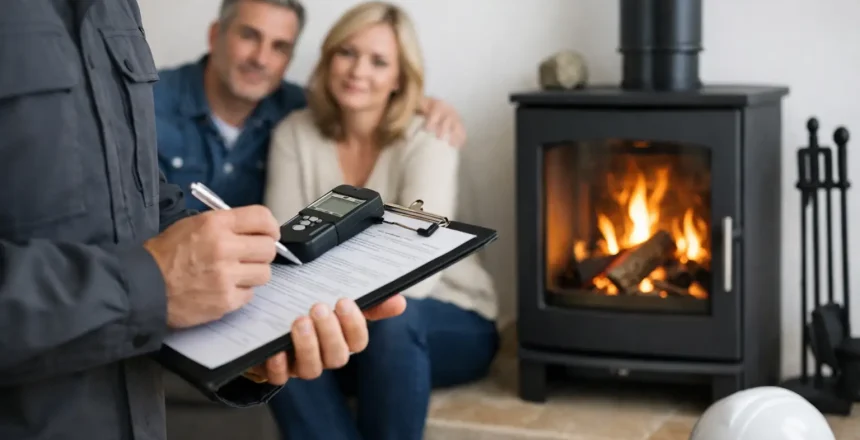
A stove can look finished the moment the first fire is lit, but the HETAS certificate process starts much earlier than that. It is the route that turns a well-fitted wood burner or multi-fuel stove into a properly documented, Building Regulations-compliant installation. For homeowners, that paperwork is not a formality to chase at the end. It is evidence that the work has been completed safely and notified correctly.
What a HETAS certificate confirms
A HETAS certificate, commonly called a Certificate of Compliance, confirms that a solid fuel installation has been carried out by a HETAS registered installer under the Competent Person Scheme. In England and Wales, this allows the installer to self-certify eligible work rather than requiring you to arrange a separate Building Control inspection.
The certificate is particularly valuable because a stove installation involves much more than placing an appliance in an opening. The flue route, chimney condition, hearth, clearances to combustible materials, ventilation and safe termination all need to meet the relevant requirements. A registered installer is trained to assess these details as a complete system.
Once the installation has been notified through the scheme, the certificate is normally sent to the property owner. Keep it with your home documents. It may be requested by a buyer’s solicitor when you sell, and it provides useful evidence for insurers and future property records.
The HETAS certificate process, step by step
1. The survey establishes what is possible
A proper process begins with a survey, not a guess based on photographs alone. The engineer assesses the proposed stove position, the size and layout of the room, the available chimney route or the suitability of a new twin wall stainless steel chimney system.
They will also consider the hearth arrangement, fireplace opening where relevant, the construction around the installation area and the practical route for the flue. If the property has no usable chimney, that does not automatically rule out a stove. A suitably designed external or internal twin wall system can often provide a compliant solution, subject to the property and installation design.
This is the stage to be clear about whether you are supplying the stove yourself or would like a supply-and-fit service. A professional installer can then confirm whether the chosen appliance is suitable for the room and proposed flue arrangement before work is booked.
2. The installation is designed around compliance
Building Regulations requirements for solid fuel appliances are set out principally in Approved Document J in England and Wales. Your installer applies these rules to the specific property rather than relying on a one-size-fits-all setup.
For an existing chimney, this may involve confirming the chimney is suitable and installing an appropriate flue liner where required. For a property without a chimney, the work may include planning the chimney system route, support points, wall or roof penetrations and the correct termination position.
The hearth is another key part of the design. Its dimensions, construction and the clearances around the stove depend on the appliance and its manufacturer instructions. Ventilation may also be necessary, particularly for more powerful stoves or airtight modern homes. These requirements are there to protect occupants and the building, not to add unnecessary work.
3. The fitting is completed by a registered engineer
A HETAS registered engineer installs the system in accordance with the approved design, the appliance instructions and Building Regulations. They check the full installation as work progresses, including the flue connection, the safe route of the chimney, required distances from combustible surfaces and the hearth construction.
Before handover, the engineer carries out the required commissioning checks. This includes checking that fumes are drawing correctly through the flue and that the installation operates safely. You should also receive practical guidance on using the stove correctly, choosing suitable fuel and allowing the appliance to operate efficiently.
A quality installation is not simply about getting a stove working on the day. It should leave you with confidence that the system has been fitted to serve your home safely for years to come.
4. The installation is notified to HETAS
After eligible work is completed, the registered installer submits the installation details through the HETAS Competent Person Scheme. This notification is the central administrative step in the HETAS certificate process.
It confirms that the installer is taking responsibility for certifying the work they have completed. You should not need to submit the notification yourself or arrange separate Building Control sign-off for work that has been correctly self-certified by a registered installer.
Notification is usually completed promptly after installation, although the certificate itself can take a little time to arrive. If it has not arrived within a reasonable period, contact the installer first and ask them to confirm that the notification has been submitted with the correct property details.
5. You receive and retain your certificate
The HETAS Certificate of Compliance is generally issued to the homeowner after the notification has been processed. Check the name and address are correct when it arrives, then store it safely alongside other important property paperwork.
It is sensible to keep a digital copy as well as the original. If you later sell the property, the certificate helps demonstrate that the stove installation was notified through the appropriate route. If a solicitor asks for evidence of Building Regulations compliance, having it ready avoids unnecessary delays and uncertainty.
When the process may be different
The HETAS route applies when the work is carried out and self-certified by a suitably registered installer. If you use someone who is not registered under a competent person scheme, you will normally need to involve your local authority Building Control department before work starts. Building Control may inspect the work and issue its own completion documentation rather than a HETAS certificate.
That route can be appropriate in some circumstances, but it places more administration with the homeowner and can add time and cost. It is worth confirming the certification route before any installation begins, rather than assuming paperwork can be arranged afterwards.
Requirements can also differ outside England and Wales. Homeowners in Scotland and Northern Ireland should check the relevant local building standards process. A dependable installer will explain which rules apply to your property and what documentation you can expect to receive.
What homeowners should do before and after installation
Before booking, ask whether the installer is currently HETAS registered and whether the quoted work includes notification and certification. This should be clear from the outset. A low initial price that excludes essential compliance work can become more costly once the true scope is understood.
Make sure the survey covers the full project, including any chimney lining, new chimney system, hearth creation and building work needed to achieve a safe result. A stove may be the visible centrepiece, but the unseen elements are equally important to safety and certification.
After handover, use the appliance as instructed and retain every document provided. The certificate does not replace responsible ownership, but it gives you a reliable record that the installation met the required standard when it was completed.
Choosing an installer who can take responsibility
The best question is not simply, can this stove be fitted? Ask whether the company can assess, install, commission and certify the complete system. That joined-up responsibility reduces the risk of gaps between different trades, unexpected compliance issues and uncertainty over who is accountable for the final result.
At Stove Specialists UK, our HETAS registered engineers manage installations from initial advice through to formal certification, including projects with existing chimneys and homes that need a new twin wall chimney system. We provide clear recommendations, free quotes and a 100% Peace of Mind installation approach, so you know what is included before work begins.
A HETAS certificate is the final record of careful planning and competent work. Choose an installer who treats it as part of the installation itself, and you can enjoy the comfort of your stove with the reassurance that the details behind it have been handled properly.