
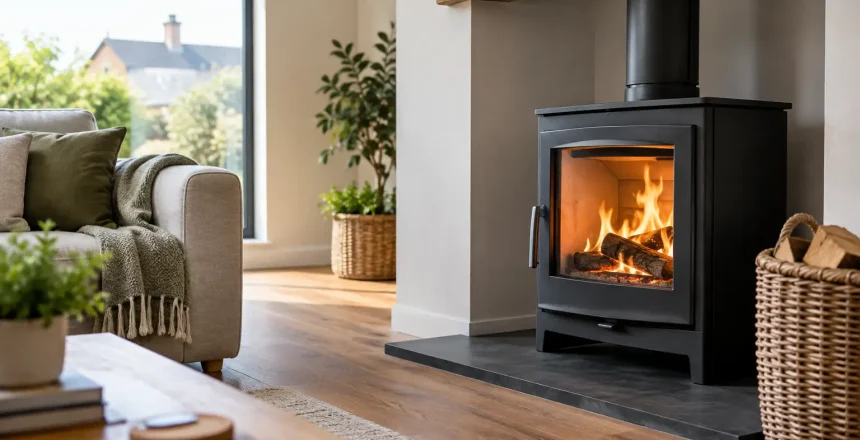
A stove should give you warmth and a focal point, not leave you wondering whether it will still meet the rules in a few years’ time. Future UK stove standards are a sensible concern for anyone planning a new wood burner or multi-fuel stove, particularly where a property has an older chimney, no existing chimney, or is located in a Smoke Control Area.
The key point is reassuring: a properly specified, professionally installed modern stove is already built around much stricter expectations than older appliances. The right decision is not to delay a project while waiting for headlines about potential changes. It is to choose an appliance and installation that meet today’s rules, suit the property, and leave no doubt about safety or certification.
What future UK stove standards are likely to focus on
The direction of travel is clear. Government policy, local air-quality action and product development continue to focus on reducing pollution from domestic solid-fuel heating. That does not mean wood burners are being banned across the UK. It does mean that appliance choice, fuel quality and correct installation matter more than ever.
Most discussions about future standards centre on emissions. Fine particulate matter, often referred to as PM2.5, is a particular concern because it can affect local air quality. Modern Ecodesign stoves already have significantly tighter emissions and efficiency requirements than many older models. Since January 2022, new solid-fuel stoves sold for use in the UK have generally needed to meet Ecodesign requirements.
Future policy could bring tighter enforcement, more local restrictions in areas with poor air quality, or further attention on how stoves are used. Exact changes, dates and requirements should never be assumed before they are formally announced. However, homeowners can make a strong long-term choice now by selecting a suitable Ecodesign-ready appliance, using approved fuel and having the system designed around current Building Regulations.
Current standards still set the foundation
A future-proof installation begins with getting the present-day requirements right. In England and Wales, stove installations must comply with Building Regulations, including Part J, which covers combustion appliances and fuel storage systems. This is not simply paperwork. The rules address safe clearances, hearth construction, flue sizing, chimney performance, ventilation and the safe discharge of combustion gases.
A HETAS registered installer can assess these requirements as one joined-up job. The survey should consider the stove output needed for the room, the route of the flue, the condition and suitability of the chimney, combustible materials nearby, and whether permanent ventilation is required. A stove that looks right in a showroom can be the wrong output or configuration for a particular home.
On completion, a compliant installation should be formally certified. This evidence matters when selling a property, arranging insurance, or demonstrating that building work has been carried out correctly. It also gives homeowners clear peace of mind that the installation has been checked against the relevant standards rather than judged by appearance alone.
Ecodesign is the starting point, not the whole answer
Ecodesign compliance is a good baseline, but it is not a licence to burn anything in any way. The appliance needs to be used as intended, with the correct fuel and air controls. An efficient stove can still produce unnecessary smoke if wet logs are burned or the fire is repeatedly starved of air.
For wood-burning stoves, choose properly seasoned or kiln-dried logs with a moisture content of 20% or less. The Ready to Burn scheme helps homeowners identify suitable small-volume wood fuel. Dry fuel lights more easily, produces more useful heat and creates less smoke than damp wood.
If you are considering a multi-fuel stove, ask at the survey stage which fuels are appropriate for the appliance and your location. Fuel rules can be different in Smoke Control Areas, and manufacturers’ instructions must always be followed. This is one area where a little professional advice before purchase can prevent an expensive mismatch later.
Smoke Control Areas and local requirements
Many towns and cities have Smoke Control Areas, where it is an offence to emit smoke from a chimney unless an authorised fuel is used or the appliance is exempt. Modern appliances designed for these locations are commonly described as DEFRA exempt or smoke-control approved.
Do not rely on a neighbour’s installation or an old listing when checking your own address. Boundaries can be specific, and local authority rules apply to the property rather than the type of street you live on. A professional installer can explain what needs checking, but homeowners should also confirm the position with their local authority where there is any uncertainty.
This local picture is why broad claims about future UK stove standards can be misleading. National product requirements are one issue. Planning considerations, local air-quality measures and smoke-control rules are another. The sensible approach is to design for the property and area, not for a one-size-fits-all answer.
Installation quality will matter more, not less
As appliance emissions improve, the quality of the flue and chimney system becomes even more significant. A stove needs a reliable draw to burn efficiently and send combustion gases safely outside. Poorly planned flue routes, inadequate clearances or unsuitable chimney arrangements can undermine the performance of an otherwise excellent stove.
For a traditional fireplace installation, this may involve lining an existing chimney to suit the new appliance. For a home without a usable chimney, a twin-wall insulated stainless-steel chimney system can provide a safe route through the building and above the roofline. The right solution depends on the property layout, stove position and the practical route available.
Hearth requirements also need careful attention. The material, dimensions and positioning must protect the surrounding floor and meet the appliance manufacturer’s instructions. This is particularly relevant in renovations, extensions and newer homes where the desired stove position may not have been designed for solid-fuel heating.
A complete survey is therefore worth more than a quick price based on photographs alone. It identifies the building work required, gives a realistic specification and helps avoid compromises that could affect safety, performance or certification. Stove Specialists UK takes this managed approach so homeowners have one clear route from initial advice through to a compliant, certified installation.
How to make a sensible decision now
If you are choosing a stove with the next decade in mind, focus on proven compliance rather than marketing claims. Ask whether the appliance meets current Ecodesign requirements, whether it is suitable for a Smoke Control Area if needed, and whether its output suits the room. Bigger is not automatically better. An oversized stove can be difficult to run cleanly because it may encourage low-temperature burning.
Think about the whole system too. The stove, hearth, flue or chimney liner, ventilation and building clearances work together. Choosing the appliance first and treating everything else as an afterthought can limit your options. A survey before ordering gives you a far clearer picture of the final cost, installation route and likely timescale.
It is also worth considering how you will use the stove. A living-room feature used on winter evenings has different demands from a stove intended to contribute regularly to household heating. Your installer can walk you through practical options without pushing you towards more output than you need.
Questions worth asking before you commit
Ask whether the proposed appliance is Ecodesign compliant and, where relevant, approved for use in a Smoke Control Area. Confirm how the flue system will be installed, what hearth arrangement is needed, and whether ventilation is required. Finally, ask how certification will be provided once the work is complete.
These are straightforward questions, but they separate a fully considered installation from one that could create uncertainty later. Free quotes and clear specifications are especially valuable because they let you compare like for like rather than comparing a stove price with a complete, compliant installation.
A cleaner future begins with good choices at home
Future standards should encourage better decisions, not put homeowners off enjoying a stove. A modern, correctly sized appliance, dry approved fuel and a HETAS-certified installation are already the most practical way to reduce emissions while enjoying dependable heat. Arrange a proper survey, ask direct questions, and choose an installation designed to meet the rules with 100% peace of mind.