
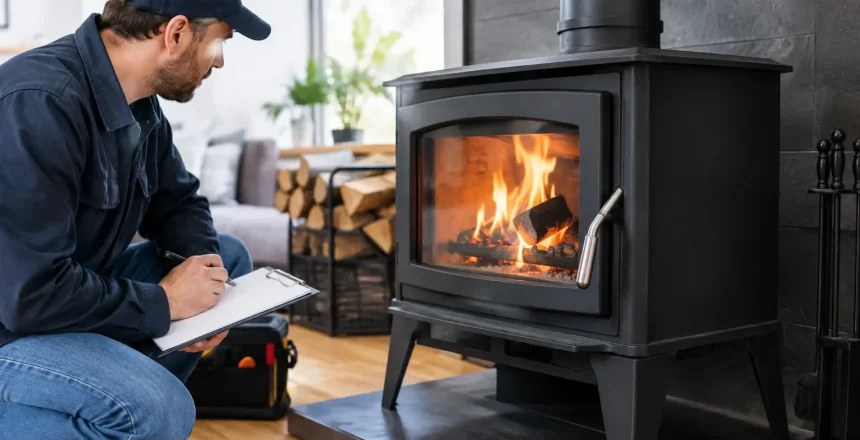
A wood stove should feel reassuring long before the first fire is lit. A proper wood stove installation review looks beyond the finished appearance and asks the practical questions: is the appliance suitable for the room, is the flue route safe, has the hearth been built correctly, and will you receive the right certification when the work is complete?
For UK homeowners, those details matter as much as the stove’s style or heat output. A well-planned installation can provide an efficient, attractive focal point for years. A rushed one can lead to unnecessary disruption, avoidable cost and concerns over compliance. This guide explains what a good installation review should cover before you commit.
Start with the room, not the stove
The first decision is not which stove looks best in the showroom. It is whether the room can accommodate the right appliance and flue system. A professional survey considers the room size, insulation levels, layout and how the property is used. A large open-plan space may need a different solution from a well-insulated sitting room in a modern home.
Getting the heat output right is particularly important. An oversized stove can make a room uncomfortably hot, encouraging owners to run it low. That is not the intended way to operate a stove and can affect how cleanly it burns. A correctly sized appliance is easier to enjoy and more likely to perform as expected.
The survey should also identify practical constraints early. These may include an existing fireplace opening, combustible materials near the proposed location, air supply requirements, ceiling and roof access, or the most sensible route for a new chimney system. Clear advice at this stage prevents surprises once work begins.
Wood stove installation review: chimney or twin wall?
A key part of any wood stove installation review is deciding how smoke will safely leave the property. Where there is an existing chimney, it must be assessed for suitability. The chimney may be able to take a correctly specified flue liner, creating a dedicated and controlled route from the stove to the chimney pot.
Not every home has a usable chimney, and that does not rule out a stove. A twin wall stainless steel chimney system can be installed internally or externally, subject to a suitable design and the relevant clearances. This makes a stove possible in many extensions, newer properties and rooms where there is no traditional fireplace.
Neither option is automatically better. An existing chimney can suit a classic fireplace setting, while a twin wall system can offer flexibility in where a stove is positioned. The right choice depends on the building, the intended stove location, the route available and the finished look you want.
A dependable installer will explain the proposed route in plain English. You should understand where the flue will run, how it will pass through floors or the roof if required, and why that route has been selected. A vague promise that it will be “sorted on the day” is not the standard to accept.
Check the hearth and clearance requirements
The hearth is not simply a decorative base. It is a safety feature designed to protect the floor and surrounding area from heat and falling embers. Its required construction and dimensions depend on the stove and the temperature beneath it, so it needs to be planned around the selected appliance rather than guessed at.
Clearances are equally important. Every stove has manufacturer-specific distances from combustible materials, and these need to be respected. Timber beams, plasterboard-lined studwork, flooring, furniture placement and decorative finishes can all affect the final design. In some homes, this means changing the proposed position slightly or carrying out associated building work to create a safe installation area.
This is where experienced advice pays off. A good installer does not treat safety distances as an inconvenience. They build them into the design, helping the finished stove look considered while meeting the requirements that protect your home.
Ventilation is a safety requirement, not an afterthought
Modern homes are often more airtight than older properties, which can change how a stove draws air. Depending on the appliance output and the property, permanent ventilation may be required. This is assessed as part of the installation design.
Some homeowners worry that ventilation will make the room draughty. In practice, the correct approach is to assess the property and specify what is needed for safe operation. It should never be ignored simply because it affects the look of a wall or because a shortcut appears easier.
The installation also needs to account for extractor fans and other appliances that can influence airflow. A survey provides the opportunity to raise these questions before the work is scheduled, rather than discovering an issue after the stove is in place.
Ask who takes responsibility for compliance
A stove installation is controlled work under Building Regulations. Using a HETAS registered engineer gives homeowners a straightforward route to compliance, because the work can be self-certified where applicable and the correct documentation issued after completion.
This paperwork is valuable. It records that the installation has been completed by a competent person and can be useful when selling or remortgaging a property, as well as for insurance purposes. Keep it somewhere safe with the stove instructions and any other property documents.
A proper review should make the certification process clear before you book. Ask whether the installation will be notified, what certificate you will receive, and whether the quotation includes all work needed to deliver a compliant result. A low initial figure is not necessarily good value if essential elements have been left out.
Compare quotations on the full scope of work
It is sensible to obtain more than one quote, but compare like for like. One quote may cover a stove, flue liner, hearth work, installation and certification, while another may only cover part of that scope. The lower number can quickly stop being the lower cost once omitted work is identified.
A clear quotation should state the proposed appliance, flue approach, hearth arrangement, labour and certification. It should also set out any assumptions that depend on the survey. This gives you a fair basis for comparison and makes it easier to plan your budget.
Be open about whether you want a supply-and-fit package or installation of a customer-supplied stove. Both can be possible, but the installer still needs to confirm that the appliance is suitable for the planned location and can be fitted in accordance with its instructions. The same safety standards apply either way.
What should happen on installation day?
A fully managed installation should be organised, tidy and clearly explained. The team should protect the work area, carry out the agreed building and flue works, position and connect the stove, then test the completed system. You should not be left guessing whether the appliance is ready to use.
Before the team leaves, ask for a practical handover. You should be shown how to operate the air controls, light the stove correctly and use suitable fuel. You should also understand the importance of burning dry, untreated wood with a moisture content below 20 per cent. Wet wood creates more smoke, reduces heat and can cause poor stove performance.
If you live in a Smoke Control Area, ask whether the chosen stove is suitable for use there. This is a location-specific point, so it is worth confirming rather than assuming. An experienced installer will help you make a choice that suits both your home and local requirements.
Signs of an installation company you can trust
The best indicator is not a sales promise but a clear process. Look for a company that carries out a proper survey, explains the work required, provides a written quotation and uses a HETAS registered engineer. You should feel able to ask direct questions without being rushed into a decision.
Customer reviews can also be useful when they describe the details that matter: punctuality, communication, care in the home, clarity of advice and whether the agreed work was completed as expected. Focus on consistent feedback rather than one unusually glowing or negative comment.
At Stove Specialists UK, the aim is a 100% Peace of Mind installation: practical recommendations, compliant workmanship and a clear route from the first survey to HETAS certification. That approach is particularly valuable when a project involves a new chimney system, a fireplace transformation or building work alongside the stove fitting.
A stove is a long-term addition to your home, so give the planning the attention it deserves. Choose an installer who is willing to assess the property properly, explain the options honestly and leave you with the confidence that the first fire can be lit safely.