
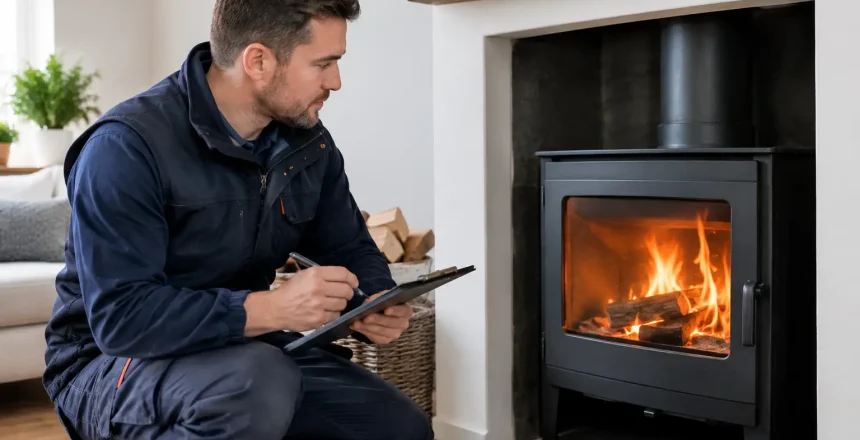
A stove can look perfectly at home in a fireplace or new extension, yet the work behind it determines whether it is safe, legal and ready to enjoy. That is why HETAS engineer credentials matter before you agree to an installation. They give homeowners a practical way to identify a competent installer who understands solid fuel appliances, flues, chimneys and the certification process.
For most customers, this is not about learning every line of the regulations. It is about knowing who is taking responsibility for the work, what paperwork you should receive, and why the lowest quote is not always the best value. A properly planned installation should give you warmth, confidence and 100% peace of mind from the first survey through to completion.
What HETAS registration means
HETAS is the recognised competent person scheme for solid fuel and biomass heating in the UK. A HETAS registered installer has been assessed to carry out relevant work in line with the scheme’s requirements and applicable Building Regulations.
In everyday terms, a registered installer is trained to consider the entire stove system rather than treating the appliance as a standalone purchase. That includes the suitability of the fireplace opening, hearth, flue route, chimney condition, ventilation, clearances from combustible materials and safe termination of the flue.
The exact scope of registration matters. An installer should be registered for the type of work they are proposing, whether that is fitting a stove into an existing chimney or creating a twin wall chimney system for a property without a usable chimney. Ask the question directly during your quotation stage. A dependable contractor will explain what work is covered and why it is required.
HETAS registration is not simply a badge for a website. It supports a process of competent installation and notification. Where the work is eligible and completed by a registered installer, they can normally notify the installation through the competent person scheme rather than requiring you to arrange a separate Building Control application yourself.
Why HETAS engineer credentials protect your home
A wood burning or multi-fuel stove produces high temperatures and combustion gases. The installation must manage both safely. Small details can have major consequences: an incorrectly sized flue, insufficient clearance, an unsuitable hearth or inadequate ventilation can affect performance and create a safety risk.
Strong HETAS engineer credentials indicate that the installer knows how to assess these details before work begins. They should not promise a final specification based only on a photograph and a stove model. A proper survey is where practical issues become clear, such as whether the existing chimney is appropriate, whether lining is needed, how a flue can pass through a roof space, and what building work is needed to create a compliant setting.
Credentials also matter because every home is different. A period property with a masonry chimney may need a different approach from a modern house, a garden room or a new-build extension. In some homes, the cleanest solution is a carefully designed twin wall flue system. In others, the existing fireplace can be prepared for a stove. The right answer depends on the property, the appliance and the proposed location – not on a one-size-fits-all package.
The certification you should expect after installation
Once the installation is complete, the paperwork is part of the job, not an optional extra. Your installer should provide clear information on the completed system and explain the safe use of the stove.
For work notified through the HETAS competent person scheme, homeowners should receive a HETAS Certificate of Compliance. This is important evidence that the installation has been notified in relation to Building Regulations. Keep it with your property documents. It may be requested by a solicitor or buyer when you come to sell your home.
You should also receive an appliance installation or commissioning record where applicable, together with operating guidance. Take the time to ask questions before the installer leaves. You should understand which fuel is suitable, how to light the stove correctly, how to control it, and what signs suggest it is not operating as intended.
If an installer is not HETAS registered, that does not automatically mean they cannot complete work competently. However, the Building Regulations route can be different. You may need to arrange Building Control approval, which adds responsibility, time and potential cost. For many homeowners, choosing a HETAS registered installer simplifies the process and provides a clearer certification trail.
How to check an installer’s credentials before you book
Checking credentials should be straightforward, and it is worth doing before paying a deposit. Do not rely solely on a logo in an advert or a verbal assurance. Ask for the installer’s HETAS registration details and confirm that they are current and relevant to your installation.
It also helps to discuss the job in enough detail to judge the quality of the advice. A professional should be comfortable talking through the proposed flue arrangement, hearth, ventilation and certification without hiding behind jargon. They should explain where there are choices, and where the regulations leave no room for compromise.
Before confirming your installation, make sure you understand these four points:
- who will carry out the on-site work and whether they are HETAS registered;
- what the quotation includes, including any chimney lining, twin wall flue work, hearth creation and building works;
- how the installation will be notified and which certificate you will receive; and
- what assumptions have been made following the survey, especially where access, chimney suitability or flue routing may affect the final design.
A detailed written quotation is a positive sign. It helps prevent surprises and lets you compare like for like. A cheaper figure can be misleading if it leaves out the flue system, required construction work or formal notification.
Credentials are only one part of a good installation
HETAS registration is a key starting point, but homeowners should also look for careful planning, clear communication and workmanship that matches the complexity of the project. A simple installation in an existing fireplace and a new stove system in a home without a chimney should not be priced or approached in the same way.
A good installer will recommend the safest practical route for your property, even when that means explaining why a preferred position is unsuitable or why additional work is necessary. That honesty protects the finished result. It also makes budgeting more realistic from the outset.
At Stove Specialists UK, installations are approached as a complete service: survey, recommendations, fitting, compliance and certification. Whether you are choosing a stove as a focal point for a living room or planning a new heating feature in an extension, the aim is to remove the technical uncertainty without cutting corners.
Questions worth asking at the survey
The survey is your opportunity to make sure the proposed installation fits your home and expectations. Ask how the installer has calculated the flue arrangement, whether the existing chimney is suitable, and what clearances will be maintained around the stove. If the property has modern airtight improvements, ask how ventilation has been considered.
It is also sensible to ask what could change once work starts. Some unknowns cannot be confirmed until an old fireplace is opened up or a flue route is inspected. A professional will be upfront about these possibilities and explain how they would be handled, rather than presenting every job as risk-free.
Finally, ask when you can expect your certification and what you need to retain. Clear answers are a sign that the installer views compliance as an essential part of the service, not an administrative afterthought.
Choosing a stove should be enjoyable. Let the credentials, survey and certification do the hard work in the background, so you can focus on a safe, attractive heating feature that is properly installed for your home.