
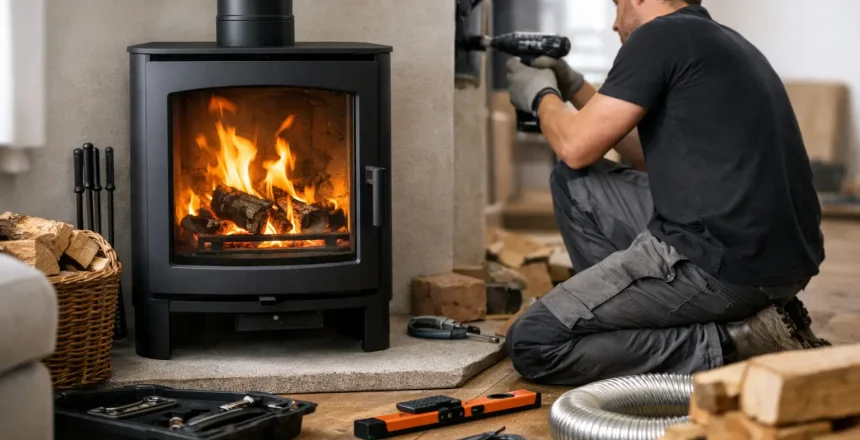
If you are pricing up a stove for your home, the number that matters is not just the appliance on its own. When homeowners ask how much does a log burner and installation cost, the honest answer is usually somewhere between £2,000 and £5,500 for a typical UK job – but the final figure depends on the flue route, chimney condition, hearth work, and whether your property is already set up for a compliant installation.
A low-cost figure you see online can be misleading if it excludes the liner, chimney work, register plate, hearth, labour, commissioning, and certification. On the other hand, not every installation turns into a major building project. Some are straightforward and cost far less than people expect. The key is understanding what is included.
How much does a log burner and installation cost in the UK?
For a standard installation into an existing fireplace with a usable chimney, many homeowners will fall into the £2,500 to £4,000 range. That often includes the stove, flexible flue liner, closure plate, connecting flue pipe, commissioning, and HETAS certification.
If you are supplying your own stove and the fireplace opening is already suitable, the installation cost alone may start from around £1,500 to £2,500, depending on the chimney and the amount of work involved. If the chimney needs lining, the opening needs altering, or the hearth needs to be built or upgraded, the total rises.
For homes without a chimney, expect a higher budget. A twin wall insulated flue system typically pushes the overall cost into the £3,500 to £5,500 range, and sometimes more if the flue run is long or complicated. Bungalows, new builds, extensions, and rooms with awkward roof access can all affect labour and materials.
That is why a proper quote matters. Two houses on the same street can need very different levels of work.
What affects the total cost?
The biggest cost factor is the route the flue system has to take. If you already have a sound masonry chimney, installation is usually simpler and more affordable than creating a new flue system from scratch. Even then, most chimneys still need a suitable liner to meet current standards and ensure the stove performs safely and efficiently.
The stove itself also changes the price. A smaller entry-level wood burner for a modest room will cost far less than a premium model with a larger heat output, designer finish, or more advanced combustion performance. A higher purchase price does not always mean better value for your home. The right stove is the one sized correctly for the room and installed properly.
Building work is another common variable. Some fireplaces are already the right size, with a suitable non-combustible hearth and enough clearance around the stove. Others need the opening enlarging, the chamber rendering, a new lintel, or a raised hearth to comply with regulations. These are not cosmetic extras. They are often essential parts of a safe installation.
Access can also make a difference. A chimney that is easy to reach with safe roof access is one thing. A tall property, awkward pitch, or difficult flue route takes more time and more equipment.
Typical price breakdown
A budget stove might start from around £700 to £1,200, while many mid-range models sit between £1,000 and £2,000. Premium stoves can go well beyond that. For most homeowners, the appliance is only one part of the total.
Installation labour for a straightforward job can sit around £1,000 to £1,800, but that figure moves with complexity. A chimney liner often adds several hundred pounds, and sometimes over £1,000 depending on length, diameter, and specification. Hearth construction or alteration may add a few hundred pounds more. Twin wall insulated flue systems usually cost significantly more than lining an existing chimney because of the specialist components involved.
This is where very cheap headline prices can catch people out. If a quote does not clearly state what is included, you may be comparing a part-price with a full installation.
Existing chimney vs no chimney
If your home has an existing chimney breast and fireplace opening, that is usually the most cost-effective route. Even if the fireplace has been closed off, it can often be reopened and adapted for a stove installation. In many cases, this gives homeowners the best balance of appearance, performance, and cost.
If there is no chimney, a stove is still perfectly possible. A twin wall stainless steel flue system can run internally through the house and roof, or externally up an outside wall. This allows stove installations in newer homes, extensions, garden rooms, and rooms that were never built with a fireplace. The trade-off is price. Twin wall systems are more material-heavy and more labour-intensive, so they cost more.
Neither option is automatically better. It depends on the property, the look you want, and the most practical compliant route for the flue.
Why professional installation matters
A log burner is not just a decorative feature. It is a live heating appliance producing high temperatures and combustion gases. The installation must comply with Building Regulations, manufacturer requirements, and flue safety standards. That is why using a HETAS registered installer matters.
With a properly managed installation, you are not left trying to piece together separate trades or guess whether the work is legal. The stove can be commissioned correctly, the flue system checked, and the job formally certified. That gives you confidence that the installation is safe and properly documented.
It also avoids one of the most expensive mistakes – choosing a stove first and discovering later that it is the wrong size or unsuitable for the planned setup. Good advice at survey stage can save money as well as hassle.
Hidden costs homeowners should ask about
The phrase how much does a log burner and installation cost often sounds as though there should be one simple price. In reality, the better question is what is included in the quote.
Ask whether the price covers the flue liner or twin wall system, vitreous pipe, closure plate, carbon monoxide alarm, hearth work, commissioning, and certification. You should also check whether making good around the fireplace is included, especially if the opening is being altered.
Some homes need chimney capping or ventilation work. Others need more preparation than expected once the opening is exposed. That does not mean the installer is adding unnecessary cost. It usually means the survey has identified what is required to deliver a safe, compliant result.
Is a cheaper installation worth it?
Sometimes yes, sometimes no. If your home already has the right fireplace opening, a sound chimney, and minimal building work required, a lower-cost installation may be completely realistic. Straightforward jobs do exist.
Where homeowners need to be careful is with quotes that seem low because key elements have been left out. A stove that looks cheap on paper can become far more expensive once the flue system, building work, and certification are added. The better approach is to compare complete like-for-like quotations.
A reliable quote should explain the scope clearly and walk you through any recommendations. That is especially important if you are deciding between a supply-and-fit package and installation of a customer-supplied stove.
What is the best way to budget?
For most households, it is sensible to plan around three broad brackets. If you have a straightforward existing chimney installation, a budget of £2,500 to £4,000 is often realistic. If you want a higher-end stove or there is extra fireplace work involved, £4,000 to £5,500 is a safer allowance. If you have no chimney and need a full twin wall system, start with the expectation that costs will usually sit in the upper part of that range or above it.
If finance is available, that can also make a professionally installed stove more manageable, especially where homeowners want the job completed properly rather than cutting corners on compliance.
The most accurate route is always a site survey. That is where a specialist can assess the chimney, confirm the flue route, measure clearances, and recommend a stove that suits both the room and the property.
A log burner can add real warmth and character to a home, but the best value comes from getting the whole installation right the first time – safe, compliant, and built around your property rather than a headline price.