
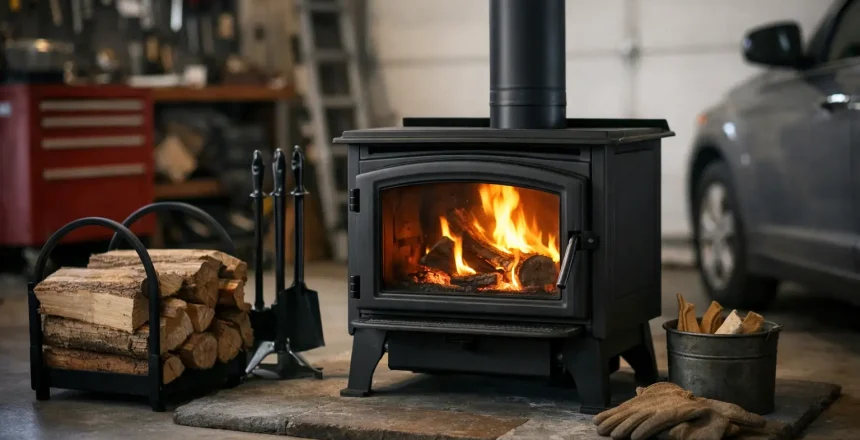
A cold garage sounds manageable until you try to work in it through January. Whether you use the space as a workshop, home gym or practical overflow room, knowing how to install wood burning stove in garage properly matters for one reason above all else – safety. A garage stove is not a quick DIY shortcut. It needs the right clearances, the right flue system, the right hearth and the right sign-off under UK rules.
For many homeowners, the appeal is obvious. A wood burning stove can turn a draughty, underused garage into a space you actually want to spend time in. The challenge is that garages come with extra considerations compared with a standard living room installation. Combustible materials, concrete floors, poor insulation and the route for the flue all affect what is possible.
Can you install a wood burning stove in a garage?
In many cases, yes, but it depends on the garage layout, how the space is used and whether the installation can comply with Building Regulations. A detached brick garage with good access for a twin wall flue is a very different job from an integral garage connected to the house.
The first point to understand is that a stove installation in a garage must still meet the same core standards as any other solid fuel installation. The appliance must be suitable for the space, the hearth must be correctly sized, combustible materials must be protected, and the flue must be installed to the right specification. You also need proper certification.
If the garage stores petrol, paint thinners or other flammable materials, that changes the risk level straight away. In some cases, the safer answer is to rethink how the space is used before any stove is considered. That is why a proper survey matters more than internet advice.
How to install wood burning stove in garage safely
The safest way to approach the job is to start with the room itself, not the stove. A garage often looks simple because it is just four walls and a roof, but in practice it can be one of the trickier places to fit a stove properly.
You need to assess the floor construction, wall materials, roof type, internal clearances and where the flue can terminate. Many garages do not have an existing chimney, which means a factory-made insulated twin wall flue system is usually the most practical route. That system must be correctly supported, correctly distanced from combustible materials and terminated at the proper height.
The stove position matters just as much. It should allow safe distance to nearby walls, stored items and the route people take through the room. Garages are often tighter than they first appear once benches, shelving and storage are taken into account.
Choosing the right location
The best position is usually against a suitable wall where the flue route can run as directly as possible. A straighter flue generally performs better and keeps the installation simpler. If the stove is forced into an awkward corner to avoid moving other items, the result can be poor heat distribution and a more complicated flue system.
You also need enough room around the appliance for the manufacturer’s stated clearances. Those distances are not optional. If nearby walls or surfaces are combustible, extra shielding or a different layout may be needed.
Hearth requirements
A garage stove still needs a compliant hearth. In some garages, the existing concrete base may appear ideal, but that does not automatically mean it meets the required specification as a finished hearth. Dimensions, thickness and the way the hearth projects around the stove all matter.
If the appliance can raise the hearth temperature beyond the permitted limit, a constructional hearth may be required. The details depend on the stove selected, which is why the appliance choice and hearth design should be considered together, not separately.
Flue system and chimney route
Most garage installations rely on an insulated twin wall chimney system rather than a masonry chimney. The flue can run vertically through the roof or internally and then out through the wall before rising externally. The best option depends on the building design and what gives the safest, most efficient draw.
A vertical rise through the roof is often the cleaner solution for performance. A wall exit can work well too, but it needs careful planning around eaves, windows and the final termination height. There is no one-size-fits-all answer here. What works in one garage may be unsuitable in another only a few streets away.
Ventilation, air supply and garage use
Stoves need air to burn correctly. Some garages are draughty enough that people assume ventilation will take care of itself. That is not a safe assumption. The required air supply depends on the appliance output and the overall character of the building.
Modernised garages with upgraded doors, insulation and sealed windows can be more airtight than expected. If ventilation is inadequate, the stove may burn poorly and create a safety risk. Purpose-provided ventilation may be needed, and it should be designed as part of the installation rather than treated as an afterthought.
The way the garage is used is equally important. If it remains a general storage area with fuels, solvents or clutter close to the appliance, that needs addressing before installation. A wood burner works best in a managed, organised space where clearances can be maintained long term.
Legal requirements and certification in the UK
This is where many garage stove projects go wrong. Homeowners often focus on buying a stove before considering legal compliance. In the UK, a wood burning stove installation must comply with Building Regulations, including the rules covering combustion appliances, flues and hearths.
You generally have two routes. The installation can be signed off through your local authority building control, or it can be self-certified by a competent person such as a HETAS registered installer. For most homeowners, using a HETAS installer is the simpler and more reassuring route because the work and certification are handled together.
That certificate matters. It provides evidence that the installation has been completed in line with the relevant standards and is often needed for home insurance and when selling the property. If a garage stove is fitted without proper compliance, it can create far bigger problems than the cold space you started with.
Common mistakes when installing a garage stove
The biggest mistake is treating the garage as an informal space where the usual rules can be relaxed. They cannot. A stove in a garage is still a live solid fuel appliance and must be installed accordingly.
Another common issue is choosing a stove that is too large. Garages can lose heat quickly, but oversizing the appliance is not the answer. A stove that is too powerful for the usable area can make the room uncomfortable and harder to run efficiently.
Poor flue planning is another regular problem. Long horizontal runs, awkward bends and badly placed terminals can all affect performance. So can ignoring the surrounding structure. Timber roof members, plasterboard finishes and stored household items all need proper consideration.
Then there is the assumption that because the floor is concrete and the walls are brick, the whole room is automatically non-combustible. In reality, roof timbers, internal linings, doors and stored contents often create the real constraints.
Is this a DIY job or a professional installation?
Technically, some homeowners will ask whether they can fit the stove themselves and arrange approval afterwards. The better question is whether they should. In a garage, where no existing chimney is often present and the room may have mixed construction details, the margin for error is too small to treat casually.
A professional installation gives you more than labour. It gives you proper assessment of stove sizing, flue design, hearth requirements, distance to combustibles and legal certification. It also avoids the common situation where a homeowner buys a stove first and only later finds out the planned position or flue route is unsuitable.
For that reason, most people are better served by a full survey and installation plan from the outset. A company such as Stove Specialists UK can walk you through what is achievable, what building work may be required and how to get the finished result signed off correctly, without turning the project into a drawn-out guesswork exercise.
What to expect from a proper survey
A good survey should look at the intended use of the garage, the dimensions of the room, the construction of the floor and walls, and the safest route for the flue. It should also consider whether the space is insulated, whether additional ventilation is needed and what clearance zones must be maintained once the stove is in place.
This is also the stage where practical advice matters. Some garages are ideal for a stove with only modest building work. Others need layout changes to make the installation both legal and sensible. Honest advice at this point saves money and avoids disappointment later.
A garage stove can be a brilliant addition when it is planned properly. It can bring real warmth, make the space more usable and add value to how you live in your home. The key is to treat it as a certified heating installation, not a weekend shortcut. If you start with safety, compliance and the right professional guidance, you give yourself the best chance of enjoying that extra room all year round.