Cutting a hole through an external wall for a stove flue sounds straightforward until you get into the details – clearances, wall sleeves, terminal height, Building Regulations, and making sure the system actually draws properly. If you are researching how to install wood burning stove pipe through wall, the most important thing to know is that this is not just a matter of joining pipe and sealing a gap. It is a fire safety job, and in the UK it must be done in line with manufacturer instructions and Approved Document J.
For many homes, taking the flue through a wall is the right answer. It is common where there is no usable chimney, where a fireplace opening is not suitable, or where a homeowner wants a stove fitted in a different room layout. Done properly, a rear-exit stove connected to a twin wall insulated flue system can be safe, neat, and highly effective. Done badly, it can create smoke issues, poor performance, and serious risk.
When a through-the-wall stove flue makes sense
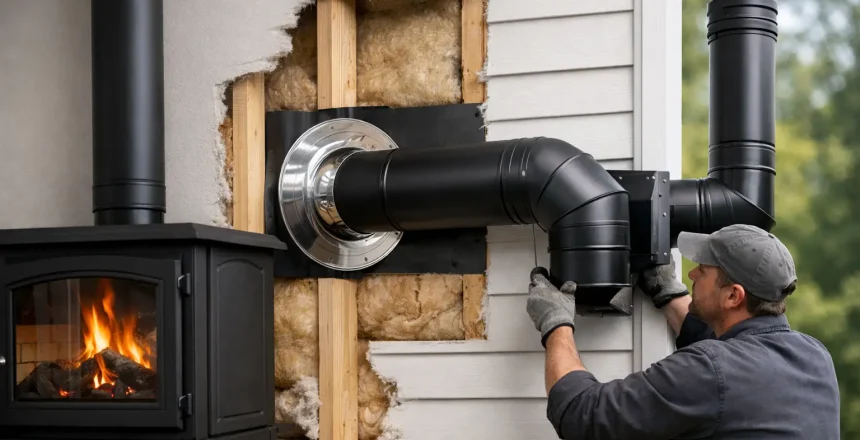
A through-the-wall arrangement is usually chosen when the appliance is positioned against an outside wall and there is no existing chimney to use. The flue exits horizontally through the wall for a short distance, then turns and rises vertically outside the property in insulated twin wall system.
That setup can work very well, but there are trade-offs. The main benefit is flexibility. You are not relying on an old chimney breast, and installation can often be planned around the room rather than around an existing fireplace. The downside is that external flue runs need careful design. Height, route, support, and termination position all affect performance, appearance, and compliance.
This is also where many DIY plans start to come unstuck. A wood burning stove does not simply need an outlet. It needs the correct flue diameter, suitable draught, proper distance from combustible materials, and a route that allows fumes to disperse safely.
How to install wood burning stove pipe through wall safely
The first step is choosing the right stove position. You need enough room for the appliance itself, the hearth, the required clearances around the stove, and the flue connection point. If the stove will exit directly through an external wall, the location has to work both inside and outside the house.
Internally, the stove must sit on a suitable hearth and meet the manufacturer’s stated distances to nearby walls and finishes. Externally, the flue must rise to a compliant height and finish in a safe position away from openings such as windows. This is one of the reasons a site survey matters. What looks simple indoors may be awkward once you check the outside wall, eaves, guttering, roofline, and neighbouring boundaries.
From the stove outlet, the connecting section inside the room is typically vitreous enamel or steel stove pipe, but only for the internal visible run. Once the flue passes through the wall or enters areas where insulated chimney is required, it should transition to the correct twin wall insulated system. A standard single-skin stove pipe should not be used to pass through the wall itself.
The wall penetration must be formed to the specification of the flue manufacturer. In practical terms, that means opening the wall to the correct diameter, using the proper insulated components, maintaining the required distance from combustible materials, and fitting the system with the right wall sleeve and finishing plates. The exact detail depends on the wall construction. A solid masonry wall presents different requirements from a timber-framed or otherwise combustible structure.
Once through the wall, the flue normally turns upward with a tee connection and vertical rise. That outside rise is not optional decoration. It is what helps the stove draw correctly. A flue with too much horizontal run and not enough vertical lift often performs poorly, especially during lighting and refuelling. Smoke spillage, lazy combustion, and difficulty keeping the fire stable are common signs of a badly designed route.
The rules that matter in the UK
If you want to understand how to install wood burning stove pipe through wall in a UK property, you cannot separate the fitting work from the regulations. The job must comply with Building Regulations, particularly Approved Document J, and with the appliance and flue manufacturer instructions. Where those differ, the stricter requirement generally applies.
Several points matter straight away. The flue diameter must suit the appliance. The chimney system must be rated for solid fuel use. Distances to combustible materials must be maintained throughout. The terminal position must meet the required separation from the roof and nearby building elements. The stove also needs suitable ventilation where required, and the room must have a carbon monoxide alarm installed in the correct position.
There is also the legal side. In England and Wales, a new stove installation generally needs to be signed off either by a competent person such as a HETAS registered installer or through local authority Building Control. Most homeowners prefer the HETAS route because it is faster, more straightforward, and ends with the right certification for the property.
That certificate is not a formality. It shows the work has been carried out and self-certified correctly, which matters for safety, insurance, and future sale of the home.
Common mistakes with through-wall flue installations
The biggest mistake is treating the wall exit as if it were just a vent opening. It is not. The point where the flue passes through the wall is one of the most safety-critical parts of the whole system.
Another frequent issue is getting the flue route wrong. People often try to keep the outside section as short as possible for appearance, but the stove still needs enough vertical chimney to operate properly. There is always a balance between looks and performance, and the best route is not always the least visible one.
Poor positioning of the terminal is another problem. If it finishes too low, too close to windows, or in a spot where wind effects are likely to interfere with draught, you may end up with ongoing nuisance and poor burning characteristics. A good installer will look at the whole building, not just the wall being drilled.
Finally, some installations fail because the stove choice itself does not suit the room or the planned flue arrangement. Certain stoves are more straightforward to install with a rear exit than others, and some properties need additional building work to create a safe and practical result.
Why professional installation is usually the sensible option
There are jobs around the house where a capable homeowner can save money by doing the work themselves. A wood burning stove flue through a wall is rarely one of them. It combines heat, combustion, structural alteration, external weathering, and legal compliance in one installation.
A HETAS registered engineer will assess the appliance output, hearth requirements, flue route, external rise, terminal position, and ventilation needs before the work starts. That avoids expensive guesswork and reduces the risk of ending up with a stove that looks good but performs badly.
Professional installation is especially valuable in newer homes, extensions, timber-framed properties, and rooms where the ideal stove position is close to combustible finishes. These situations can still often be solved, but they need the right system design from the outset.
For homeowners who want a hassle-free result, a fully managed service also means the building work, chimney system, commissioning, and certification are handled together. That tends to be the difference between a stressful project and one that runs cleanly from survey to first burn.
What the installation process usually involves
In practical terms, the process starts with a survey. The installer checks the room, the wall construction, the proposed appliance, and the safest flue path. They will also confirm whether additional ventilation is needed and whether the outside route can achieve the correct height and support.
The stove position and hearth arrangement are then set out. The wall opening is formed to suit the approved system, the internal connecting flue is installed, and the transition to twin wall insulated chimney is made at the correct point. Externally, the vertical system is fixed with the required supports and brackets, then terminated at the proper height.
After fitting, the appliance is commissioned. That includes checking the draw, confirming the installation is sound, and making sure the stove operates as intended. Where the work is carried out by a HETAS registered installer, the installation can then be self-certified and the homeowner receives the relevant documentation.
At Stove Specialists UK, this is exactly the kind of job we walk customers through regularly, especially in homes with no existing chimney where a through-the-wall flue offers the cleanest route to a safe, compliant stove installation.
A stove should give you warmth, character, and confidence in the colder months – not doubts about whether the flue has been fitted properly. If your plan involves taking the pipe through an external wall, the right advice at survey stage is what keeps the whole project safe, legal, and worth doing.