
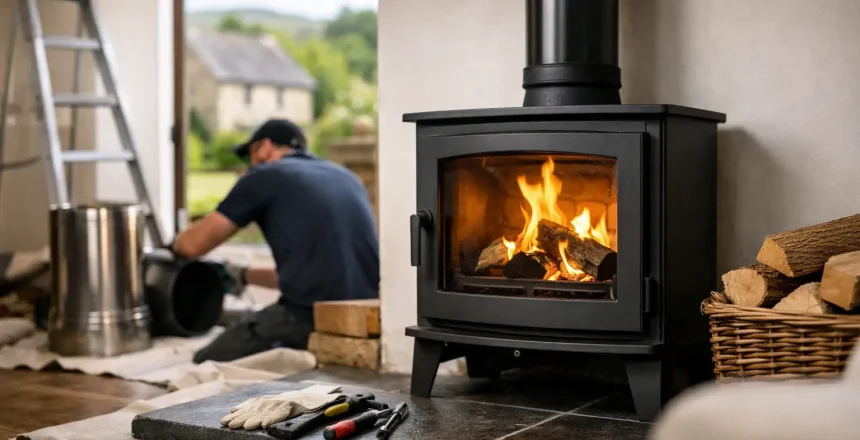
A log burner can turn an unused fireplace, cold sitting room or new extension into the warmest part of the home. But log burner installation Oxfordshire is not simply a matter of positioning a stove and lighting it. The flue route, chimney condition, hearth, clearances and ventilation must work together so the finished installation is safe, efficient and legally compliant.
For homeowners, the right starting point is a professional survey. It gives you a clear answer on what your property can accommodate, what building work may be needed and how to achieve a finish that looks right in the room. That means fewer surprises once work begins and 100% peace of mind when the stove is first used.
What a proper stove survey should establish
Every property is different. A Victorian terrace with an original chimney breast presents a different set of considerations from a modern home with no chimney at all. A specialist survey looks beyond the appearance of the fireplace and assesses the full route that safely carries combustion gases outside.
The installer will consider the room size and intended use, the stove output required, the existing chimney or potential route for a new flue, and the construction of surrounding walls, floors and ceilings. They should also check whether a suitable hearth can be formed and whether any permanent ventilation is required.
Choosing a stove that is too large is one of the most common mistakes. An oversized appliance is often run with the air controls restricted, which can lead to poor combustion and unnecessary deposits in the flue. A correctly sized wood burning stove should provide comfortable heat without making the room unpleasantly hot.
A survey is also the point to discuss the look you want. Some homeowners want a stove set into an existing opening with a clean, simple finish. Others prefer a freestanding stove on a hearth, perhaps in an extension or garden room. Both can be excellent options, but the installation method and costs depend on the building rather than a one-size-fits-all package.
Log burner installation in Oxfordshire and Building Regulations
A compliant installation must meet the relevant requirements of Building Regulations, including Approved Document J. These rules cover the safe provision of combustion appliances, hearths, fireplaces, flues and chimneys. They are not optional details – they exist to reduce fire risk and ensure fumes are discharged safely.
A HETAS registered engineer can install and self-certify eligible domestic solid-fuel work. Once complete, you should receive a HETAS Certificate of Compliance. Keep this document with your property records. It is valuable evidence that the installation has been completed properly and may be requested when you sell your home or make an insurance enquiry.
In some Oxfordshire locations, smoke control rules may also affect the stove and fuel you choose. Where these restrictions apply, your installer can explain whether a DEFRA exempt appliance is appropriate and how to use it correctly. The quality and moisture content of your wood matter just as much as the appliance itself. Dry, suitable fuel supports cleaner burning, better heat and a more enjoyable stove experience.
The chimney and flue route make the difference
An existing chimney does not automatically mean it is ready for a stove. The flue must be suitable for the appliance, correctly sized and able to create reliable draw. In many cases, installing a flexible stainless-steel liner within the existing chimney is the sensible approach. This provides a dedicated route for the stove gases and helps the system perform as intended.
Where there is no usable chimney, a twin wall insulated stainless-steel chimney system can create a safe route through the building and above the roofline. This is a popular solution for extensions, new-build homes and rooms where an original fireplace is not available. The route needs careful planning, particularly where it passes through floors, ceilings or the roof.
The shortest route is not always the best route. Flue design has to balance appearance with performance, clearances and the correct terminal position. A qualified installer will explain the practical options before work starts rather than forcing an unsuitable route because it appears easier.
Why chimney lining is often recommended
Older chimneys can be irregular internally, oversized for a modern stove or affected by historic use. A correctly specified liner helps create a controlled, continuous flue path. It also makes the connection between stove and chimney more predictable, which is central to safe and efficient operation.
Not every chimney requires the same solution. The survey should determine whether lining is appropriate, what diameter is needed and whether any chimney renovation or associated building work is required before the stove can be fitted.
Hearths, clearances and ventilation are not finishing touches
The hearth is a safety feature as well as a design choice. It must be made from suitable non-combustible material and provide the correct dimensions for the stove arrangement. Depending on the appliance and floor construction, it may need a specific thickness or construction to protect the surface below.
Clearances to combustible materials are equally important. Timber beams, mantels, plasterboard-lined structures and nearby furnishings all need proper consideration. The manufacturer’s instructions set out appliance-specific distances, and these must be followed alongside Building Regulations. A good installer will not guess or promise a particular stove will fit before checking the measurements.
Ventilation can be another area where homeowners are caught out. Modern homes are often well sealed, and a stove needs enough air for safe combustion. Whether an air vent is required depends on the stove’s output, the property and other factors such as extractor fans. It may be discreet, but it should never be omitted where it is needed.
What the installation process usually looks like
A fully managed installation removes the need to coordinate several trades yourself. After the survey and quotation are agreed, the work is planned around the condition of your property and the chosen stove.
The process commonly includes preparing the fireplace opening or stove location, constructing or fitting the hearth, installing the chimney liner or twin wall system, connecting the appliance, and completing the necessary checks. If your project needs chimney work, a new opening or a purpose-built feature wall, those elements should be included clearly in the scope rather than treated as vague extras later.
At commissioning, the engineer checks that the stove and flue are operating safely, explains the controls and provides guidance on first use. You should understand how to light the stove, how to manage the air supply and what fuel is suitable before the installer leaves. The final certification then gives you formal confirmation of the completed work.
Stove Specialists UK can provide supply-and-fit packages or install a customer-supplied stove, subject to a survey confirming it is suitable for the proposed installation. This flexibility is useful, but the same standards apply in either case: the appliance, flue system and surrounding construction must all work safely together.
Questions to ask before accepting a quote
Price matters, but a low figure is not always a like-for-like comparison. Ask what is included in the proposed work, whether the flue or liner specification has been confirmed, and whether the price includes the hearth and any necessary building work. You should also establish who will issue the HETAS Certificate of Compliance.
It is worth asking how the installer will protect your home while work is taking place, how long the job is expected to take and whether there are likely to be any visible changes to the chimney breast, ceiling or roofline. A clear quote makes it easier to compare options honestly and budget with confidence. If spreading the cost would help, ask about available finance options before committing.
Be cautious of anyone willing to fit a stove without discussing the flue route, clearances or certification. A log burner is a long-term heating feature. Saving a little at the start is not worthwhile if the result is poorly planned, difficult to use or fails to meet the required standards.
Start with the property, then choose the stove
The best log burner installation is one designed around your home, your heat requirements and the way you want the room to feel. Book a survey, ask for a detailed free quote and make sure compliance is built into the plan from the first conversation. With the right advice and a HETAS registered installer, your new stove can be a dependable source of warmth and a feature you will be pleased to come home to.