
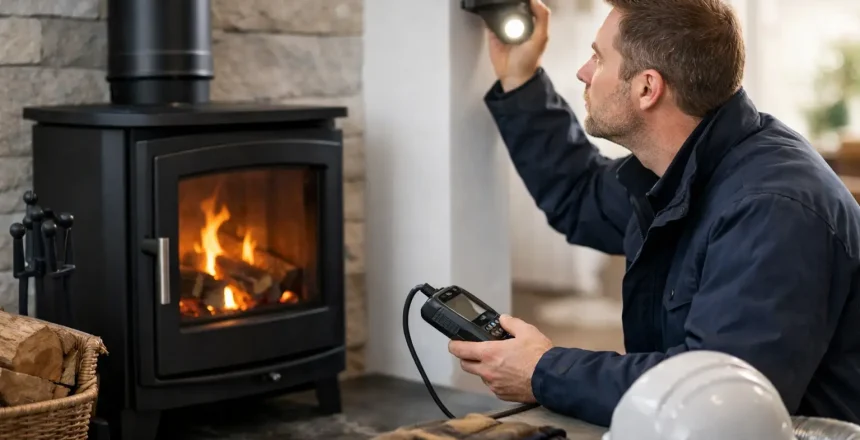
A stove can transform a cold sitting room into the warmest place in the house, but it is not a fit-and-forget purchase. Knowing how to meet HETAS stove requirements before choosing an appliance helps you avoid costly changes, keep your household safe and ensure the installation can be certified correctly.
The first point to understand is that HETAS is not a separate set of laws. It is a competent person scheme for solid-fuel and biomass heating. In practical terms, a HETAS registered installer can assess and install your stove in line with the relevant Building Regulations, then notify the work and provide the correct compliance documentation. That gives homeowners a clearer, more straightforward route to a legal installation.
Start with the right stove for your property
A compliant installation begins with an appliance that suits the room, chimney and way you intend to use it. Selecting a stove purely on appearance or headline heat output is one of the most common causes of poor results.
Heat output matters. A stove that is too large for the room will often be run with insufficient airflow, causing inefficient combustion and dirty glass. One that is too small may struggle to provide the warmth you expect. Room size, insulation levels, glazing, ceiling height and the role of the stove as a primary or supplementary heat source should all be considered during a survey.
For most new installations, the appliance must meet current Ecodesign requirements. If your property is in a Smoke Control Area, you will also need a stove approved for use with wood in that area, or you must use an authorised smokeless fuel where appropriate. These are separate considerations: an Ecodesign-ready stove is not automatically suitable for burning wood in every Smoke Control Area.
A professional survey is particularly valuable in newer, well-insulated homes. Modern properties can be very airtight, so combustion air and ventilation need careful planning from the outset.
How to meet HETAS stove requirements for the flue
The flue system is not simply a pipe that takes smoke outside. It creates the draw that allows the stove to burn properly and removes combustion gases safely from the home. Its condition, route, height and sizing all need to be assessed against the appliance manufacturer’s instructions and Building Regulations guidance.
Where an existing chimney is suitable, it may require a correctly sized flexible liner. This helps provide a continuous, sealed route for flue gases and is often essential where the chimney is old, oversized or has an uncertain internal condition. The liner, closure plate, insulation and terminal must work together as one properly designed system.
If there is no usable chimney, a twin-wall insulated stainless-steel chimney system can make a stove possible in many homes. It can be routed internally or externally, depending on the layout, clearances and visual preference. The route must be planned carefully around floors, walls, roof structures and neighbouring buildings. A system that looks simple on a sketch can involve significant technical detail once it passes through the building fabric.
Flue height is equally important. The terminal must be positioned to disperse smoke safely and reduce the chance of downdraught. A taller flue is not always the answer, and neither is copying the height of a neighbour’s chimney. The final design depends on the appliance, the route, roof shape, nearby obstructions and manufacturer guidance.
Provide a safe hearth and clearances
A stove produces substantial heat beneath, behind and around the appliance. The hearth and surrounding area must therefore protect the floor, walls and occupants from excessive temperatures and falling embers.
The required hearth construction depends on the stove’s tested hearth temperature and whether it is installed on a constructional hearth or a superimposed hearth. This is why a slate, tile or glass surface that looks suitable is not necessarily compliant. It must have the right dimensions, thickness and heat protection for the specific appliance.
Clearances to combustible materials are just as important. Timber beams, stud walls, skirting boards, flooring and decorative finishes can all be affected by heat. The distances stated by the stove manufacturer must be followed unless an approved shielding arrangement changes the requirement. Reducing a clearance without proper evidence is never a worthwhile shortcut.
Where a stove is fitted into an opening, the fireplace recess may also need building work to create suitable space and heat protection. This is especially relevant with older chimneys, where original openings were designed for open fires rather than modern closed appliances.
Check ventilation and carbon monoxide protection
Every solid-fuel stove needs enough oxygen to burn safely. Some smaller appliances in older, naturally ventilated homes may not need a dedicated air vent, but this must be confirmed rather than assumed. Larger outputs, certain appliance types and airtight properties can all require permanent ventilation directly to outside.
A vent should not be blocked because it feels draughty. If a room is uncomfortable, the correct answer is to review the installation design, not to restrict the stove’s air supply. Adequate ventilation supports cleaner combustion and helps prevent dangerous flue-gas issues.
A carbon monoxide alarm is a legal requirement for a new or replacement fixed solid-fuel appliance in England. It must be installed in the same room as the stove and positioned in accordance with the alarm manufacturer’s instructions. The alarm is an essential warning device, but it does not replace correct installation, suitable ventilation or responsible operation.
Use suitable fuel and operate the stove properly
Certification confirms that the installation was completed correctly. It cannot compensate for unsuitable fuel or poor day-to-day use. For wood burning, use dry, properly seasoned logs with a moisture content of 20% or less. Wet wood creates more smoke, deposits and pollution, while giving less useful heat.
For a multi-fuel stove, only burn fuels permitted by the appliance manufacturer. Different fuels burn at different temperatures and require different airflow settings. Using an unapproved fuel can damage the appliance, reduce efficiency and create a safety risk.
Once the stove is installed, take time to understand the controls. Running a fire too slowly for long periods is a frequent cause of smoky burning and excessive deposits in the flue. A good installer should explain how to light the stove, establish a clean burn and use it in line with the manufacturer’s guidance.
Make sure the work is notified and certified
This is the step that turns a physically installed stove into a properly documented one. You can use a HETAS registered installer, who is able to self-certify eligible work through the competent person scheme. Alternatively, the installation can be approved through your local authority Building Control process.
For most homeowners, using a HETAS registered engineer is the more convenient option. The installation is assessed as part of the work, notification is handled correctly and you receive a certificate showing that the installation has been registered. Keep this document safely with your property records. It may be requested by insurers, surveyors or prospective buyers when you sell.
Be cautious of anyone who offers to fit a stove but cannot explain how compliance will be achieved. A low initial figure can become expensive if the flue, hearth, ventilation or certification has been overlooked. A clear written quotation should set out what is included, what building work is needed and how the completed installation will be certified.
What happens during a professional stove survey?
A proper survey removes guesswork before installation day. The engineer will examine the intended location, measure the room and fireplace opening where relevant, assess the chimney or twin-wall route, and consider hearth, clearance and ventilation requirements. They will also discuss the fuel you plan to use and whether the property sits within a Smoke Control Area.
At Stove Specialists UK, the aim is to make this process hassle-free: from advice on a suitable stove through to flue design, necessary building work and final HETAS certification. Customer-supplied appliances can also be considered where they are appropriate for the proposed installation.
The safest route is to involve a qualified installer before ordering a stove, not after it has arrived. A short survey early on gives you the confidence to choose an appliance that fits your home, your heating needs and the rules that protect everyone living there.