
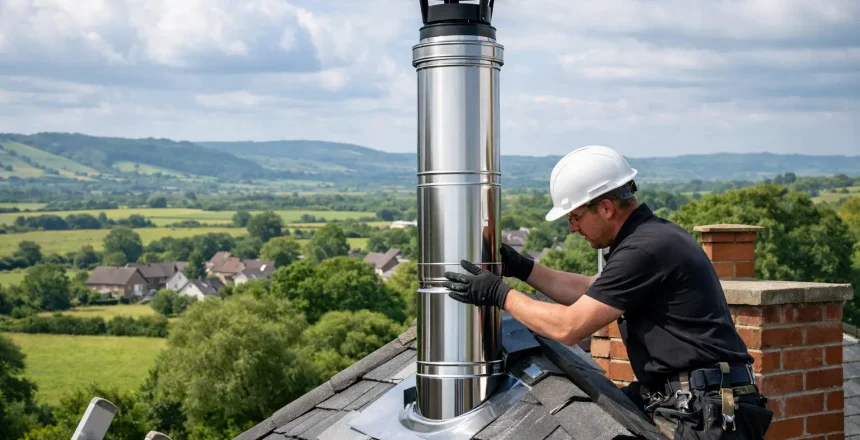
A wood burning stove can transform a Gloucestershire home, but the stove is only one part of the job. Where there is no usable chimney, twin wall chimney installers Gloucestershire homeowners trust can create a safe, purpose-built route for the flue gases to leave the property. The result should look considered, perform efficiently and, most importantly, meet the relevant safety requirements.
A twin wall system is not simply a metal pipe fitted through a roof. Its route, clearances, termination height and support all need to be planned around your property, your chosen appliance and the manufacturer’s instructions. A professional survey is the right place to start.
What a twin wall chimney system does
Twin wall flue is an insulated stainless-steel chimney system designed for properties without a conventional masonry chimney, or for rooms where using the existing chimney is not practical. It connects to the stove, passes safely through the building fabric or externally up the wall, and terminates at a suitable height above the roofline.
The insulation between the inner and outer walls is a major part of the design. It helps keep flue gases warm as they travel upwards, which supports a stronger natural draw and reduces the likelihood of excessive cooling within the flue. It also allows the system to maintain prescribed clearances from combustible materials when installed correctly.
For many homeowners, twin wall makes a stove possible in a new-build, extension, garden room or a living space with no fireplace at all. It gives greater freedom over where the appliance sits, although that freedom must be balanced against the practical route the chimney needs to take.
Why the installer matters as much as the stove
A stove installation involves fire, heat, combustion gases and the structure of your home. It is not a job to judge by appearance alone. A flue that looks neat can still be unsuitable if it is too close to timber, poorly supported, incorrectly terminated or paired with an appliance it cannot serve properly.
Experienced twin wall chimney installers in Gloucestershire will assess the complete installation rather than treating the chimney as a separate item. That includes the stove’s output, room size, ventilation needs, hearth arrangement, the proposed flue route and the type of wall or roof it will pass through.
This whole-system approach matters because every property is different. A detached cottage may allow a straightforward external route, while a terraced home may need careful consideration of neighbouring buildings, roof levels and access. A vaulted ceiling can create an attractive internal chimney feature, but it may require a different approach to shielding, support and roof penetration than a standard ceiling.
A HETAS registered installer can self-certify qualifying work and provide the appropriate certificate once the installation is complete. This gives you evidence that the work has been carried out in line with the applicable Building Regulations, and it is useful documentation to retain for future property matters.
Choosing the right flue route for your home
There are usually two broad options: an internal route that rises through the home and exits through the roof, or an external route that leaves through an outside wall before rising up the exterior of the property. Neither is automatically best.
An internal route often keeps more of the flue within the warm envelope of the home. It can be visually striking and may support good flue performance, but it requires suitable space above the stove and careful work where it passes through floors and the roof. It can also affect the layout of rooms above.
An external route can preserve internal space and is often a practical choice where the stove sits against an outside wall. However, the chimney still needs to rise to a compliant terminal position, with secure wall supports and a route that works around eaves, windows and roof projections. The visible finish should be considered early, especially on period homes or properties in prominent locations.
At your survey, an installer should explain why one route is preferable, not simply offer the quickest route. A sensible recommendation takes account of safety, performance, appearance and budget together.
What a proper survey should cover
Before work is booked, the property needs to be assessed in person or through a sufficiently detailed survey process. Measurements and photographs help, but there is no substitute for understanding the building’s construction and the intended use of the room.
The survey should establish whether the proposed stove output is appropriate for the space, whether a suitable hearth can be formed, and how the flue will pass through walls, ceilings or the roof. It should also identify combustible materials near the proposed route, such as timber joists, cladding, roof trusses or boxed-in services.
Ventilation is another important consideration. Modern homes can be tightly sealed, and a solid-fuel appliance needs an adequate supply of air for safe combustion. If the property has mechanical extraction or ventilation systems, these should be considered as part of the design rather than after the stove is fitted.
In Gloucestershire, planning considerations may occasionally apply, particularly for listed buildings, conservation areas or homes where the external appearance is closely controlled. This does not mean a twin wall system is impossible. It means the route and finish should be discussed properly before work begins.
Clear quotations prevent unwelcome surprises
The cost of a twin wall chimney installation depends on more than the length of chimney required. A simple external run from a ground-floor room is very different from a system passing through multiple storeys, a complex roof structure or difficult access conditions.
A clear quotation should set out the scope of work in plain language. Homeowners should understand whether it includes the stove fitting, hearth work, flue system, roof or wall penetration, labour, certification and any necessary building works. If you are supplying your own stove, check that the installer is happy to assess it for suitability before committing to the installation.
The cheapest figure is not always the best value. Saving money by cutting corners on the flue route, the fitting method or certification can create a far more expensive problem later. A professional installer should be able to explain the choices available and give an honest view of where spending more delivers a genuine benefit.
The installation day: what to expect
A well-managed installation starts with protecting the work area and confirming the agreed route before any work begins. The team will install the hearth and appliance position as required, construct the chimney system section by section, and form the correct penetrations through the building fabric using the specified components and safe clearances.
Once the physical work is complete, the stove and flue are tested and commissioned. You should be shown how to use the appliance correctly, including lighting it, controlling the air supply and choosing suitable dry fuel. This guidance is essential to getting good heat from your stove and helping the chimney operate as intended.
You should also receive your HETAS documentation where applicable. Keep it somewhere safe with your home paperwork. It is evidence of a professionally completed, compliant installation and supports 100% peace of mind from the first fire onwards.
Questions worth asking twin wall chimney installers Gloucestershire
The right installer will welcome sensible questions. Ask whether they are HETAS registered, how they determine the best flue route, what certification will be supplied, and whether they can manage the stove fitting and associated building work as one coordinated job.
It is also reasonable to ask how the finished chimney will look from inside and outside, particularly where the installation is visible on a front or side elevation. A good answer should be practical rather than dismissive. There can be constraints, but you deserve to understand them before the work starts.
Stove Specialists UK provides a fully managed service across Gloucestershire and surrounding counties, from initial advice and free quotation through to installation and certification. Whether you already have a stove in mind or need guidance on the right solution, the focus should always be on a safe design that suits your home.
The best time to resolve a chimney question is before the stove is ordered. Arrange a professional survey, talk through the route in detail, and choose an installation that gives you warmth, confidence and a finished result you will be pleased to live with.