
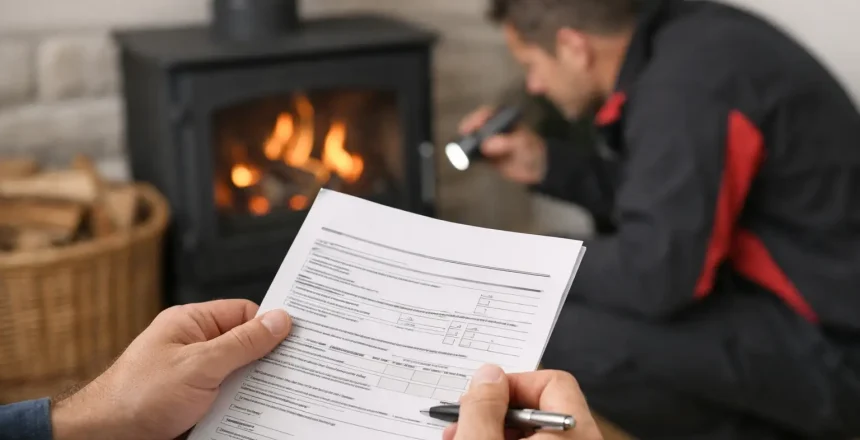
You have had a stove fitted, the fire looks right, the room feels transformed, and then someone asks for the HETAS certificate. That is usually the moment homeowners realise this document is not a nice extra – it is the formal proof that the installation was signed off correctly. If you are planning a new stove, replacing an old appliance, or fitting one in a property without an existing chimney, understanding the HETAS certificate early can save you hassle later.
A HETAS certificate is the document that confirms a solid fuel or wood-burning stove installation has been carried out in line with UK Building Regulations by a registered installer. In practical terms, it shows that the work has been assessed as compliant, safe and properly notified. For homeowners, that matters because a stove is not simply a decorative feature. It is a heating appliance connected to a flue system, combustion air supply and fire safety requirements.
Why a HETAS certificate matters
The value of a HETAS certificate tends to become obvious when you need to prove the installation is legal. That might be when you sell your home, when your insurer asks for evidence of compliance, or when you want confidence that the stove was fitted to the correct standard in the first place.
Without certification, you can find yourself trying to answer awkward questions after the job is done. A buyer’s solicitor may ask for proof the installation complies with Building Regulations. An insurer may want confirmation that the appliance and flue were installed correctly. If that paperwork is missing, sorting it out afterwards is often slower, more expensive and more stressful than getting it done properly from day one.
There is also the safety side, which is the more important issue. A compliant installation is about more than paperwork. It covers the suitability of the flue, the correct clearances to combustible materials, hearth dimensions, ventilation, chimney performance and the safe operation of the appliance. The certificate is the paper trail, but the real point is that the installation itself has been completed to a recognised standard.
When you need a HETAS certificate
In most cases, you need a HETAS certificate when a new solid fuel appliance is installed in a home. That includes wood-burning stoves, log burners and multi-fuel stoves. It also applies where significant installation work is carried out, such as a new flue liner, a twin wall chimney system, or a completely new stove setup in a room that did not previously have one.
The detail can vary depending on the type of property and the scope of work. A straightforward fireplace opening with an existing chimney is different from a new-build house with no chimney at all. Even so, the principle stays the same. If the work falls under Building Regulations, there needs to be a proper route to compliance.
That route is usually handled in one of two ways. The first is through a HETAS registered installer who can self-certify the work. The second is through local authority Building Control. For most homeowners, using a HETAS registered engineer is the cleaner and more convenient option because the compliance process is built into the installation.
Who issues the HETAS certificate?
This is where many people get confused. A HETAS registered installer carries out the work and notifies it through the proper scheme. The certificate is then issued as confirmation that the installation has been registered. In other words, the installer does not just hand over an informal note saying the stove looks fine. There is a formal compliance process behind it.
That distinction matters because not every general builder or fireplace fitter can provide the same certification route. A company may be perfectly confident in practical building work, but if it is not HETAS registered, it cannot self-certify the installation through the HETAS scheme. That can leave the homeowner needing a different sign-off route altogether.
For that reason, it is worth asking the question before work starts, not after. Who is carrying out the installation, are they HETAS registered, and will the work be formally notified so you receive the correct certificate? A dependable installer should answer that clearly.
What a HETAS certificate does and does not prove
A HETAS certificate proves the installation has been notified as compliant with the relevant Building Regulations through the competent person scheme. It gives you formal evidence that the work was completed by a registered professional and recorded properly.
What it does not do is replace good judgement about the appliance itself, fuel quality, or ongoing safe use. A correctly installed stove still needs to be used as intended, with the right fuel and sensible operation. It also does not remove the need for any other property-related checks that may apply in unusual situations, such as listed buildings or leasehold restrictions.
So while the certificate is essential, it works best as part of a properly managed installation from start to finish. That means survey, advice, correct specification, compliant fitting and final certification all lining up rather than being treated as separate jobs.
Why missing certification causes problems
The most common issue with a missing HETAS certificate is delay. A sale that should be straightforward suddenly stalls because a document cannot be found. A homeowner who thought everything was in order discovers that the stove was fitted years ago without proper notification. At that point, options can become limited.
Sometimes people assume they can sort the paperwork later with very little effort. In reality, retrospective compliance is rarely as simple as they expect. It may involve further inspection, additional cost and uncertainty about whether the original installation meets current standards. If hidden parts of the system were not installed correctly, the work may need more than just paperwork.
This is why a safety-first installation matters. The goal is not to chase certificates after the event. It is to have the stove fitted correctly, the flue and hearth properly considered, and the compliance side completed as part of the job.
Choosing an installer who handles the whole process
For homeowners, the easiest route is usually to work with a specialist who manages both the technical installation and the certification. That is especially helpful if your project is not a basic one. Homes without a usable chimney, properties needing a twin wall system, or installations that involve hearth and building work all benefit from a joined-up approach.
A company like Stove Specialists UK is set up around that full process. The value there is not just fitting the stove. It is making sure the recommendations, flue design, building work and final certification all point in the same direction. That gives you 100% peace of mind installation rather than a patchwork job with loose ends.
It also helps with budgeting and expectations. When compliance is treated as part of the service, you know what is included. You are less likely to run into surprise admin, missing paperwork or confusion over who is responsible for notification.
HETAS certificate questions homeowners should ask
Before agreeing to any installation, ask whether the work will be carried out by a HETAS registered engineer and whether certification is included. Ask what type of flue system is recommended and why. If your home has no existing chimney, ask how the new system will meet regulations. If building work is needed around the fireplace or hearth, ask who is handling that and whether it forms part of the compliant installation.
These are not awkward questions. They are sensible ones. A reliable installer should be able to walk you through the recommendations in plain English and explain what happens at the end of the job, including the certification process.
A HETAS certificate is not just paperwork
It is tempting to think of the HETAS certificate as the final envelope you file away and hope never to need. In reality, it represents something more useful than that. It shows the installation was approached properly from the outset, with safety, legality and long-term peace of mind built in.
If you are investing in a stove, make sure the certificate is part of the plan before any work begins. It is one of the clearest signs that the job is being done the right way, and that matters long after the first fire is lit.