
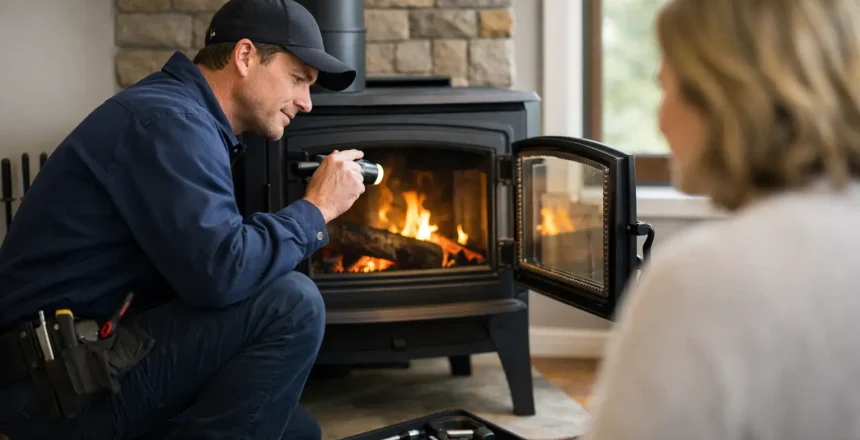
A stove can make a room feel warmer before the first log is lit, but the finished look is only one part of the job. Certified stove installers help ensure your wood burner, log burner or multi-fuel stove is safely fitted, properly ventilated and compliant with the relevant Building Regulations. That means less uncertainty for you, and the paperwork to prove the work has been completed correctly.
For homeowners, choosing the right installer is not simply about finding someone who can position a stove in an existing fireplace. A compliant installation may involve the appliance, hearth, chimney, flue route, insulation, ventilation and clearances to combustible materials. Each property has its own constraints, particularly in older homes, extensions and new builds.
What certified stove installers actually do
A qualified installer assesses the whole heating system, not just the stove itself. Before work starts, they should look at the room, the intended appliance, the chimney or proposed flue route, the hearth area and the construction of nearby walls and ceilings.
A HETAS registered engineer is able to self-certify eligible solid-fuel installations through the competent person scheme. Following completion, you should receive the appropriate certificate confirming that the work meets the required standards. This matters when you sell, remortgage or insure your home, and it gives you clear evidence that the installation has not been treated as a cosmetic building job.
The alternative route is to notify your local authority Building Control before work begins and arrange for their approval. That can be suitable in some circumstances, but it can add administration, cost and delay. For most homeowners, using a HETAS registered installer provides a more straightforward, fully managed route to compliance.
Safety depends on the complete installation
Stoves produce significant heat and combustion gases. Even an excellent appliance will not perform as intended if the chimney or flue system is incorrectly designed, if the hearth is unsuitable, or if the room does not have adequate air supply.
A professional survey identifies these requirements early. In a traditional property with a usable chimney, the work may include installing a correctly sized flue liner and making good the fireplace opening. In a home without a chimney, a twin-wall stainless steel chimney system can create a safe route through the building and above the roofline. Both are established solutions, but they require careful planning around clearances, weathering and the structure of the house.
Ventilation is another area where guesswork is not acceptable. Modern homes are often better sealed than older properties, which can affect the air available for combustion. Your installer should calculate whether permanent ventilation is required and explain why. The aim is to give the stove the air it needs while keeping the room comfortable and the installation compliant.
A survey should answer practical questions
The best time to deal with concerns is before a stove is ordered or building work begins. A proper survey gives you realistic options rather than a one-size-fits-all quote.
You should come away understanding whether your preferred stove is suitable for the room, whether an existing chimney can be used, and what work is needed to create a compliant hearth and flue arrangement. It should also clarify the likely visual result. Some homeowners want to retain a traditional fireplace opening; others prefer a freestanding stove with a visible chimney system. Neither approach is automatically better. It depends on the property, your heating needs and the finish you want.
Output is particularly worth discussing. A stove that is too large for the room may need to be run at a lower setting too often, which is not ideal for clean, efficient operation. A suitably sized appliance is more comfortable to live with and easier to use as intended. Certified stove installers should guide you towards a practical choice, not simply the highest heat output.
Why certification protects your property
A completion certificate is not a minor extra to file away. It is evidence that the installation has been carried out through the correct compliance route. Solicitors and prospective buyers commonly ask for it during a sale, and its absence can create avoidable questions at the worst possible time.
Certification also supports a safety-first approach. The standards cover issues that are easy to overlook when comparing only installation prices: the distance between the stove and nearby materials, the thickness and size of the hearth, the condition and route of the flue, and safe termination above the roof.
A low initial quote may not include everything required to finish the work properly. That does not always mean the quote is misleading, but it does mean you should ask exactly what is included. A clear proposal should set out the appliance if supplied, the flue or chimney system, hearth work, any required building works, installation, commissioning and certification. Transparent scope makes it far easier to compare like for like.
Questions to ask before you book
You do not need to become a stove expert to make a confident choice, but a few direct questions will help you separate a complete service from a vague estimate.
Ask whether the installer is HETAS registered and whether certification is included after completion. Confirm who will carry out the survey and installation, rather than assuming that the person preparing the quote will be on site. It is also sensible to ask how they will deal with your particular property type, especially if you have no existing chimney, a thatched roof, a listed building or a recently built, airtight home.
Discuss the scope of work in plain language. Will the installer create or alter the fireplace opening where required? Is the hearth included? Is a chimney liner or twin-wall system needed? How will the flue route affect the rooms and roof above? These are normal questions, and a dependable specialist will answer them clearly without burying you in jargon.
Finally, make sure you understand timescales, access requirements and what preparation is expected from you. A well-planned installation is usually less disruptive because decisions about the route, finish and building work have been made before the team arrives.
Supply and fit or installation-only?
There is no single right route. A supply-and-fit service can be the simplest option because the appliance and installation are planned together. The installer can recommend a stove with suitable output and dimensions, then take responsibility for the complete specification from survey through to certification.
Installation-only work can also be a good fit if you have already chosen or purchased a stove. In that case, it is especially important to arrange the survey before committing where possible. The appliance must still be appropriate for the room and capable of being installed to the required clearances and manufacturer guidance.
At Stove Specialists UK, the focus is on giving homeowners a practical, fully managed recommendation, whether the project is a straightforward fireplace installation or a new chimney system in a property with no suitable existing route. Free quotes, clear advice and a HETAS registered installation give you a firm basis for deciding what works for your home and budget.
Do not treat commissioning as an afterthought
The work is not finished when the stove is in position. Commissioning confirms that the installation is ready for use, and it is your opportunity to understand how to operate the appliance safely and efficiently. You should be shown the correct first-use procedure and given the certification documentation for your records.
Keep that paperwork with other important property documents. It offers reassurance now and saves time later if questions arise about the installation.
A stove should be a source of comfort, not a project you have to second-guess. Choose certified stove installers who survey carefully, explain the options honestly and provide the correct certification, and you can enjoy the warmth and character of your new stove with genuine peace of mind.