
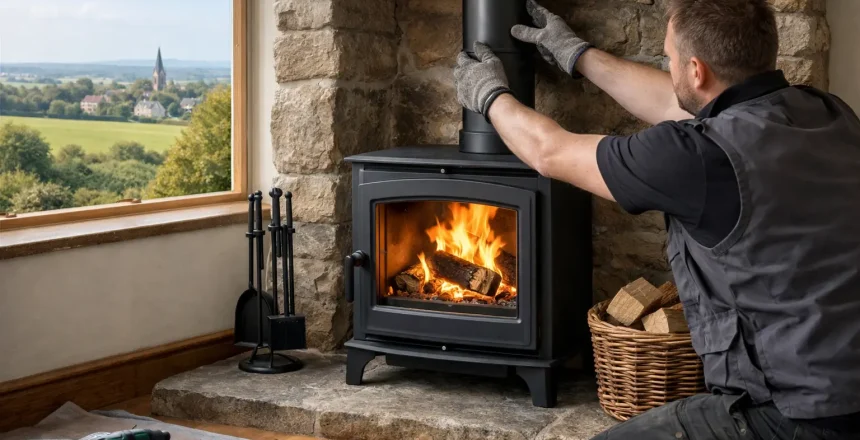
A wood burner should feel like a lasting improvement to your home, not a project filled with uncertainty. For wood burning stove installation Oxfordshire homeowners can rely on, the key is getting the survey, appliance choice, flue design and certification right before the first fire is lit. Whether you live in a period cottage, a village home with an existing fireplace or a newer property with no chimney, a professionally planned installation gives you warmth, visual appeal and 100% peace of mind.
At Stove Specialists UK, we manage the practical details that make a stove installation safe, legal and straightforward. That includes advising on the right route for the flue, preparing the fireplace area where needed, fitting the system and issuing the appropriate HETAS documentation on completion.
What a Wood Burning Stove Installation in Oxfordshire Involves
A stove is only as good as the system around it. The appliance, chimney or flue, hearth and surrounding clearances must work together in line with current Building Regulations and the manufacturer’s instructions. A professional installation begins with a proper assessment of the property rather than a guess based on the size of an old fireplace.
During a survey, an installer will consider the room size, the construction of the chimney, the available flue route, access to the roof, ventilation requirements and where the stove will sit. These details affect both safety and performance. A stove that is too powerful can make a room uncomfortably hot, while an unsuitable flue arrangement may lead to poor draw and disappointing results.
Oxfordshire has a broad mix of properties, from older stone cottages and Victorian terraces to extensions and modern homes. There is no single installation method that suits every property. An existing chimney may be a good candidate for lining, while a home without a chimney may need a purpose-designed twin wall stainless steel chimney system.
Existing fireplace and chimney installations
If your property has an open fireplace, it may provide a practical starting point, but it should still be surveyed carefully. The chimney needs to be suitable for a solid-fuel appliance, and in many cases a new flexible flue liner is fitted to create a dedicated, correctly sized route for the stove gases.
The fireplace opening may also need building work to achieve the required clearances and a neat finish. Depending on the design, this can include opening up a blocked fireplace, creating a non-combustible chamber or fitting a suitable register plate. The objective is never simply to make the stove fit. It is to create a safe, efficient installation that is straightforward to use.
Installing a stove where there is no chimney
No chimney does not mean no stove. Twin wall insulated flue systems allow a wood burning stove to be installed in many homes, including extensions, garden rooms and newer properties. The flue can often rise internally through upper floors and the roof, or follow an external route where that is the better option for the building.
This type of work needs thoughtful planning. The route must meet clearance requirements, terminate at the correct height and be supported properly. The best option depends on the layout of your home, its roofline and the position you would like for the stove. A survey provides clear answers before work begins, rather than leaving costly decisions until installation day.
Why HETAS Certification Matters
A wood burner installation is controlled building work. It must comply with Building Regulations, including the requirements around combustion appliances, hearths, flues, ventilation and carbon monoxide alarms. Using a HETAS registered engineer gives homeowners a clear route to compliant installation and the paperwork to show it.
Once the work is complete, your installer can self-certify it and provide a HETAS Certificate of Compliance. Keep this document with your household records. It can be requested by insurers and solicitors, particularly when you sell your property, and it confirms that the installation was completed through the correct process.
It is tempting to focus only on the appearance of the stove or the initial quote. Those matter, but certification and competent installation matter more. A lower price can become poor value if essential elements have been overlooked or the work does not meet the standards required for a safe solid-fuel installation.
Choosing the Right Stove for Your Room
The right stove should suit how you live as well as the dimensions of the room. Heat output is a major consideration. Larger is not automatically better. A living room in a well-insulated modern home may need considerably less output than a high-ceilinged room in an older property with single glazing.
A survey and discussion about your home will help establish an appropriate kilowatt rating. The installer should also consider whether the stove will be your main source of room heating, an occasional focal point or part of a wider heating plan. This keeps the recommendation practical rather than sales-led.
Your choice also needs to take account of local air-quality rules. Some areas may be designated Smoke Control Areas, where only authorised fuel or an exempt appliance can be used. Oxfordshire homeowners should check the position for their specific address before choosing how they intend to operate their stove. A knowledgeable installer can explain what this means in plain English and help ensure the appliance choice is suitable.
Hearths, Clearances and Ventilation
The visible elements of a stove installation are often what homeowners think about first, yet they are governed by important safety requirements. The hearth must be made from a suitable non-combustible material and extend far enough around the appliance. Its construction and size depend on the stove and the floor beneath it.
Clearances from combustible surfaces are equally important. Timber beams, plasterboard-lined walls, flooring and nearby furniture must all be considered. Some stove designs can be installed closer to a wall than others, but only where the manufacturer’s stated clearances and the required protective measures are followed.
Ventilation is another area where the answer depends on the property. Modern, airtight homes may require a dedicated air supply, while other installations may not. The correct approach is determined during the survey, using the appliance specification and Building Regulations guidance. A carbon monoxide alarm is also required in the room, providing an essential additional safeguard.
What to Expect From a Professional Installation
A well-managed installation should make the process feel clear from the start. You should receive a free quote based on your property and the work genuinely needed, not a vague estimate that leaves key elements open-ended. The quotation should explain whether it covers the stove, chimney liner or twin wall flue, hearth work, installation and certification.
Before the fitting date, your installer should talk you through access, likely timescales and any preparation required within the room. On site, care should be taken to protect the working area and complete the installation methodically. Once fitted, the stove and flue system should be tested, and you should be shown how to use the appliance safely and efficiently.
There are times when extra building work is needed, particularly in older fireplaces or homes where a completely new flue route is being created. This is not necessarily a problem. It is simply why an honest survey is so valuable. Knowing what is required at the beginning allows for an accurate plan, a realistic price and a finished result that looks right in the room.
Questions to Ask Before You Book
Before choosing an installer, ask whether they are HETAS registered, whether they will provide certification, and whether the quote includes the complete flue system and any required hearth work. It is also sensible to ask how they will assess ventilation, clearances and the suitability of your chimney or proposed flue route.
If you have already bought a stove, a specialist installer may still be able to fit it, provided it is suitable for the property and can be installed in accordance with its instructions. If you have not chosen one yet, supply-and-fit can make the process simpler because the appliance and installation are planned together from the outset.
Finance options can also help spread the cost where available, but the decision should always be based on the right installation for your home rather than the lowest headline figure. Great value comes from a system that is correctly specified, professionally fitted and ready to enjoy for years to come.
A warm, welcoming stove begins with the work you cannot always see: the right survey, the right flue route and the confidence of full compliance. Arrange a professional assessment and you can make your Oxfordshire home warmer with a solution designed around the property, not forced into it.