
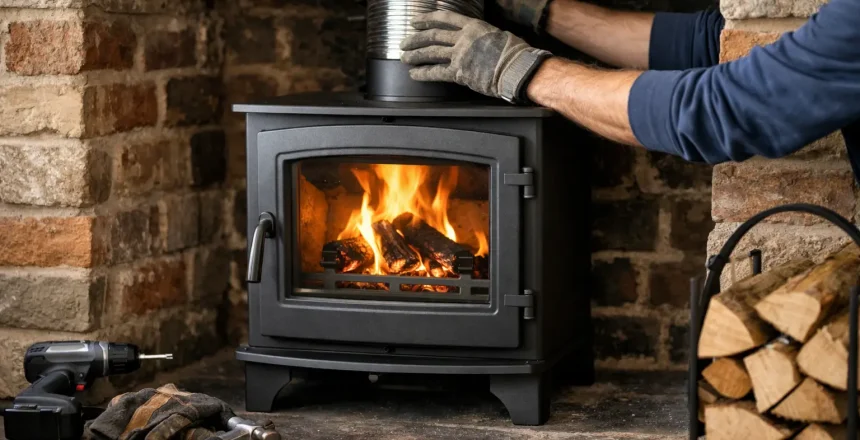
If you are looking up how to install wood burning stove in existing fireplace, you are usually at the point where an open fire no longer makes sense. It may look attractive, but it often wastes heat, draws badly, and leaves you with a fireplace opening that could do far more. A properly fitted stove changes that completely – but only when the installation is designed around safety, chimney condition and UK building regulations.
Installing a stove into an existing fireplace is not a case of sliding the appliance into the opening and connecting a pipe. In most homes, the work involves checking the chimney, confirming the recess is suitable, fitting the correct flue system, making sure the hearth meets current standards, and commissioning the stove correctly. Done properly, it gives you efficient heat, legal compliance and 100% peace of mind.
How to install a wood burning stove in an existing fireplace
The first stage is a proper site survey. This is where the fireplace opening, chimney breast, hearth, room size and ventilation are all assessed together. Many older fireplaces have been altered over the years, and what looks usable from the front can hide poor brickwork, an oversized recess, an unsuitable lintel height or a chimney that is not safe to use in its current condition.
A survey also confirms whether the stove output matches the room. Bigger is not always better. An oversized appliance can make a room uncomfortably hot and may encourage slumber burning, which is bad for efficiency and flue performance. The right stove should suit both the fireplace opening and the heating demand of the room.
Once the survey is complete, the fireplace opening is usually prepared. In some homes, this means opening up a blocked fireplace. In others, it means reducing or refining an oversized recess so the stove sits correctly and looks proportionate. It is common for some building work to be required here. That may include making the chamber safe, improving the finish around the opening, or installing a suitable lintel if the existing support is not adequate.
After that comes the flue design. In the vast majority of existing fireplace stove installations, a chimney liner is recommended. This improves the draw, helps the stove perform as intended, and reduces the risk associated with oversized or deteriorated chimney flues. The liner must be the correct diameter for the stove and fuel type, and the full system needs the right connections, closure plate and terminal arrangement.
Finally, the stove is positioned on a compliant hearth, connected to the flue system, tested and commissioned. The installation then needs to be signed off correctly, with certification confirming it meets the relevant standards.
Why an existing fireplace often still needs upgrading
Homeowners are often surprised that an old fireplace cannot simply be reused as it is. That is understandable. If the chimney has served an open fire for decades, it can seem like it should be ready for a stove. In practice, a stove places different demands on the system.
An open fire uses a large volume of air and generally vents into a much larger flue. A wood burning stove works more efficiently and in a more controlled way, which means the flue path needs to suit the appliance. If the chimney is too large, in poor condition or poorly insulated, you can run into issues with weak draw, condensation, soot build-up and unreliable performance.
The hearth is another common sticking point. Older hearths may be too small, too low, or not raised where required by current regulations. The chamber itself may also need attention, especially if the internal surfaces are unstable or the opening is too tight for safe clearances. This is why a managed installation matters. It removes the guesswork and makes sure each part of the system works together.
Chimney lining and flue connection
For many properties, the chimney liner is the heart of the installation. A suitable flexible stainless steel liner is normally dropped down the existing chimney and connected to the stove via a register plate and vitreous flue pipe or connecting section. The exact arrangement depends on the property and the appliance, but the principle is the same – create a safe, continuous flue route sized for the stove.
There are exceptions. Some chimneys are unsuitable for lining in the standard way and need a different solution. In other homes, especially where the original chimney route is no longer viable, a twin wall insulated flue system may be the better answer. That is why there is no one-size-fits-all method, even when the fireplace opening looks straightforward.
Hearth and recess requirements
The stove must stand on a hearth that meets current legal requirements for size, thickness and projection. This is not just about appearance. The hearth protects the surrounding area from heat and stray embers, and it forms part of the compliance picture.
The recess also needs the right clearances around the stove. Some models can be fitted neatly into an inglenook or chamber, while others need more space to the sides, above or behind. Those distances vary by manufacturer, and they should never be guessed. A stove that looks good but sits too tightly inside the opening can create avoidable safety issues.
Legal and safety points that matter in the UK
When homeowners ask how to install wood burning stove in existing fireplace, they are often really asking two things at once – what is physically involved, and what is legally required. In the UK, both matter equally.
A stove installation must comply with Building Regulations, including the parts that cover combustion appliances, flues, hearths and ventilation. Depending on the property and the stove output, an air vent may be required to provide sufficient combustion air. This is especially relevant in newer or more airtight homes.
The work should also be commissioned properly. That includes testing the flue, checking the draw, confirming safe operation and issuing the appropriate certification. Using a HETAS registered installer is usually the simplest route because the work can be self-certified, giving you a clear record that the installation has been completed correctly and legally.
This is not just paperwork. If you ever sell the property, certification helps avoid delays and questions from solicitors and surveyors. More importantly, it confirms that the stove has been installed with safety in mind from the start.
Can you fit a stove into any fireplace?
Not every fireplace is immediately suitable, but many can be adapted. A small opening may need to be enlarged. A damaged chamber may need rebuilding. An old chimney may need lining or a different flue arrangement altogether. What matters is whether the structure can safely accommodate the stove and whether the flue route can be made compliant.
There are also cases where the visual style of the fireplace influences the choice of stove. A compact contemporary model may suit a narrower opening, while a more traditional room may benefit from a larger chamber and a stove with a broader presence. The best result is usually one that balances performance, proportion and compliance rather than focusing on appearance alone.
If you are working with a period property, it is especially worth taking a measured approach. Older homes can be excellent candidates for stove installations, but they often need careful preparation to bring the fireplace up to modern standards without losing character.
The biggest mistake homeowners make
The most common mistake is treating the stove as the main item and the chimney as secondary. In reality, the stove and flue system are one working installation. A high-quality appliance cannot perform well on a poor flue, and even an attractive fireplace opening means very little if the chimney route is unsuitable.
The second mistake is underestimating the amount of building work that can be needed around the opening and hearth. Sometimes the installation is simple. Sometimes it involves opening up the chamber, reshaping the recess and creating a compliant base. Neither approach is a problem when it is planned properly, but surprises tend to happen when the job starts without a full assessment.
That is why a specialist survey saves time, cost and stress. It tells you what is possible, what is required, and what will give the best finished result in your home.
What a professional installation gives you
A professionally managed stove installation is about more than fitting a fire into a hole in the wall. It means the appliance is matched to the room, the fireplace is prepared correctly, the chimney system is designed to suit the stove, and the finished job is tested and certified.
For homeowners, that usually means a smoother process from start to finish. You know whether a liner is needed, whether the hearth needs changing, whether ventilation is required, and what building work is involved before the job begins. It is practical, compliant and far less hassle than trying to piece together the work yourself.
If your fireplace has the right potential, a wood burning stove can turn it into one of the hardest-working features in the house. The right place to start is not with the stove brochure but with a proper assessment of the fireplace, chimney and room – because that is what leads to a safe installation that looks right and performs properly for years to come.