
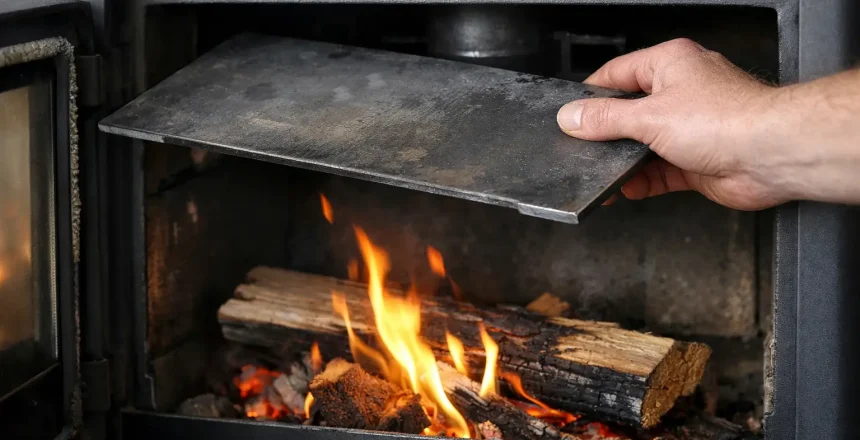
If your stove seems to be burning through logs too quickly, throwing heat in all the wrong places, or leaving you with a fire that feels harder to control, the wood heater baffle plate is often part of the conversation. It sits out of sight near the top of the firebox, but its job is central to how a stove performs, how efficiently it burns fuel, and how safely it handles hot gases.
For many homeowners, the baffle plate is one of those components they only hear about when choosing a stove or discussing installation details. That is understandable. It is not the feature you notice first. The door style, heat output and overall look usually get the attention. Yet the baffle plate has a direct effect on how well the appliance burns, how much warmth stays in the room, and how effectively the flue system works as a whole.
What does a wood heater baffle plate do?
A wood heater baffle plate is fitted inside the upper area of the stove and helps control the route that hot gases take before they leave through the flue. Rather than letting those gases rush straight up and out, it slows and redirects them. That extra control gives the stove more time to burn fuel gases properly and transfer useful heat into the room.
In practical terms, that means better efficiency. When combustion is managed properly, you get more heat from the wood you are burning and less waste going up the chimney. It also supports cleaner burning, which is important not only for performance but for the safe, lawful operation of a modern stove installation.
This is one reason professional stove specification matters. A stove is not just a box that burns logs. It is a heating appliance that relies on balanced airflow, suitable flue design and correct installation to work as intended. The baffle plate is part of that wider system.
Why the baffle plate matters more than most people think
The difference between a stove that feels steady and efficient and one that seems awkward or disappointing often comes down to how well the appliance manages heat and gases. The baffle plate plays a major role in that.
First, it improves heat retention within the stove body. By keeping hot gases in the appliance for longer, it helps the stove radiate more warmth into the space rather than losing that energy too quickly through the flue.
Second, it supports cleaner combustion. Many modern stoves are designed to burn smoke and gases more effectively, but they can only do that if the path of airflow and exhaust gases is controlled properly. The baffle plate helps create those conditions.
Third, it contributes to safer operation. Excessively rapid movement of hot gases can lead to poor burn control and unnecessary strain on the flue system. A properly designed installation takes all of this into account, from appliance selection through to chimney lining or twin wall flue specification.
That said, not every stove uses the exact same internal layout. The shape, material and position of the baffle area can vary between models. That is why it is always best to treat stove design as manufacturer-specific rather than assuming all appliances work in the same way.
How the wood heater baffle plate affects efficiency
When homeowners compare stoves, they often focus on nominal output, style and price. Those are sensible things to consider, but efficiency is just as important if you want reliable day-to-day performance.
The wood heater baffle plate helps improve efficiency by increasing the time hot combustion gases stay inside the stove. The longer those gases remain in the right environment, the more opportunity the appliance has to extract usable heat. This usually means better warmth from the same amount of fuel.
It also helps the fire burn in a more controlled manner. A stove that burns too fiercely can feel impressive at first, but it often means fuel is being consumed faster than necessary and heat is escaping where you do not need it. A well-designed stove should produce comfortable, consistent heat rather than simply racing through a load of logs.
There is a balance, though. Efficiency depends on more than one internal feature. Fuel quality, moisture content, chimney draw, room ventilation and the overall installation standard all matter. Even a well-designed appliance can disappoint if it is paired with poor fuel or an unsuitable flue arrangement.
Why installation quality still comes first
It is easy to focus on individual stove features, but homeowners get the best results when the whole installation is planned correctly. That includes choosing a stove suited to the room size, matching it to the right flue system and making sure all work complies with current UK requirements.
A baffle plate can only do its job properly when the appliance is installed in the right setting. If the flue draw is too strong or too weak, or the stove is not correctly specified for the property, performance can be affected. This is where expert guidance makes a real difference.
At Stove Specialists UK, the approach is always to look at the full picture. That means the stove, the chimney or flue route, the hearth, the surrounding construction work and the compliance side of the installation. Homeowners want warmth and visual appeal, but they also want confidence that the job has been carried out safely and signed off properly.
Signs your stove setup may not be performing as it should
A stove should light reliably, burn steadily and provide predictable heat when used with suitable fuel. If that is not happening, it may point to a wider setup issue rather than a single fault.
You might notice the fire burns too quickly and is hard to control. You may feel that a lot of heat is disappearing up the flue rather than staying in the room. In some cases, the stove may not seem to deliver the comfort level you expected from its quoted output. These are the kinds of situations where proper assessment is worthwhile.
It depends, of course, on the age of the appliance, the type of flue arrangement and whether the stove was chosen specifically for that room. In older properties, chimney condition can also have a major influence. In newer homes, airtightness and ventilation requirements may need careful consideration. The point is that stove performance should never be judged in isolation.
Choosing the right stove means looking beyond the brochure
A polished brochure can make one stove look much like another, but real-world performance depends on the engineering behind it and the quality of the installation. Homeowners are often best served by asking practical questions rather than chasing the highest output figure or the lowest headline price.
How will the stove behave in your type of property? Is the flue route straightforward, or will a twin wall system be needed? Is the room size appropriate for the appliance? Will additional building work be required to create a compliant setup? These details matter far more than marketing claims.
The same applies to internal stove design. Features such as the baffle arrangement support efficiency, but they only deliver their full benefit when the stove is suitable for the space and fitted correctly. That is why a proper survey is so valuable. It avoids guesswork and gives you a clear recommendation based on safety, legality and practical performance.
A professional approach gives you better long-term results
For most homeowners, a stove is not a small purchase. It is part heating appliance, part focal point, and part property improvement. Done well, it can add comfort, character and value. Done poorly, it can lead to frustration, compliance concerns and disappointing performance.
That is why it pays to work with a HETAS registered installer who can assess the complete system and guide you through the best option for your home. Whether the property has a traditional chimney, needs a new flue route, or requires hearth and building works, the goal should always be the same – a safe, efficient installation that performs as it should.
The wood heater baffle plate may be hidden from view, but it is a good example of why stove installations deserve proper attention to detail. Small design elements often have a big effect on how a stove burns, how much heat you enjoy, and how confidently you can use it through the colder months.
If you are planning a new stove or upgrading an existing fireplace opening, the best next step is not to guess which feature matters most. It is to get clear, professional advice on the complete installation, so the stove you choose works properly from day one.