
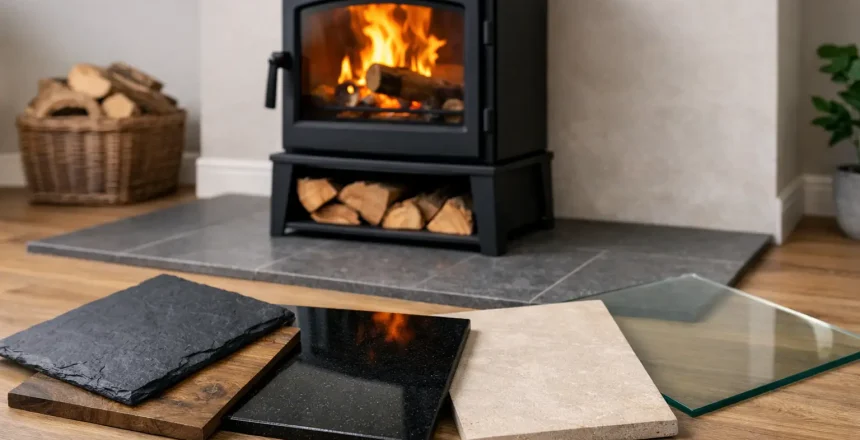
A hearth does far more than frame a wood burner beautifully. It protects the floor beneath your appliance, defines a safe installation area and forms part of a compliant installation. The best hearth materials for stove installation are therefore not simply the ones that suit your décor. They must also be non-combustible, appropriately sized and suitable for the stove, its heat output and its position in the room.
A good hearth choice begins with a professional survey. The appliance manufacturer’s instructions, the construction of the floor, surrounding combustible materials and Building Regulations all influence what is suitable. With the right advice, homeowners can achieve a finish that feels at home in a period cottage, a contemporary extension or a newly created fireplace.
What a Stove Hearth Needs to Do
A stove hearth is a protective base made from a non-combustible material. Its job is to prevent heat and embers from reaching a combustible floor surface such as timber, laminate, vinyl or carpet. It also gives the appliance a secure, level foundation.
There are two common arrangements. A constructional hearth is built into the structure of the building and is often used where a fireplace recess is being formed or altered. A superimposed hearth sits on top of the existing floor and can be an excellent option for certain freestanding stoves, provided the appliance has been tested to keep the temperature beneath it within the permitted limit.
This distinction matters. A slim hearth may look ideal in a modern room, but it is only suitable where the stove manufacturer confirms that it can be used. Where more heat protection is required, a thicker constructional solution may be necessary. This is why choosing a material before confirming the installation design can lead to unnecessary cost and delay.
Best Hearth Materials for Stove Installation in UK Homes
The right material depends on the look you want, the level of heat protection required and how the hearth will be constructed. These are the materials most often considered for compliant domestic stove installations.
Slate: a practical, timeless choice
Slate remains one of the most popular hearth materials, and for good reason. It is naturally non-combustible, dense, hard-wearing and well suited to both traditional and contemporary interiors. Its charcoal tones sit comfortably with cast-iron stoves, exposed brickwork and lighter plastered chimney breasts.
A riven slate surface has natural texture and character, while honed slate provides a flatter, more refined appearance. The latter is often preferred in cleaner-lined, modern spaces. Slate can show dust and ash less readily than pale finishes, making day-to-day housekeeping straightforward.
As with any natural material, colour and texture vary from piece to piece. Slate should be properly supported on a level base, and the correct thickness must be selected for the proposed appliance and hearth specification. It is a strong all-round choice when you want a traditional finish without making the room feel overly formal.
Granite: durable with a polished finish
Granite gives a hearth a more formal, premium appearance. It is extremely durable, non-combustible and available in a range of colours, from deep black through grey and speckled natural tones. A polished black granite hearth can create a striking contrast beneath a stove, particularly against a pale wall or a simple opening.
Its smooth surface is easy to wipe clean, but it can show dust, fingerprints and ash more clearly than textured slate. Polished finishes may also feel visually strong in a small room, so it is worth considering the size of the hearth and the amount of natural light in the space.
Granite is heavy and requires careful handling and proper support. It is an excellent choice where a crisp, high-end finish is the priority and the installation design allows for it.
Natural stone: character for period properties
Stone hearths, including limestone, sandstone and similar natural products, offer a softer, more traditional appearance. They can be particularly effective in cottages, older properties and rooms with timber beams, stonework or an inglenook-style fireplace.
The trade-off is maintenance and variation. Lighter stone can mark more readily if ash or soot is allowed to sit on the surface, and some porous stones benefit from an appropriate sealant. Natural veining, fossils and colour differences are part of their appeal, but homeowners looking for a perfectly uniform finish may prefer slate, granite or porcelain.
Not every stone is equally hard-wearing, so the chosen product should be assessed for hearth use rather than selected solely from a showroom sample. A professional installer can advise whether the intended stone and thickness are suitable for the installation.
Porcelain and ceramic tile: flexible design options
Tiles offer the widest choice of colour, pattern and finish. Large-format porcelain can give a clean, contemporary hearth with minimal grout lines, while traditional ceramic tiles can complement a Victorian or Edwardian fireplace. Both materials are non-combustible when correctly installed over a suitable non-combustible base.
Porcelain is generally denser and less porous than standard ceramic, making it a particularly practical choice for a busy family room. It is available in convincing stone- and slate-effect designs, which can help achieve a certain look at a more controlled cost.
The key consideration is the complete build-up beneath the tiles. Grout, adhesive, backing board and the supporting structure must all be suitable for the temperature conditions and required hearth construction. A tiled hearth can look superb, but it should never be treated as a purely decorative floor finish.
Toughened glass: minimal and contemporary
Toughened glass hearths are increasingly popular for freestanding stoves in modern extensions and open-plan rooms. Their transparent finish allows timber, tile or another existing floor surface to remain visible, creating a lighter visual effect than a dark stone slab.
Glass must be specifically manufactured and rated for stove-hearth use. It is not a standard piece of toughened glass from a general glazing supplier. When the stove’s tested temperature data permits a 12mm superimposed hearth, purpose-made toughened glass can be a neat solution.
It does, however, show dust, ash and smears more quickly than darker materials. It may also be less forgiving visually where the floor beneath has noticeable imperfections. Glass works best when you want the stove to appear visually separate from the flooring rather than anchored to a traditional fireplace setting.
Concrete: industrial style with a bespoke feel
Concrete can provide a simple, architectural hearth, especially in a contemporary renovation. It can be cast to suit unusual sizes and shapes, allowing a hearth to align neatly with a chimney breast, feature wall or freestanding installation.
The finish needs careful planning. Concrete can be smooth and refined, lightly textured or more industrial in character, but it may have natural tonal variation and small surface marks. It should also be sealed appropriately where required to reduce staining. A properly designed concrete hearth can be highly effective, but it is best treated as a made-to-measure building element rather than a quick finishing choice.
Thickness, Size and Clearances Matter More Than Appearance
Material is only one part of a safe hearth. The dimensions and thickness must match the stove and the way it is being installed. For some appliances, a 12mm non-combustible superimposed hearth is permitted where the manufacturer confirms that the floor beneath will not exceed 100°C. Other installations require a more substantial constructional hearth.
Hearth projections are equally important. For a stove positioned in an open room, the hearth normally needs to extend beyond the appliance at the sides and to the front, with the required dimensions determined by the appliance and installation arrangement. Stoves installed in a recess have different considerations, including the depth of the opening and the protection needed in front of it.
Clearances to combustible walls, flooring and nearby finishes must also be checked. A beautiful slate or glass hearth cannot make an unsuitable stove position compliant. The full installation must work together: appliance, flue route, fireplace opening, chimney arrangement and hearth.
Choosing a Hearth That Suits Your Home
Start with the practical question: is your stove going into an existing fireplace, against a wall, or in a room with no chimney where a twin-wall flue system is required? This determines the likely hearth construction before colour or finish enters the conversation.
Then consider how the room is used. A dark slate hearth is forgiving in a busy family living room. A polished granite slab can suit a more formal space. Glass is effective where a contemporary stove needs to feel light and unobtrusive, while natural stone creates warmth and character in a traditional setting.
Budget should include more than the visible slab or tiles. The preparation of the floor, any building work, the hearth base and the fitting all affect the finished cost. Choosing a cheaper surface that is unsuitable for the required hearth design is rarely a saving.
At Stove Specialists UK, a HETAS registered engineer can assess the property, explain the practical options and complete the installation with the appropriate certification. That gives you a hearth selected for the stove and the home, not just one that looked right in a photograph.
A well-chosen hearth should quietly do its job for years while making the stove feel like it has always belonged in the room. Begin with safety and compliance, then choose the material that makes you pleased to light the fire every time.