
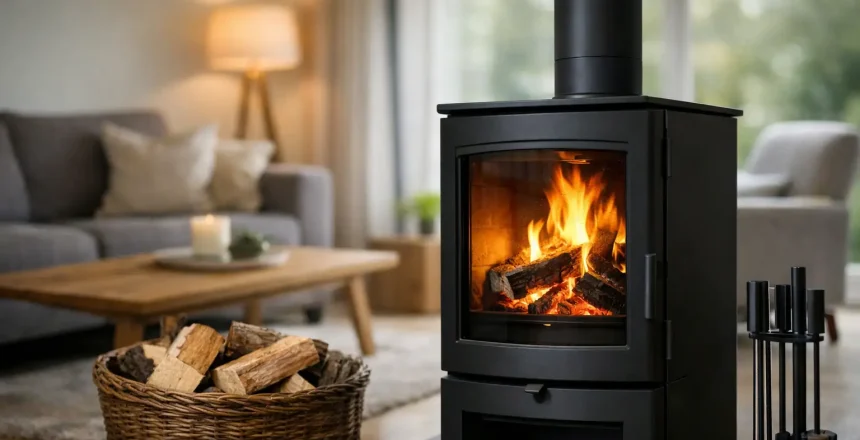
A stove that is too small will struggle on the coldest evenings. One that is too large can make your living room uncomfortably hot, encourage inefficient slumbering and leave you opening windows to cool down. If you are asking, “what size stove does my room need?”, the answer is usually measured in kilowatts, but choosing the right output involves more than a quick measurement.
The room’s size is the starting point. Its insulation, ceiling height, glazing, layout and the way you want to use the stove all affect the final recommendation. A professional survey is the safest way to match the appliance, flue system and ventilation to your home while ensuring the installation meets current requirements.
What size stove does my room need in kW?
For a straightforward first estimate, calculate the volume of the room in cubic metres, then divide it by 14. The result gives an approximate stove output in kilowatts for a reasonably insulated home.
To find room volume, multiply the room’s length by its width and ceiling height. For example, a room measuring 5 metres by 4 metres with a 2.4-metre ceiling has a volume of 48 cubic metres. Dividing 48 by 14 gives 3.4kW. In practice, you would normally look at a stove with a nominal output around 3kW to 4kW, depending on the property.
This is a useful rule of thumb, not a substitute for assessing heat loss. A Victorian house with single glazing, draughty floors and external walls may need more heat than the calculation suggests. A recently insulated new-build with modern windows may need less. The aim is not to buy the highest kW rating possible. It is to choose a stove that provides comfortable heat at its normal, efficient operating level.
Measure the space you actually want to heat
Start with the room where the stove will be installed, but do not stop there if heat will naturally move elsewhere. An open-plan kitchen and living area, a wide archway into a dining room or a staircase rising directly from the lounge can all increase the area that needs heating.
Equally, doors matter. A stove in a snug with a door that is usually kept closed should be sized for that snug, not for the whole house. If your main goal is to add a warm focal point while central heating continues to heat the rest of the property, a lower-output stove is often the better choice.
High ceilings deserve particular attention. A room with a vaulted ceiling may have far more air volume than its floor area suggests, and heat rises. Ceiling fans, careful stove positioning and realistic expectations about where warmth will collect may all be relevant during the design stage.
Why insulation changes the stove size you need
Two rooms with the same dimensions can require very different stove outputs. The difference is heat loss. Before recommending a stove size, a knowledgeable installer will consider how quickly the room loses heat through walls, windows, floors, the roof and unwanted draughts.
A well-insulated room with double or triple glazing, filled wall cavities and a modern insulated floor retains warmth for longer. It may be comfortable with a smaller stove than the basic calculation indicates. In contrast, an older property with solid external walls, a suspended timber floor and older windows may require a higher output.
It also depends on the room’s position. A north-facing room with several external walls will generally feel colder than an internal room of the same size. Large glazed doors look excellent but can increase heat loss, especially after dark. An extension may be well insulated but have extensive glazing, while a converted barn may have a large volume and more challenging fabric to heat.
This is where a site survey earns its value. Rather than treating every 50-cubic-metre room as identical, the survey considers the building as it stands and explains the sensible output range for your circumstances.
Nominal output matters more than the maximum figure
When comparing stoves, you may see both a nominal output and a maximum output. The nominal figure is the one to focus on. It represents the heat the stove is designed to deliver efficiently during normal use.
A stove advertised as 5kW may have a working range around that figure, with a higher maximum output under certain firing conditions. Choosing it purely because its maximum rating looks impressive can lead to an oversized installation. A stove that regularly has to be turned right down is not being used as intended and may produce less clean combustion.
For many average UK living rooms, 4kW or 5kW is sufficient. That does not mean 5kW is right for every room. Smaller, well-insulated lounges often suit 3kW to 4kW, while larger open spaces or properties with greater heat loss may need 6kW or more. The correct choice comes from the room, not from a one-size-fits-all recommendation.
Do not size a stove for the coldest hour of the year
It is understandable to want plenty of heat when a hard frost arrives. However, sizing a stove only for the very coldest conditions can leave it oversized for the much more common autumn, spring and milder winter days.
A correctly selected stove should be enjoyable to run across most of the heating season. You should not need to sit too close to it, keep doors and windows open, or continually restrict the air controls to make the room bearable. Comfort, clean burning and controllability are better measures of success than the largest possible heat output.
If your property has unusually high heat loss, improving insulation or reducing draughts can be worth considering alongside the stove installation. Retaining the heat you generate can reduce the output required and improve everyday comfort throughout the home.
Stove size, chimney and ventilation must work together
The stove is only one part of a safe installation. Its output must be considered alongside the chimney or flue route, hearth, clearances to combustible materials and the air supply available in the room.
Homes are increasingly airtight, particularly where windows and doors have been upgraded. Some installations need a dedicated source of combustion air, and this should be assessed properly rather than guessed. The right provision supports efficient burning and helps prevent the stove drawing air from unsuitable places in the home.
If you do not have a usable chimney, a twin wall stainless steel chimney system can make a stove possible in many properties. The flue route, terminal position and clearances must be designed for the building and appliance. This is not an area for choosing a stove first and hoping the rest will fit around it.
A compliant installation also includes an appropriate hearth and a carbon monoxide alarm. Using a HETAS registered engineer gives you the reassurance that the work is assessed against the relevant standards and that you receive the correct certification on completion.
A practical way to choose your stove output
Begin by measuring the room accurately, including ceiling height, and use the volume divided by 14 calculation as an initial guide. Then consider whether the room is well insulated, exposed, open-plan or connected to other areas you expect the stove to warm.
Next, think honestly about how you will use it. A stove intended as a cosy evening heat source needs a different approach from one expected to provide substantial daily heating. Make a note of large windows, external walls, nearby doorways and any existing chimney arrangement. These details help an installer give a useful recommendation rather than a generic answer.
At Stove Specialists UK, a survey can establish the appropriate stove output and the practical work needed to deliver a safe, fully managed installation. Whether you are using an existing fireplace or planning a new flue route, the priority is a stove that suits the room, the property and the way you live.
The best stove size is the one that keeps your room comfortably warm without being overpowering. Measure carefully, allow for the character of your home, and ask for a professional recommendation before committing to an output.