
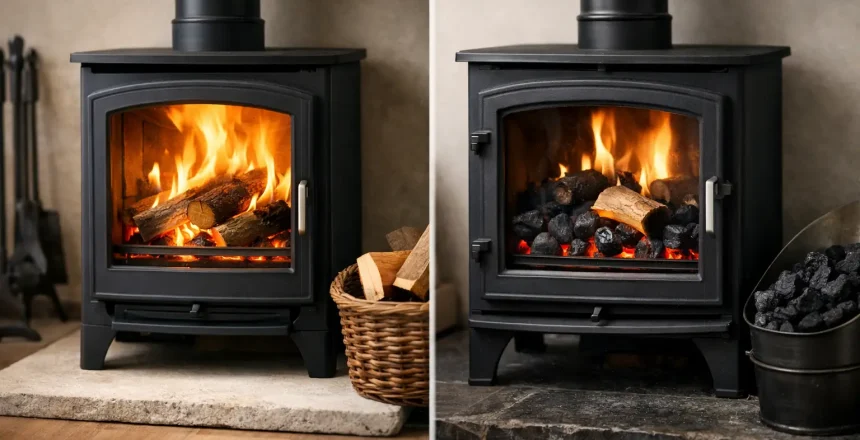
A stove should suit the way you genuinely heat your home, not simply the fuel that sounds most convenient. When weighing up a wood burner vs multi fuel stove, the key question is whether you want to burn seasoned wood only or retain the flexibility to use approved smokeless fuels as well. Both can create a welcoming focal point and deliver useful room heat, but they burn differently and need to be chosen with the installation, chimney and local regulations in mind.
For many households, a dedicated wood burner is the straightforward answer. For others, particularly those who want a longer, steadier burn from solid fuel, a multi-fuel model may be the better fit. Here is what to consider before you decide.
Wood burner vs multi fuel stove: the main difference
A wood burning stove is designed specifically for logs. It normally has a flat firebed where ash builds up during use, helping to insulate the fire and support efficient wood combustion. Air is generally supplied from above or behind the fuel, encouraging the gases released by burning logs to ignite properly.
A multi-fuel stove is designed to burn wood and certain solid fuels, subject to the manufacturer’s instructions. It commonly uses a grate, allowing air to travel up through the fuel from below. Ash falls into a removable ashpan beneath the grate, which makes sense for smokeless fuel because it needs a stronger flow of air through the firebed.
This difference may sound minor, but it affects day-to-day performance. Wood tends to burn best on a bed of ash with air fed from above. Smokeless fuel performs better with a grate and under-air. A multi-fuel stove can burn logs, but a dedicated wood burner is often more naturally optimised for regular wood burning.
Choose a wood burner if logs will be your main fuel
A wood burner is a strong choice for homeowners who plan to burn dry logs almost exclusively. It is simple to operate once you understand the appliance’s air controls, and it can provide lively flames and responsive heat for evenings and weekends.
The quality of your logs matters more than the label on the stove. In England, wood sold in small quantities for domestic burning must have a moisture content of 20% or less. Dry, properly stored logs light more easily, burn cleaner and give more useful heat. Wet wood wastes energy boiling off water and can create excessive deposits in the flue.
A wood-only appliance can also make the right operating method easier to follow. You build a fire, allow it to establish, then adjust the air supply as the stove manual recommends. The best result is a bright, clean burn rather than a fire starved of air for long periods.
Wood burners are particularly popular where homeowners have a reliable log supplier, suitable storage space and a preference for the look and routine of a real log fire. They can work well as a secondary heat source in a living room, kitchen-diner or open-plan family space, provided the heat output is properly matched to the room.
Choose a multi-fuel stove if flexibility is essential
A multi-fuel stove gives you a wider fuel choice. Alongside suitable dry wood, it may burn authorised smokeless fuels. This can be helpful if you want fuel that is easier to store, provides a slow, sustained heat output or is available locally when logs are not.
That flexibility comes with responsibility. Not every fuel is suitable for every stove, and not every solid fuel is permitted in every location. You should follow the appliance manufacturer’s fuel guidance exactly. Burning an unsuitable fuel can reduce efficiency, create unnecessary emissions and invalidate the basis on which the stove was tested.
Multi-fuel models also involve a slightly different daily routine. The grate and ashpan need regular attention, particularly when burning smokeless fuel. Some households appreciate the controlled, long-lasting heat this can provide; others prefer the simpler wood-burning approach and do not need the additional choice.
If your intention is to burn logs most of the time, do not assume multi-fuel automatically means better. It means more versatile. The best stove is the one designed around your normal fuel, not the one with the longest list of possibilities.
Heat output matters more than fuel type
It is easy to focus on wood versus smokeless fuel and overlook the more important question: how much heat does the room need? A stove that is too large for the space will encourage low-temperature, restricted burning. A stove that is too small may struggle to make the room comfortable during cold weather.
Heat loss, room size, insulation levels, glazing, ceiling height and whether doors are usually open all influence the correct output. A well-insulated modern room can need far less heat than an older room of the same size. This is why a professional survey is valuable before selecting an appliance.
The stove also needs to work with the route for the flue. An existing chimney may require lining, while a property without a usable chimney may need a twin-wall stainless steel chimney system. Both routes can be suitable when designed and installed correctly, but the practical layout can influence the stove size and position that make most sense.
Smoke control areas and clean burning rules
Many UK homeowners live in smoke control areas. In these locations, you must use an exempt appliance if you want to burn wood, and you must use authorised fuel where applicable. An exempt stove is commonly described as DEFRA-approved, although it is worth checking the exact appliance status rather than relying on general wording.
Modern Ecodesign stoves are designed to meet stricter emissions requirements than older models. They are a sensible option for homeowners who want cleaner combustion and better efficiency, but they still need correct fuel and operation. Even an efficient stove will not perform as intended if it is loaded with damp logs or run with insufficient air.
Your installer should also consider ventilation. Homes have become increasingly airtight, and a stove needs enough permanent air supply to burn safely. Depending on the appliance output and the property, an air vent may be required. Extractor fans, mechanical ventilation and the presence of other fuel-burning appliances should all be considered during the survey.
Installation is not just about fitting the stove
Whether you choose wood-only or multi-fuel, the installation must comply with Building Regulations. This includes the hearth, clearances to combustible materials, flue sizing, chimney condition, terminal position and carbon monoxide alarm provision.
A HETAS registered engineer can assess these details, complete the installation and provide the appropriate certification. This gives you confidence that the work has been carried out to the required standard and helps avoid the uncertainty of trying to piece together a stove system without specialist guidance.
For homes with an existing fireplace, the work may involve opening up the recess, assessing the chimney and creating a suitable hearth. For a new-build, extension or house with no chimney, a carefully planned twin-wall flue system can make a stove possible without compromising safety or appearance. The right answer depends on the property, not a one-size-fits-all package.
Cost and running considerations
The purchase price of a stove is only one part of the decision. You should also allow for the flue system, hearth, building work where required, installation and certification. A free survey and clear quotation make it far easier to compare the full project cost rather than judging appliances in isolation.
Running costs depend on local fuel prices, how efficiently you use the stove and how much heat your home retains. Logs can be economical when bought dry from a dependable supplier and stored properly. Smokeless fuel may cost differently but can offer a longer, more consistent burn. Neither is universally cheaper because household habits and regional supply vary.
It is also worth thinking about effort. Burning wood involves carrying, stacking and seasoning or buying ready-to-burn logs. Multi-fuel use may involve more frequent ash management. Choose the routine you will be happy to keep up with through the colder months.
The right choice for your home
Choose a wood burner if you want to burn dry logs as your primary fuel and value a stove purpose-built for that task. Choose a multi-fuel stove if authorised smokeless fuel is a meaningful part of your plan and you value flexibility enough to accommodate a different operating routine.
Before committing, have the room, chimney or proposed flue route assessed by a qualified installer. Stove Specialists UK can walk homeowners through the options, from appliance choice and hearth requirements to a compliant installation and HETAS certification. A well-chosen stove should feel simple to live with, efficient to run and reassuringly safe every time you light it.