
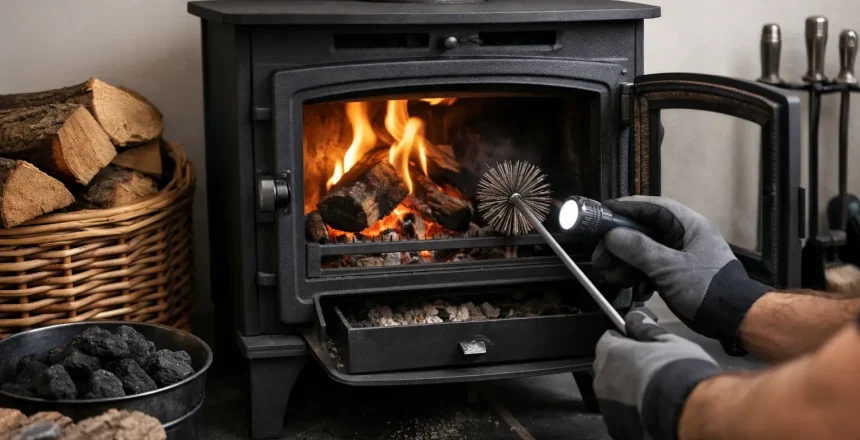
A stove that looks perfectly positioned can still fail on the detail that matters most – clearance. Multi-fuel stove clearance is not just about leaving a bit of space around the appliance. It affects fire safety, heat performance, legal compliance and whether your installation can be signed off properly.
For many homeowners, this is where confusion starts. Stove brochures often give headline dimensions, but those figures do not always tell the full story once you factor in the fireplace opening, wall finish, hearth size, flue route and the manufacturer’s stated distances to combustible materials. That is why clearance should be worked out as part of the installation plan, not guessed once the stove has arrived.
What multi-fuel stove clearance actually means
In simple terms, clearance is the safe distance that must be kept between the stove, flue components and surrounding materials. That can include timber beams, plasterboard, skirting boards, flooring, furniture and decorative finishes. Some materials may look solid enough to cope with heat, but if they are combustible or heat-sensitive, the required gap can be greater than many people expect.
There is no single clearance rule that suits every stove. The correct distances depend on the appliance model, its heat output, whether it is freestanding or fitted into a recess, the type of flue system being used and what sits around it. Manufacturer instructions are central, and they work alongside UK building regulations rather than replacing them.
This is where professional guidance makes a real difference. A stove might fit physically into a fireplace chamber, but if it sits too close to combustible material or does not allow for proper heat dispersal, it may not be safe or compliant.
Why clearance matters more than appearance
A stove installation should look right in the room, but appearance has to come after safety. When clearances are too tight, heat can build up where it should not. That creates risk around nearby combustible materials and can also affect how the appliance performs over time.
Too little space around a stove can make servicing access more awkward, restrict airflow and limit your options on hearth design or mantel placement. It can also create problems during installation if building work has already been completed to the wrong dimensions. We regularly see homeowners plan the opening around the look they want, only to find the stove they like cannot legally or safely sit there.
A well-planned installation avoids that. It gives you a stove that works efficiently, looks balanced in the room and comes with the reassurance of proper certification.
Multi-fuel stove clearance to combustibles
The phrase you will hear most often is clearance to combustibles. This refers to the distance required between the stove or flue and any material that can catch fire or degrade under heat. Timber lintels, oak beams, stud walls and certain decorative surrounds are common examples.
The exact figures vary by stove model. Some appliances are designed to reduce rear or side distance requirements, while others need more generous spacing. The same applies to flue systems. Twin wall insulated flue has its own clearance requirements, and these must be respected throughout the full route, including where the system passes near ceilings, joists and roof structures.
This is why a room-by-room approach matters. A detached stove in an open inglenook may allow comfortable spacing, while a tighter chimney breast opening may need alterations before the chosen appliance can be installed safely. If your property has older construction details, unusual timbers or a decorative surround you want to keep, the installation plan may need to be adapted rather than forced.
Non-combustible surfaces still need thought
One of the most common assumptions is that masonry solves everything. It does not. Even when the surrounding structure is non-combustible, the stove still needs the correct space for the manufacturer’s instructions, heat circulation and practical fitting. A fireplace recess may be brick-built, but if the opening is too tight, the stove can still be unsuitable for that setting.
Clearance is also about usability. You need enough room for safe operation, sensible positioning of the flue connection and a layout that does not leave the stove cramped into the opening.
Hearth clearance and floor protection
The hearth is another area where estimates often go wrong. Homeowners sometimes focus on the visible footprint of the stove and forget that the hearth must project beyond it in line with current requirements. The right hearth size depends on the appliance type, installation method and the temperatures involved beneath the stove.
A compliant hearth does two jobs. It protects the building from heat and provides a defined safe zone in front of the appliance. If the stove sits too close to the front edge, or if the side margins are too tight, the installation may need redesigning. That can affect not only safety but also the look and feel of the finished fireplace.
In practical terms, hearth planning should happen at the same time as stove selection. Leaving it until the end can create avoidable compromises.
Fireplace recesses and opening sizes
Many customers start with the question, Will this stove fit my fireplace? The better question is, Will it fit with the correct clearances? Those are not the same thing.
A stove recessed into a chimney opening needs enough room around it to meet the appliance guidance and to allow proper installation of the flue connection and closure plate where required. If the recess is too shallow or too narrow, the answer may be to choose a different model or carry out building work to alter the chamber safely.
Older fireplaces can be especially unpredictable. Once opened up, the chamber may reveal uneven brickwork, unsuitable dimensions or structural details that affect the final layout. That is why site surveys are valuable. They replace guesswork with measured recommendations.
Decorative beams and surrounds
Decorative timber beams are popular, but they need careful positioning. A beam placed too close to a stove opening may not comply, even if it looks right visually. The same applies to timber surrounds, shelves and nearby panelling.
Sometimes the safest route is simply to adjust the design. In other cases, a different stove size or a revised opening height gives you the look you want without compromising compliance. It depends on the room, the materials and the appliance chosen.
Flue clearance is part of the same conversation
When people think about stove clearance, they often picture the appliance itself and overlook the flue. In reality, the flue route is just as important. Whether the installation uses an existing chimney with a liner or a new twin wall system, safe spacing from combustible materials must be maintained throughout.
This becomes particularly important in homes without a conventional chimney, barn conversions, extensions and newer properties where the flue passes through walls, ceilings or roof spaces. A well-designed system can still be achieved, but the route needs to be planned properly from the outset.
That is one reason an end-to-end installation service is valuable. The appliance, hearth, chamber and flue all affect each other. Treating them as separate decisions often leads to delays, redesign costs or compliance issues later on.
Can you reduce multi-fuel stove clearance?
Sometimes yes, but only within the rules that apply to the appliance and installation method. Some stoves are specifically designed with tighter distance requirements. In other cases, changes to the fireplace construction or the choice of flue system can help make the layout work.
What should never happen is informal shortening of distances based on appearance or convenience. If a stove needs a particular clearance, that requirement is there for a reason. Shaving off a few centimetres to make a chamber look neater is not worth the risk.
If space is limited, the right answer is usually one of three things: choose a more suitable stove, alter the opening properly, or redesign the installation. A good installer will walk you through those options and explain the trade-offs clearly.
Getting it right before you buy
The safest way to approach a new stove is to treat clearance as an early design decision, not a final check. Before buying an appliance, it helps to know the opening size, construction materials, flue route, hearth requirements and any nearby features that may affect spacing.
That avoids a very common problem: buying a stove online because the width looks about right, then discovering the stated clearances make it unsuitable for the room. A professional survey can save a lot of time and expense by matching the stove to the property properly.
For homeowners across areas such as Oxfordshire, Warwickshire and the West Midlands, that usually means more peace of mind from the start. The installation can be planned around what is safe, what is compliant and what will work well in day-to-day use.
At Stove Specialists UK, that is exactly how we approach it – clear advice, compliant installation and a hassle-free process from survey through to HETAS certification. If you are considering a multi-fuel stove, the smartest first step is not choosing the finish or the style. It is making sure the clearances work properly for your home.