
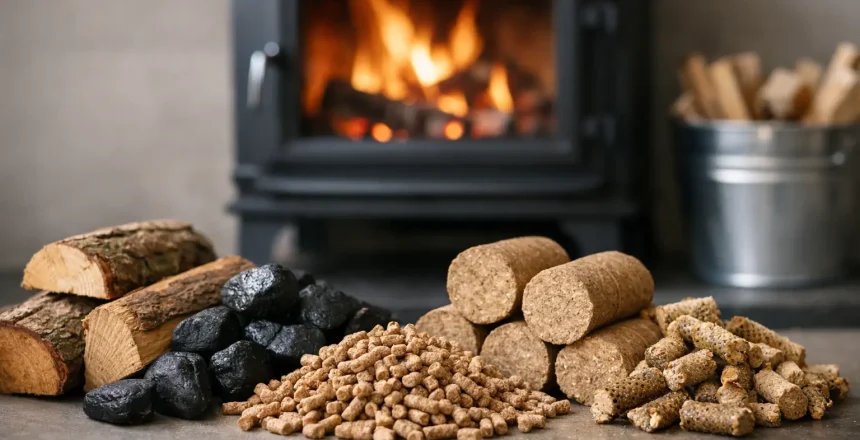
The fuel you burn will shape almost everything about how your stove performs – the heat you feel, how often you need to refuel, how clean the appliance stays, and whether your setup remains compliant. When homeowners ask us about multi-fuel for stoves, they are usually trying to answer a practical question: what should I actually burn for reliable, efficient heat at home?
The honest answer is that there is no single best choice for every household. It depends on your stove type, your chimney or flue arrangement, how often you use the appliance, and whether you want the lowest running cost, the longest burn time, or the simplest day-to-day use. What matters is choosing a suitable fuel for a correctly installed stove, rather than simply buying whatever is cheapest.
What does multi fuel for stoves actually mean?
A multi-fuel stove is designed to burn more than one approved solid fuel. In most cases, that means seasoned or kiln-dried logs as well as smokeless mineral fuel. The key difference between a dedicated wood burning stove and a multi-fuel model is the way the appliance is built to handle combustion. Multi-fuel appliances usually include a grate and an ash collection area, allowing air to circulate from underneath in a way that suits smokeless fuels.
That does not mean you can burn anything solid. Household waste, treated timber, wet wood, coal that is not suitable, or unapproved fuels can create excessive smoke, damage the appliance, and cause compliance issues. A properly specified stove should always be matched with fuels the manufacturer allows.
The main fuel options for a multi-fuel stove
For most UK homes, the realistic choices are logs and authorised smokeless fuel. Both can work well, but they burn differently and suit different priorities.
Logs
Many homeowners prefer logs because they give a traditional flame picture and a more familiar stove experience. If you want the look and feel of a classic fire, wood is usually the preferred option. Dry wood can perform very well, but moisture content matters. Wet or poorly stored logs reduce heat output, create more smoke, and leave more residue in the flue.
Kiln-dried or properly seasoned logs are the sensible choice. They light more easily, burn more cleanly, and help the stove operate as intended. The trade-off is that logs often need more regular loading than smokeless fuel, and they require enough dry storage space to keep them in good condition.
Smokeless fuel
Smokeless fuel is often chosen by homeowners who want a steadier, longer-lasting burn. It can be especially useful where longer heat retention matters, such as evening use or keeping a room warm over a more extended period. In many cases, it also produces a more consistent output once established.
The trade-off is that the flame picture tends to feel less natural than wood, and some households simply prefer the ambience of logs. Cost can also vary depending on local supply. The right choice comes down to whether you value appearance, convenience, burn duration, or a balance of all three.
How to choose the right multi fuel for stoves
Start with the stove itself. The manufacturer’s guidance should always come first, because not every appliance handles fuel in exactly the same way. A stove may be sold as multi-fuel, but there will still be clear recommendations about what can and cannot be burned safely.
After that, think about how you use the room. If the stove is mainly there to create a welcoming focal point in the evening, logs may suit you best. If it is expected to provide dependable heating for longer stretches, smokeless fuel may prove more practical.
Storage is another factor that gets overlooked. Wood needs to be kept dry and properly ventilated. If you do not have suitable outdoor storage, your logs can quickly become less efficient. Smokeless fuel can be easier for some households to manage, especially where space is limited.
Running cost matters too, but it should not be viewed in isolation. A cheaper fuel that burns poorly, creates more deposits, or delivers less usable heat is not necessarily the better buy. Efficiency, cleanliness and convenience all play a part in real-world value.
Why the installation matters as much as the fuel
Even the best fuel choice will not perform properly if the stove installation is wrong. This is where many homeowners run into trouble. Poor flue design, incorrect sizing, weak chimney draught, or an unsuitable hearth layout can affect how the appliance burns and how safely it operates.
A HETAS-registered installation gives you a far clearer starting point. It means the stove, flue and ventilation arrangements can be assessed together, so the appliance is not only fitted legally but set up to work efficiently with the fuels it is intended to burn. That is particularly important in homes where there is no existing chimney and a twin-wall flue system is needed, or where an older fireplace opening is being altered to suit a modern stove.
This is one reason homeowners often benefit from a full survey rather than trying to work backwards from the fuel they want to use. A proper recommendation looks at the whole system, not just the appliance brochure.
Smoke control areas and legal compliance
If your property is in a smoke control area, fuel choice becomes even more important. You cannot assume that any solid fuel is acceptable simply because it is widely sold. The rules around what can be burned, and in what type of appliance, need to be followed carefully.
That is why compliance should never be treated as an afterthought. A legally compliant stove installation is about more than paperwork. It protects your home, supports efficient performance, and gives you confidence that the appliance has been installed and commissioned properly. If you are unsure what applies to your area, get advice before the stove is fitted and before bulk fuel is purchased.
Common mistakes homeowners make
The most common mistake is buying fuel on price alone. Cheap, poor-quality fuel often burns less efficiently and can create more problems than it solves. Another is assuming a multi-fuel stove should routinely switch between any available material. In reality, suitable fuel selection should always stay within the manufacturer’s approved range.
A third mistake is underestimating ventilation, draught and flue performance. If a stove struggles to burn cleanly, the issue may not be the fuel at all. It may be the installation setup, the chimney condition, or the way the appliance has been specified for the room.
Finally, many homeowners leave advice until after the stove has been bought. That can limit your options. A better route is to discuss the appliance, fuel preferences and installation requirements at the survey stage, so everything is planned together.
What we usually recommend to homeowners
For most households, the best approach is straightforward. If you want the traditional look of a stove fire and are happy to store fuel correctly, choose good-quality dry logs and burn them in a stove designed to use them properly. If you want longer, steadier output and the appliance is approved for it, smokeless fuel can be a strong option.
If you want flexibility, a genuine multi-fuel stove fitted to the right standard gives you that choice. What matters is not having every option on paper, but having a stove and flue system that are safe, compliant and suited to how you actually live. At Stove Specialists UK, that is exactly how we guide customers – practical advice first, installation done properly, and 100% peace of mind from start to finish.
A stove should make home heating simpler, not more complicated. Choose fuel with the same care you choose the appliance, and you will get better heat, cleaner burning and far fewer surprises once the fire is lit.