
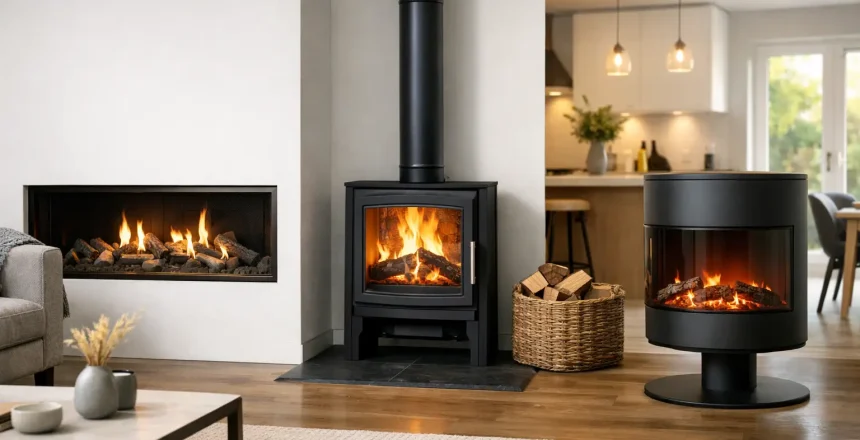
A stove can be designed into a new home from day one, rather than squeezed into an existing fireplace later. The right new build stove options will give you a reliable focal-point heater, a clean finish and a fully compliant flue system – but only if the appliance, air supply and chimney route are considered early enough.
For most new-build homeowners, the key decision is not simply which stove looks best. It is whether the house has a chimney, how airtight the property will be, where the flue can exit, and what heat output is genuinely appropriate for a well-insulated room. Getting those decisions right before walls and ceilings are finished usually makes installation simpler, neater and more cost-effective.
The main new build stove options
A wood burning stove is the most popular choice for homeowners who want the atmosphere of a real fire alongside useful room heating. Modern Ecodesign models burn far more cleanly than older appliances when used with suitable dry wood, and their controlled heat can work very well in an open-plan kitchen, living room or snug.
A multi-fuel stove can burn approved smokeless fuel as well as wood, depending on the model. This may suit households that want flexibility, although wood-only stoves are often the better match for homeowners who expect to burn logs most of the time. The internal design of the appliance affects how efficiently each fuel type burns, so it is worth choosing based on how you actually intend to use it, not just the wider fuel choice.
An electric stove offers a straightforward visual focal point where a live-flame appliance is not practical or desired. It does not require a flue, chimney liner or combustion air route. However, it provides a different experience and usually cannot offer the same level of independent, real-fire heat as a wood burner.
For a real-fire stove in a new property without a traditional chimney, a twin wall stainless steel chimney system is commonly the answer. This insulated flue system runs from the stove through the building and out through the roof or, in suitable layouts, externally up the wall. It allows a wood burning or multi-fuel stove to be installed in many new homes where no masonry chimney has been built.
Start with heat output, not stove size
New homes are generally far better insulated and more airtight than older properties. That is good news for energy efficiency, but it means an oversized stove can quickly make a room uncomfortably hot. A large firebox may look impressive in a showroom, yet it is rarely the best choice for a compact, well-insulated living space.
A professional survey considers the room dimensions, insulation levels, glazing, ceiling height and the way adjoining spaces are used. In some new builds, a modest 4kW or 5kW stove may be more sensible than a higher-output model. The aim is comfortable, controllable warmth, not a stove that has to be turned down constantly.
This matters for efficient burning too. Wood burners operate best when they are run at the temperature intended by the manufacturer, using properly seasoned wood with a moisture content of 20% or less. Choosing the right output helps the stove burn cleanly and gives you a better result over the long term.
Air supply is essential in airtight homes
A live-fire stove needs oxygen for combustion. In older properties, natural draughts may provide some of that air, although this still needs to be assessed. In a tightly built new home, an external air supply is often required and should be planned into the build.
Many modern stoves can be connected directly to an outside air supply. This brings combustion air to the appliance without relying on air drawn from the room. It can be a particularly sensible route in a highly insulated property, helping the stove operate correctly while avoiding unnecessary cold draughts.
The details depend on the stove, the ventilation strategy for the home and the applicable Building Regulations. A HETAS registered installer can assess what is required and ensure the system is installed and certified correctly.
Choosing the right flue route
The flue route is one of the biggest practical considerations for new build stove options. It affects the appearance of the room, the building work required, the position of the stove and the final cost.
An internal twin wall flue can rise from the stove through an upper floor and roof. This is often the tidiest approach when it is included in the plans, and the flue can contribute a small amount of heat as it passes through the building. It does, however, require careful coordination with joists, roof structure and fire-stopping measures.
An external twin wall system exits through an outside wall before rising vertically above roof level. It can be a practical solution when an internal route is not available or when the property is already finished. The visual impact on the exterior should be considered, and the final height and termination position must meet the relevant clearance requirements.
Where a new masonry chimney is part of the architectural design, the stove may connect to a suitable chimney system within it. This can create a traditional look, but the chimney must still be correctly specified for the chosen appliance. A decorative chimney breast alone is not a working flue.
Whichever route you choose, the flue cannot simply be positioned for convenience. Its diameter, insulation, support, clearances and termination point must all be designed around the appliance and the building. That is why a site survey before construction is so valuable.
Plan the fireplace area with safety in mind
A new build gives you the opportunity to create a stove setting that looks intentional rather than added on. A simple recessed opening, a freestanding stove against a non-combustible wall, or a purpose-built chimney breast can all work well. The best choice depends on the style of the home and the practical route for the flue.
The hearth is more than a decorative base. Its size and construction must protect the floor from heat and falling embers, with requirements varying according to the stove and its tested hearth temperature. Wall finishes, joinery and other combustible materials must also remain at the manufacturer’s stated safe distances.
This is an area where early planning prevents expensive changes. Fitted furniture, timber panelling, television positions and feature wall finishes all need to be considered around the stove location. A good layout leaves the stove as the focal point without compromising safety or everyday use of the room.
Compliance should be built into the project
A new build stove installation must comply with the relevant requirements of Building Regulations, including Approved Document J in England and Wales. The installation also needs to follow the appliance manufacturer’s instructions, particularly for clearances, hearth arrangements and flue connection.
If your property is in a smoke control area, the stove must be suitable for use there. A DEFRA exempt appliance may be required if you intend to burn wood, subject to the local rules. Ecodesign compliance is also a key consideration for new stove purchases, as it sets emissions and efficiency standards for the appliance.
Professional installation is about more than fitting the visible stove. It includes the correct chimney or twin wall system, suitable air provision, fire-safe construction details and formal certification once the work is complete. This paperwork is valuable for your records, future sale of the property and peace of mind that the installation has been completed properly.
When should you involve a stove installer?
Ideally, involve a specialist while the architectural drawings are still being developed. At that stage, the installer can advise on the proposed stove position, output, flue route, roof penetration, external air connection and hearth design. Builders and other trades can then allow for these details before the building is closed up.
If construction is already underway, there are still usually good options. A survey can establish whether an internal or external twin wall route is practical and what building work is needed to create a compliant stove area. Stove Specialists UK provides fully managed installations by HETAS registered engineers, from initial advice through to certification, so homeowners are not left to coordinate the technical elements themselves.
The most successful new-build installation is one that feels as though it always belonged in the house. Choose a stove that suits the heat demand, make room for the correct flue and air supply, and get professional advice before finishing the space around it. That small amount of forward planning can give you years of safe, dependable warmth and a feature you will genuinely enjoy using.