
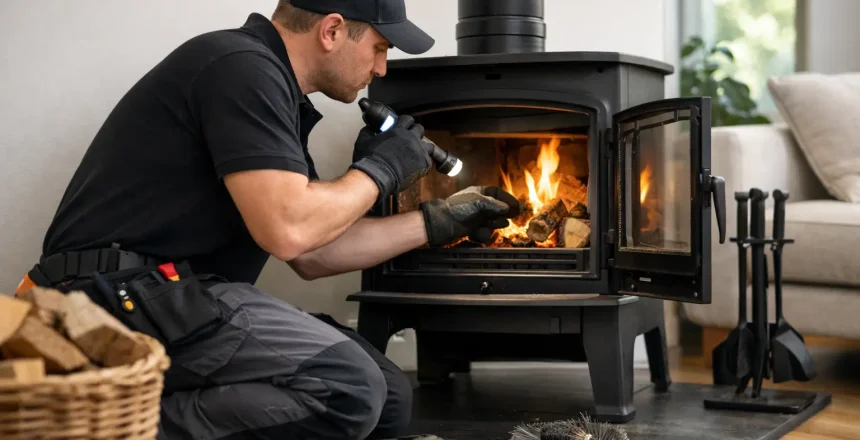
A log burner should feel like a welcome addition to your home, not a source of uncertainty once the work is complete. The key certified log burner installer benefits are straightforward: a safer installation, clear accountability, compliance with Building Regulations and the right paperwork to prove the work has been completed properly.
For many homeowners, the stove itself is the visible decision. The more important work is often hidden: assessing the chimney or flue route, creating safe clearances, selecting suitable materials and making sure smoke can leave the property efficiently. A certified installer manages those details from the first survey through to formal sign-off.
Certified log burner installer benefits for your home
A properly installed wood burning or multi-fuel stove is a practical source of heat and a focal point for the room. However, solid-fuel appliances operate at high temperatures and produce combustion gases. Small mistakes in the installation can have serious consequences, from smoke entering the room to a chimney system that does not perform as intended.
Using a HETAS registered engineer gives you a competent professional who understands the standards that apply to solid-fuel work. This is not simply about placing a stove in an existing fireplace. The installer considers the whole system – the appliance, hearth, flue, chimney, ventilation and surrounding construction – as one connected installation.
That approach is particularly valuable where a property has an older chimney, an unusual room layout, a new extension or no usable chimney at all. A certified installer can assess whether a liner, a twin-wall stainless-steel chimney system or building work is needed, then explain the practical options before work begins.
Safety is designed into the full installation
Safe stove fitting depends on correct distances from combustible surfaces, appropriate hearth dimensions, a suitable flue route and adequate ventilation where required. These are not details to guess at or adjust later. They must be considered in relation to the specific appliance and the property itself.
A registered installer will check the proposed location during a survey and identify issues early. For example, an attractive fireplace opening may not provide the required clearances, while a chimney that appears sound from the room may need further assessment before it is used. Finding this out before installation helps prevent avoidable disruption and unexpected costs.
Correct flue sizing and installation are equally important. The flue needs to create sufficient draw for the stove while carrying gases safely away from the home. Poor design can lead to weak performance, difficulty lighting the stove, smoke spillage or staining around the fireplace. Professional planning gives the appliance the best chance of working cleanly and efficiently.
Compliance without the confusion
In England and Wales, a solid-fuel installation must comply with the relevant Building Regulations. Homeowners can use Building Control, or they can choose a registered competent person who is able to self-certify qualifying work. In practice, using a HETAS registered installer is often the more straightforward route.
Once the work has been completed, the installer can notify the relevant scheme and provide a certificate for the installation. This document demonstrates that the work has been carried out in line with the required standards. Keep it with your property documents, alongside appliance information and any instruction manuals.
The distinction matters. HETAS registration is not just a badge used in advertising; it gives homeowners a clear route to compliant installation and recognised certification. If you sell your home later, purchasers and solicitors may ask for evidence that the stove installation was properly notified. Having the certificate available can prevent unnecessary questions at an already busy time.
Compliance also protects your position with insurers. Requirements vary between providers, so it is sensible to tell your insurer about a new stove and ask what evidence they require. A HETAS certificate gives you a clear record of the installation rather than leaving you to explain who carried out the work and to what standard.
A complete survey leads to a more accurate quote
A quote based only on photographs or a quick description can miss the work that makes an installation safe and compliant. A professional survey allows the installer to inspect access, measure the proposed location, consider the chimney route and understand the condition of the existing fireplace or wall.
This makes recommendations more useful. You may be able to use an existing chimney with a suitable liner, or a twin-wall system may be the right answer for a room without one. Some projects need a new hearth, opening alterations or other building work to create a safe setting for the stove. A specialist can coordinate this as part of the overall job, rather than asking you to arrange different trades and hope every stage aligns.
It also makes the quote more transparent. No installer can remove every unknown from an older property, particularly until certain areas are opened up, but a thorough survey reduces surprises. You should understand what is included, what assumptions have been made and whether there are choices that affect the final cost.
The right answer depends on the property
There is no single installation design that suits every home. A small, well-insulated room may need a modest output stove, while a larger open-plan area has different heating demands. Installing an oversized stove simply because it looks impressive can make the room uncomfortably warm and encourage inefficient, low-temperature burning.
The property’s location also matters. Homes in Smoke Control Areas need an appropriate Defra-exempt appliance if wood is to be burned, and the fuel used must meet local requirements. A knowledgeable installer will raise this during the planning stage, not after the stove is in place.
Ventilation is another area where assumptions cause problems. Modern homes are often more airtight than older properties, and extractor fans can affect how a stove draws. A certified installer assesses these factors and can recommend a suitable approach for the room and appliance.
Better workmanship, clearer responsibility
Choosing an experienced specialist gives you one point of responsibility for the installation. That is valuable when a project involves chimney lining, flue work, hearth construction and finishing work around the fireplace. The result should look considered as well as meet the technical requirements.
It is also a more reassuring experience for homeowners who do not want to become project managers. You should be able to ask practical questions in plain English: Will the stove suit the room? Can it be installed without an existing chimney? What will the finished hearth look like? How long is the work likely to take? A good installer explains the answers clearly and does not push a one-size-fits-all solution.
At Stove Specialists UK, our HETAS registered engineers take a safety-first approach, from free quotation and survey through to certification. We can supply and fit a suitable stove or fit a customer-supplied appliance, provided it is appropriate for the planned installation. Finance options and a 100% satisfaction guarantee are there to make a major home improvement feel more manageable.
When professional installation matters most
Every stove installation should be carried out correctly, but certification is especially valuable in more complex situations. A property without a chimney may need a carefully designed external or internal twin-wall system. A new-build home may have tighter ventilation and clearance considerations. An old fireplace may need alterations before it can safely house a modern appliance.
These are not reasons to abandon the idea of a log burner. They are reasons to seek proper advice before buying an appliance or starting building work. An early survey can establish what is achievable, what the installation will involve and whether the investment suits your home.
A certified installer may not always be the cheapest option on the first quote, because compliant materials, skilled labour, notification and careful planning all have a cost. Yet the cheapest route can become expensive if work must be altered, documentation is missing or the stove does not perform as expected. Value comes from getting the design and installation right the first time.
Before choosing your installer, ask whether they are HETAS registered, whether a survey is included, who will complete the certification and exactly what is covered in the quotation. Clear answers at this stage are a good indication of the service you can expect.
A stove is most enjoyable when you can light it with confidence. Start with a professional survey, share how you use the room and let a certified installer turn your plans into a safe, compliant heating feature built for your home.