
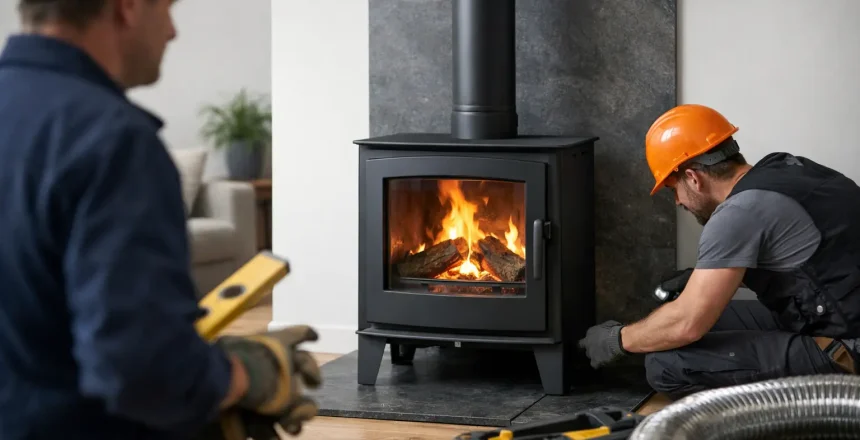
A log burner can change the feel of a room in a way central heating rarely does. It provides focused warmth, a natural focal point and the reassurance of an independent heat source on cold winter evenings. But the visible stove is only one element of the job. For log burners to work safely, efficiently and legally, the chimney, flue route, hearth, ventilation and appliance choice must all work together.
That is why a professional survey should come before choosing a model based on appearance alone. A well-planned installation gives you reliable heat and 100% peace of mind. A poorly planned one can create smoke issues, inefficient burning, avoidable building work and problems with compliance.
Choosing log burners that suit your home
The right stove is not automatically the largest one that will fit inside an existing fireplace. Output must be appropriate for the room, the insulation level of the property, ceiling height and how you expect to use the space. An oversized stove is often run too slowly, which can lead to inefficient combustion and a dirtier flue. A stove that is too small may struggle to provide the comfort you expect.
As a rough starting point, a room’s heating requirement can be estimated from its size and insulation. However, this is only a guide. Open-plan rooms, vaulted ceilings, older solid-wall homes and large areas of glazing can all change the result. During a survey, an experienced installer can assess the room properly and discuss a sensible output range rather than leaving you to guess.
Style matters too. A traditional cast-look stove can suit a period fireplace, while a cleaner contemporary design may be better for a renovated cottage or modern extension. The key is to select an appliance that is suitable for the intended fuel and can be installed in line with its manufacturer instructions and UK Building Regulations.
If you live in a Smoke Control Area, the stove and fuel choice need particular attention. Many areas require an approved appliance when burning wood, and the correct fuel must still be used. This is a common point of confusion: an approved stove does not make wet or unsuitable wood acceptable. Good advice at the outset prevents disappointment later.
The survey: where a safe installation begins
A proper site survey is not a formality. It determines what is possible, identifies the work required and allows a clear quotation to be prepared. For a home with an existing chimney breast, the survey considers the fireplace opening, chimney condition, flue route, roof access and whether a liner is needed.
For homes without a usable chimney, a twin wall stainless steel chimney system can create a safe route for the stove. This is often suitable for extensions, new-build properties, garden rooms and homes where an old fireplace has been removed. The route may travel internally through floors and the roof, or externally up an outside wall, depending on the building layout and clearances.
An installer should also assess the hearth, surrounding construction materials and air supply. Modern homes can be particularly airtight, so adequate ventilation may be needed to ensure the stove burns correctly. This is not an optional extra. A stove needs combustion air, and the installation must be designed to manage it safely.
The survey is also the right time to discuss practical decisions, such as where wood will be stored, how the stove will be used day to day and whether you want the installer to supply the appliance or fit one you have sourced yourself. Both routes can work well when the stove is suitable for the property and the installation has been planned correctly.
Chimneys, liners and flue systems explained
A chimney is not automatically ready for a stove simply because it is present. Older chimneys vary widely in size, condition and construction. In many installations, a flexible stainless steel liner is installed within the existing chimney to create a dedicated, correctly sized flue path for the appliance.
The liner helps carry combustion gases safely out of the property and supports efficient stove performance. It must be the right diameter, installed in the correct direction and connected securely throughout. The chimney top must also be finished appropriately to protect the system from weather while allowing gases to discharge safely.
Where there is no existing chimney, an insulated twin wall system performs the same essential role. These systems are designed for use through rooms, loft spaces, walls and roofs, with specified clearances from combustible materials. Their installation is technical work, not a shortcut. The flue route, support, terminal height and distance from nearby openings all need careful consideration.
A straight, well-designed route is usually preferable, but every home is different. It may be possible to work around structural features, although bends and longer routes can affect the design. The best answer depends on the property, the appliance and the available clearances. A specialist installer will explain the options clearly instead of promising a one-size-fits-all solution.
Hearths and building work are part of the installation
The hearth protects the floor and nearby surfaces from heat and sparks. Its size, thickness and construction depend on the stove type, its tested heat characteristics and the manufacturer requirements. Some installations need a constructional hearth, while others may use a suitably designed superimposed hearth. This must be assessed, not assumed.
Opening up an old fireplace can also involve more than removing a board or decorative surround. The recess may need to be enlarged, strengthened, rendered or finished to provide a safe and attractive setting for the stove. In other homes, a new hearth and chimney breast arrangement may be created to suit a planned extension or renovation.
Handling these elements as one managed project avoids the usual frustration of coordinating separate trades. It also means the stove position, flue route, hearth and final finish are considered together from the beginning. The result should look right in the room, but more importantly, it should meet the required safety standards.
Why compliance and certification matter
A stove installation is controlled building work. The completed system must comply with the relevant Building Regulations, including requirements relating to combustion appliances, flues, hearths, ventilation and clearances. This protects your household and provides valuable evidence that the installation has been carried out correctly.
Using a HETAS registered engineer gives homeowners a straightforward route to certification. Where the work is eligible for self-certification, the installer can notify the local authority through the proper scheme and provide the appropriate documentation. Keep this paperwork somewhere safe. It may be requested by a future buyer, insurer or surveyor.
Certification is not simply paperwork at the end of the day. It reflects the checks made throughout the installation, from the appliance position to the flue termination. It is one of the clearest reasons to choose a competent specialist rather than treating the job as a general DIY project.
Getting the best heat from your stove
Even an expertly installed stove depends on correct operation. Burn only properly seasoned or kiln-dried wood with a moisture content of 20% or below. Wet wood produces more smoke, less useful heat and greater deposits within the flue. Look for fuel sold as Ready to Burn where possible, or use a reliable moisture meter before bringing stored logs indoors.
Learn the air controls for your specific stove and follow the manufacturer guidance on lighting and refuelling. A bright, active flame is generally a better sign than a fire that is starved of air and left to smoulder. Burning the right fuel at the right temperature helps keep the glass clearer and delivers more heat into the room.
Before committing to log burners, ask for a detailed survey and a clear explanation of what the quotation includes. Stove Specialists UK can manage everything from the initial recommendation and building work to flue installation and HETAS certification, helping homeowners make confident decisions without being left to coordinate the technical details themselves.
A good stove installation should feel simple once it is complete: safe warmth, an inviting room and the confidence that every hidden element behind the flames has been properly considered.