A stove can look beautifully simple once it is in place, but the safe working part of the system is often hidden from view. The chimney liner is a good example. If you are planning a wood burning or multi-fuel stove, or upgrading an older fireplace, the liner is one of the first things that needs proper attention because it affects safety, performance and legal compliance.
Many homeowners assume an existing chimney will be fine as it is. Sometimes it is, but often it is not suitable for a modern stove without further work. Chimneys can be oversized, deteriorated internally or simply unsuited to the type of appliance being installed. That is why a proper survey matters before any recommendations are made.
What does a chimney liner actually do?
A chimney liner creates a defined passage for flue gases to travel from the stove to the top of the chimney. That sounds straightforward, but it does several important jobs at once.
First, it improves safety. A correctly specified liner helps carry smoke, gases and moisture out of the property efficiently. Second, it supports better stove performance by helping the appliance establish a reliable draw. Third, it protects the surrounding chimney structure from the by-products of combustion.
Without a suitable liner, a stove may be harder to light, more likely to smoke into the room or less efficient than it should be. In some cases, the issue is not obvious at first. The fire may seem to work reasonably well, but the flue system is still not compliant or safe enough for long-term use.
Do you always need a chimney liner?
Not every installation needs a new chimney liner, but many do. The answer depends on the condition and size of the existing chimney, the type of stove being fitted and whether the full flue system meets current regulations.
If you are installing a stove into an older masonry chimney, lining is very often the right route. Older chimneys were usually built for open fires, which operate very differently from modern stoves. An open fire sends a large volume of hot air up the chimney. A stove produces a different flue gas pattern and generally needs a flue path matched more closely to the appliance.
A large, unlined chimney can allow gases to cool too quickly. That affects draw and can lead to poor burning conditions. Where the internal condition of the chimney is unknown, damaged or unsuitable, a new liner is typically the safest and most practical solution.
Why a chimney liner matters for safety and compliance
This is where guesswork has no place. A stove installation is not just about fitting an appliance that looks good in the fireplace opening. It must meet Building Regulations and be installed in a way that allows safe operation.
The liner forms part of that compliant system. Size, grade, route and terminal arrangement all matter. Using the wrong specification can create ongoing problems, even if the stove appears to be working on day one.
For homeowners, the practical point is simple. A properly installed flue system gives you confidence that the stove is venting correctly and that the installation can be formally certified. That matters for safety in daily use, and it also matters when you sell the property or need proof that the work was completed properly.
Types of chimney liner used with stoves
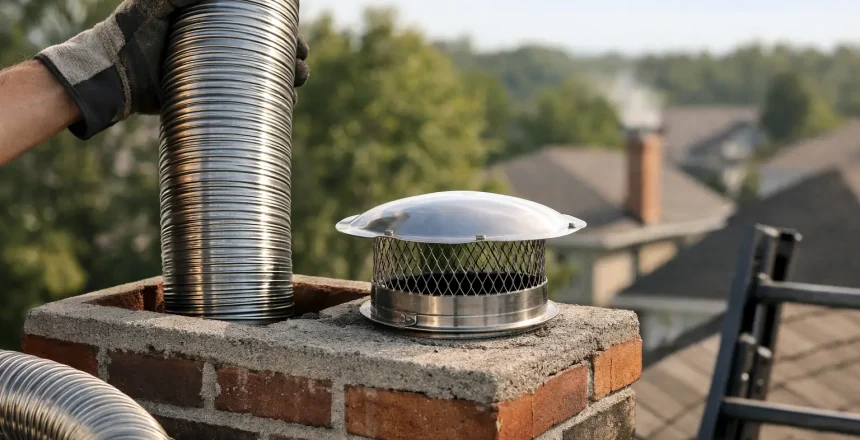
In most domestic stove installations involving an existing masonry chimney, the usual solution is a flexible stainless steel liner. This is typically installed from the top of the chimney and connected to the stove below as part of a complete flue arrangement.
The grade of stainless steel used will depend on the appliance and fuel type. That choice should not be made on price alone. A liner that is suitable for one setup may not be the best fit for another, particularly where a multi-fuel stove is involved.
In other properties, especially where there is no usable chimney, a twin wall insulated chimney system may be the better option. Strictly speaking, that is different from a chimney liner inside an existing stack, but the principle is the same – you need a safe, correctly designed route for flue gases.
This is why a one-size-fits-all answer rarely works. Good installation starts with the property, the appliance and the route available.
Signs an existing chimney may not be suitable
Homeowners often ask whether they can use the chimney already in place. The honest answer is: sometimes yes, sometimes no. Several issues can point to the need for a chimney liner.
If the chimney is older and has not been used for years, the internal condition may be uncertain. If it was built for an open fire, it may be too large to give a modern stove the draw it needs. If there has been visible staining, smoke leakage or signs of deterioration around the breast or stack, further investigation is essential.
Even if none of those signs are obvious, the flue still needs to be assessed properly. A chimney can look acceptable externally while hiding internal defects that make it unsuitable for a stove installation.
What happens during chimney liner installation?
For most homeowners, the process is less disruptive than they expect when the work is planned properly. The first stage is always assessment. The chimney route, fireplace opening, stove position and ventilation requirements all need checking before a recommendation is made.
Once the specification is confirmed, the chimney is prepared and the liner is installed as part of the full stove and flue system. The connection at the stove end, closure arrangements and terminal details all need to be correct. This is not simply a case of dropping a liner down a chimney and hoping for the best.
In some homes, additional building work is required to make the installation compliant and practical. That could include opening alterations, hearth work or chimney modifications. The right approach depends on the property and the appliance chosen.
When the installation is completed properly, the system should be tested, commissioned and certified. That final stage is just as important as the fitting itself.
Common mistakes when choosing a chimney liner
The biggest mistake is treating the liner as a hidden extra rather than a critical part of the stove system. It is understandable to focus on the stove style, heat output and price, but the flue arrangement is what allows the appliance to work safely.
Another common issue is assuming the cheapest option will do. The right liner is based on suitability, not just cost. Cutting corners on specification or installation can lead to poor performance, failed compliance or the need for further work.
DIY decision-making is another risk. Homeowners often research liner sizes online and try to match products to their stove themselves, but that misses the wider picture. The chimney route, terminal, appliance requirements, ventilation and building layout all influence what is correct.
How to know what is right for your home
A proper survey is the only reliable starting point. Every property is different, and stove installation always works best when recommendations are based on the actual site rather than assumptions.
In a period property with an old chimney, the priority may be bringing an existing fireplace back into safe use. In a newer home, there may be no chimney at all, which changes the solution completely. In both cases, the objective is the same – a safe, efficient and legally compliant system that suits the room and the way you want to heat it.
That is why a fully managed installation service makes life easier. Instead of trying to piece together advice from different trades, you get one clear recommendation based on what the home actually needs. For homeowners who want 100% peace of mind installation, that matters.
Is a chimney liner worth it?
If your stove installation needs one, then yes – absolutely. A chimney liner is not there to inflate the job. It is there to help the appliance operate properly, protect the property and keep the installation within the rules.
It can also make a real difference to the day-to-day experience of using your stove. Better draw, cleaner operation and greater confidence in the system all count for a lot once the fire is part of your routine through autumn and winter.
At Stove Specialists UK, we walk homeowners through the options clearly, recommend only what the property requires and make sure the finished installation is safe, compliant and certified. That is the standard any stove customer should expect.
If you are thinking about a stove, do not treat the chimney liner as a background detail. Get the flue system right from the start, and the whole installation has a far better chance of doing exactly what you want it to do.