
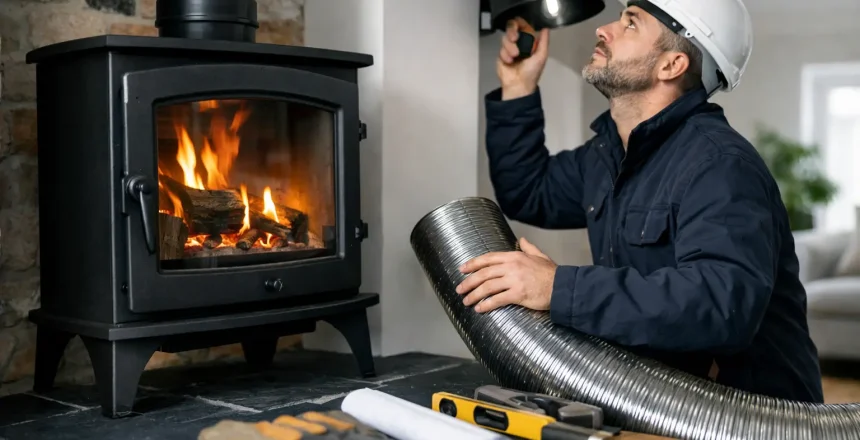
A wood burner can transform a room, but the wrong installation can do the opposite very quickly. When homeowners ask about wood burning stove installation regulations, they are usually trying to avoid two costly mistakes – ending up with an unsafe appliance, or paying for work that fails compliance checks later.
In the UK, stove rules are not just box-ticking. They affect where the appliance can go, what type of flue is needed, how the hearth is built, how close the stove can sit to walls and furniture, and whether the finished job can be formally signed off. If you want 100% peace of mind, the regulations need to be considered before any fitting starts, not after.
What do wood burning stove installation regulations cover?
The main framework comes from Building Regulations, particularly Approved Document J, which deals with combustion appliances, hearths, flues and ventilation. On top of that, the stove manufacturer’s instructions matter just as much. If the appliance says a certain clearance or flue size is required, that is not optional.
This is where many installations become more technical than homeowners expect. A stove might look straightforward in a fireplace opening, but compliance depends on the full system. The appliance, chimney, flue liner, hearth, air supply and surrounding construction all need to work together safely.
For most domestic customers, the practical question is simple: can the installation be completed legally and certified properly? If the answer is yes, you protect both your home and your future sale. If the answer is no, the job needs redesigning before it goes any further.
The key UK regulations for stove installation
Hearth rules are one of the first things to assess. The hearth must be suitable for the stove model and the heat it produces, and it must project the correct distance around the appliance. In some cases a decorative base is not enough, even if it looks substantial. The regulations are about heat protection and safe separation from combustible materials, not appearance.
Flue requirements are equally important. A wood burning stove must discharge into a correctly sized and suitable flue system. In an existing chimney, that often means installing a liner. In homes without a chimney, a twin wall insulated flue system may be the right route. The exact solution depends on the property layout, stove output and whether the existing chimney is structurally and internally suitable.
Clearances also matter more than many people realise. Stoves need safe distances from combustible walls, beams, mantelpieces and furnishings. Those distances vary by appliance and installation method. You cannot assume that because a stove fits physically, it meets regulation.
Ventilation is another area where homeowners are often surprised. Some stoves, especially at higher outputs or in more airtight properties, require a dedicated air supply. Newer homes can be particularly sensitive here because improved insulation and draught-proofing reduce natural ventilation. A room that feels comfortable can still be unsuitable without the right air provision.
Why certification matters as much as the fitting
A compliant installation does not end when the stove is lit for the first time. It also needs to be signed off correctly. In most cases, this is done either through a HETAS-registered installer who can self-certify the work, or through local authority Building Control.
For homeowners, this is not a minor administrative detail. Certification is the formal record that the installation has been carried out in line with the relevant regulations. It can be important for insurance, future property sales and simple peace of mind.
Using a HETAS-registered engineer usually makes the process much more straightforward. It means the same specialist handling the technical work can also ensure the installation is assessed and certified correctly. That avoids the common problem of one contractor fitting the stove and someone else later trying to untangle whether the work actually complies.
Wood burning stove installation regulations in older homes
Period properties often look ideal for a stove, but they can come with hidden complications. Older chimney breasts may have been altered over time, fireplace openings may have been closed, and chimney condition can vary dramatically from one house to the next.
This is why a proper survey matters. What appears to be a simple replacement stove job may involve chimney lining, hearth alteration, or building work to create a safe recess and suitable clearances. None of that is unusual. It is simply part of delivering a safe and legally compliant installation.
There is also a balance to strike between preserving character and meeting current standards. Homeowners understandably want the finished stove to suit the room. The good news is that compliance and appearance do not have to conflict, but the design needs to be led by the regulations rather than forced around them.
Installing a stove without an existing chimney
One of the biggest misconceptions is that you need a traditional chimney breast to have a wood burner. You do not. Many homes can accommodate a stove using a twin wall insulated chimney system, provided the route is designed correctly and the installation meets the relevant rules.
That said, no-chimney installations need careful planning. The flue route, terminal position, distances to the building fabric and visual impact all have to be considered. In some homes, the best route is internally through floors and roof. In others, an external run is more practical. There is no one-size-fits-all answer.
This is exactly where experienced installation advice saves time and money. A sensible design at survey stage can avoid awkward alterations later and help ensure the system performs properly once in use.
Common mistakes homeowners make
The most common issue is choosing the stove first and asking compliance questions afterwards. It is understandable – people often fall in love with a particular look or output. But a stove that suits one room may not suit another property, chimney or ventilation setup.
Another mistake is assuming an existing fireplace is ready to use. Age alone does not make a chimney suitable, and previous use does not guarantee present compliance. Even where a chimney appears sound, the internal condition and sizing may not match the needs of a modern stove.
DIY planning can also cause problems. Homeowners often measure the visible opening but miss critical factors such as recess depth, non-combustible distances, hearth projections or flue route constraints. That can lead to wasted time and changes to the original plan.
Finally, some people focus only on getting the appliance in place cheaply. The issue with that approach is simple: if the installation is not safe, not compliant or not certifiable, it is not a saving. It is a future problem.
How a professional survey makes the regulations easier
Good installation starts with clear advice. A professional survey should assess the room, the intended stove position, the chimney or flue route, the hearth requirements, the likely air supply needs and any building work needed to achieve compliance.
That is where an end-to-end service becomes especially valuable. Instead of asking the homeowner to coordinate separate trades and interpret technical guidance, the process is managed properly from the start. The recommendations are based on what will work in the property, not on guesswork.
For customers across areas such as the West Midlands, Oxfordshire and surrounding counties, that practical support often makes the difference between a stressful project and a hassle-free one. Stove Specialists UK takes that safety-first approach because regulations are not there to complicate the job. They are there to make sure the finished installation is safe, efficient and legally sound.
When the rules vary depending on the property
Not every installation follows the same path. A straightforward inglenook fireplace in a well-ventilated older house may be relatively simple. A tightly sealed new-build, a property with no chimney, or a room with limited safe clearances may require a more tailored solution.
That does not mean the project is impossible. It means the recommendations should be based on the building, not assumptions. Sometimes a different stove size is the answer. Sometimes the flue route needs redesigning. Sometimes additional building work is the only sensible way to create a compliant result.
That is why the best advice is usually the most practical advice. Rather than promising that every stove can go anywhere, a trustworthy installer will explain what works, what does not, and what needs to change to deliver a safe final result.
If you are considering a new stove, the smartest place to start is not with colour or style. It is with whether the installation can be done properly, certified correctly and built to last. Once that foundation is right, the rest of the project becomes much easier.