
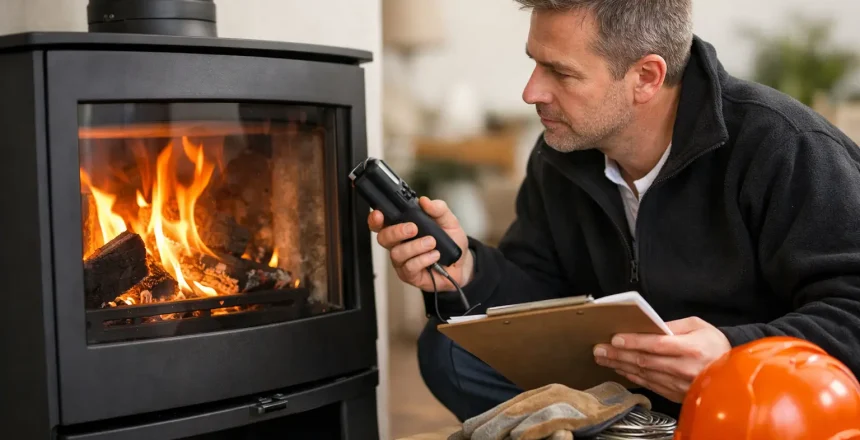
A stove can transform an unused fireplace or give a new-build room a proper focal point, but the finished look is only one part of the job. This guide to the HETAS certification process explains what homeowners should expect before, during and after a compliant wood burning, log burning or multi-fuel stove installation.
The short version is simple: the installation must meet Building Regulations, be properly notified, and leave you with the right paperwork. Choosing a HETAS registered installer gives you a straightforward route through that process, without the uncertainty of arranging Building Control yourself.
What HETAS certification means for your home
HETAS is the recognised competent person scheme for solid fuel and biomass heating in England and Wales. A HETAS registered installer has been assessed as competent to carry out and self-certify relevant stove and flue work in line with Building Regulations.
For a homeowner, the key document is normally the HETAS Certificate of Compliance. This confirms that the work has been notified through the competent person scheme after installation. Keep it safely with your property documents. It may be requested when you sell your home, remortgage, make an insurance enquiry or need to demonstrate that the installation was completed properly.
A certificate is not merely an administrative extra. It is evidence that the installation has been treated as a safety-critical heating system, including the appliance, hearth, chimney or flue system, ventilation and carbon monoxide alarm.
The HETAS certification process step by step
Every property is different. An existing chimney in a period home presents different considerations to a stove in a garden room, extension or new-build property with no chimney at all. However, a properly managed process follows a clear order.
1. A survey establishes what is possible
The first stage is a site survey. Your installer will assess the room, the proposed stove location, the available chimney route or external flue route, and the construction around the installation area.
They will also consider the stove output needed for the space, whether an existing fireplace opening is suitable, the condition and size of the chimney, and whether a twin wall stainless steel chimney system is required. If you have bought a stove yourself, it is still essential to confirm that it is suitable before fitting is booked.
This is where professional advice saves time and expense. A stove that looks right online may not be the right output for the room, may need a different flue arrangement, or may not suit the intended fuel. A survey gives you a practical recommendation based on the property rather than a guess.
2. The installation is planned around Building Regulations
Stove installations are generally carried out with Approved Document J in mind. This covers combustion appliances and fuel storage systems, including the safe discharge of combustion gases and the protection of the building.
The practical details matter. The flue must be correctly sized and routed, have suitable clearance from combustible materials, and terminate in an appropriate position. The hearth must provide the required protection, while the stove needs enough space around it to operate safely. In some homes, permanent ventilation is needed to provide adequate combustion air.
A modern airtight home can require particularly careful planning. Likewise, a large inglenook fireplace, a property with a tall chimney stack, or a no-chimney installation may call for additional building work before the appliance can be fitted. These are not obstacles, but they should be included in the scope from the outset.
3. The stove, hearth and flue are fitted correctly
On installation day, the work should be carried out as one connected system rather than as separate jobs. That may include preparing the fireplace opening, creating or upgrading a hearth, fitting a chimney liner, installing a register plate, or constructing a twin wall flue route.
The installer will position the appliance in accordance with the manufacturer’s instructions and the relevant clearance requirements. They will connect the flue, secure and seal the system where required, and make sure the route is supported and protected correctly.
This is also why the cheapest quote is not always the best value. A lower initial figure can exclude essential preparation, certification or the work needed to achieve a compliant result. Ask for a clear written scope so you understand what is included in the fitting and what is dependent on survey findings.
4. Safety checks and commissioning take place
Before the job is signed off, the installer should commission the stove. This means checking that the installation draws correctly, that the flue is performing as expected, and that the appliance can be used safely.
You should also receive a demonstration of normal operation. This is the time to ask about lighting the stove, controlling the air supply, choosing suitable fuel and using the appliance efficiently. Burning dry, appropriate fuel helps reduce smoke, improves heat output and keeps the system operating as intended.
A carbon monoxide alarm is a fundamental requirement. It must be installed in the room containing the appliance in line with current guidance and the manufacturer’s instructions. Do not treat this as optional. Carbon monoxide cannot be seen or smelt, which is why early warning is essential.
5. The work is notified
When a HETAS registered installer completes work that falls within their scheme registration, they can notify it through HETAS. This avoids the homeowner having to make a separate Building Control application for the installation.
Notification is not normally instant on the day of fitting. The installer submits the relevant details, and the certificate is then issued following the scheme process. If you have questions about timescales, ask before the work starts so you know where the paperwork will be sent and who will receive it.
If an installer is not registered with a competent person scheme, Building Control approval may be required instead. That route can be appropriate, but it may involve additional administration, inspections and fees. For most homeowners, using a registered installer is the more convenient option.
6. You receive and retain your Certificate of Compliance
Once notification is processed, retain the HETAS Certificate of Compliance with your household records. It is sensible to keep the installer’s invoice, stove instructions and any commissioning information alongside it.
If your certificate does not arrive within the expected period, contact the installer promptly. It is far easier to resolve a missing document soon after completion than years later during a property transaction.
Situations that need extra consideration
Not every compliant stove installation follows the same route. Homes in smoke control areas need an appliance and fuel choice that meets local restrictions. In many cases, this means selecting a DEFRA exempt stove if you intend to burn wood. Your installer can help explain what applies, but local authority rules still need to be respected.
Listed buildings and properties in conservation areas can also need separate consent, particularly where a new external flue or visible alteration is proposed. HETAS certification does not replace planning permission, listed building consent or landlord approval where these are required.
The rules can also differ outside England and Wales. Homeowners in Scotland and Northern Ireland should check the relevant local building standards route rather than assuming the same notification process applies.
Questions to ask before booking your installer
A dependable installer should be comfortable answering practical questions clearly. Confirm that they are currently HETAS registered for the work proposed, whether the quote includes notification and certification, and what building work is allowed for in the price.
You should also ask how the flue route will be formed, whether your chosen stove is suitable for the room, and what will happen if the survey identifies an issue that changes the installation approach. Clear answers at this point lead to fewer surprises later.
At Stove Specialists UK, the focus is on giving homeowners a fully managed, 100% peace of mind installation, from the initial survey through to compliant fitting and certification. That is especially valuable when a project involves a new chimney system, fireplace alteration or a property with no existing chimney.
A certificate is the final check, not the starting point
HETAS paperwork is valuable, but the best outcome begins well before it is issued. Choose an installer who surveys carefully, explains the options in plain English and treats safety, legality and finish as equally important. You can then enjoy the warmth and character of your stove with the confidence that the work behind it has been completed properly.