
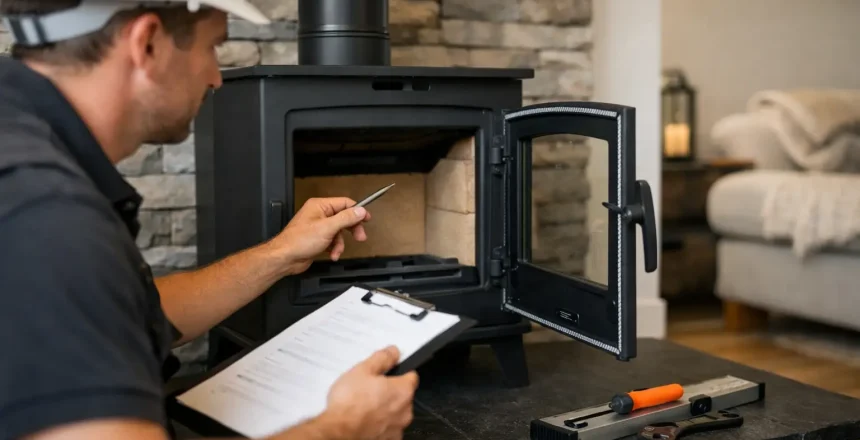
A wood burner can transform a room, but the installation behind the stove matters far more than the first fire. So, is HETAS required? Not strictly in every case – but compliance with Building Regulations is required, and using a HETAS registered installer is usually the simplest, safest route to getting the job properly certified.
For most homeowners in England and Wales, a professionally installed and notified stove provides the reassurance that the appliance, flue system, hearth and ventilation have been considered as one safe installation. It also removes much of the paperwork and uncertainty from a project that can become technical very quickly.
Is HETAS required by law?
HETAS registration itself is not a legal requirement. You are not legally obliged to choose a HETAS registered installer simply because you are having a wood burning or multi-fuel stove fitted.
What the law does require is that the installation complies with the relevant Building Regulations. In practical terms, there are two recognised ways to demonstrate this in England and Wales.
A HETAS registered installer can complete the work through the HETAS Competent Person Scheme. They inspect and certify their own installation, then notify the local authority on your behalf. You should receive a HETAS Certificate of Compliance after the installation has been registered.
Alternatively, a non-registered installer can carry out the work, but the installation must be submitted to your local authority Building Control department before work begins. Building Control will arrange inspections and, once satisfied, issue the appropriate completion documentation.
Both routes can be lawful. The difference is often convenience, timescale and who takes responsibility for managing the compliance process.
Why HETAS certification is the preferred route
A HETAS registered installer has been assessed to work within the requirements for solid fuel appliances and associated flue systems. That does not mean every non-HETAS installer is incapable of good work. However, it does give homeowners an established route to certification without needing to arrange Building Control inspections themselves.
A compliant installation involves more than placing a stove in an existing fireplace. The engineer must assess the appliance output, chimney or flue route, combustible clearances, hearth dimensions, ventilation, chimney condition, carbon monoxide alarm position and the safe discharge of combustion gases. In a home without a usable chimney, the design of a twin wall stainless steel chimney system needs equally careful consideration.
When one experienced team handles the survey, installation and notification, there is less scope for missed details between different trades. It is a practical way to achieve a 100% Peace of Mind installation, particularly where building work is needed to open up a fireplace, create a suitable hearth or run a new flue through the property.
What does a HETAS certificate prove?
The HETAS Certificate of Compliance is evidence that a registered installer has declared the completed installation compliant with the applicable Building Regulations. Keep it in a safe place with your other property documents.
This certificate can be valuable when selling your home. A buyer’s solicitor may ask for evidence that a stove installation was properly approved, especially where the work is visible but the compliance paperwork is missing. Without it, you may need to spend time establishing how the work was signed off or seek retrospective advice from Building Control.
Your home insurer may also ask whether a solid fuel appliance has been professionally installed and certified. Policy requirements vary, so it is sensible to notify your insurer before the stove is used and provide any documentation they request. Certification does not automatically guarantee cover, but it helps demonstrate that the installation has followed the proper route.
When Building Control may be the better option
There are situations where Building Control is the right route, even if it is less straightforward. For example, you may be working with a builder who is not registered through a competent person scheme, or your project may form part of larger renovation works already being overseen by Building Control.
This approach can work well, provided it is planned before installation starts. Do not assume that Building Control can simply be brought in after the work is complete. Retrospective approval can involve extra cost, disruption and uncertainty, particularly if concealed elements need to be checked.
If you choose this route, ask early who will make the application, what inspections are required and who is responsible for providing technical information about the stove and flue. Clear responsibility at the beginning avoids delays when you are ready to use your new appliance.
HETAS, Building Regulations and planning permission are different things
These terms are often confused, but they cover different responsibilities. HETAS certification or Building Control approval deals with whether the installation meets Building Regulations. Planning permission concerns the impact of building work on the property and surrounding area.
Most straightforward internal stove installations do not need planning permission. However, external flues, listed buildings, conservation areas and certain types of property can introduce additional restrictions. A new chimney system on an outside wall, for example, may need more careful consideration than an installation using an existing internal chimney.
It is always worth checking the position before work begins. HETAS certification cannot replace planning consent where consent is required, and planning permission does not remove the need to meet Building Regulations.
What a professional stove survey should cover
The right installation starts with a proper survey, not a guess based on the width of the fireplace opening. A specialist should consider the room, the property layout and the intended use of the stove before recommending a solution.
For an existing chimney, this normally includes assessing its route and suitability for lining. For a property without a chimney, it includes planning a compliant twin wall flue route, checking clearances and identifying how the system will pass through floors, ceilings or the roof. The hearth and surrounding finishes must also be suitable for the appliance being installed.
Ventilation is another area that should never be treated as an afterthought. Modern homes can be tightly sealed, while a stove needs a reliable supply of combustion air. The requirement depends on the appliance, the property and the installation design. A competent engineer will assess this as part of the complete job.
You should also expect clear advice on smoke and carbon monoxide alarms. These alarms are an essential safety measure, but they do not make an unsuitable installation safe. They are there to provide warning should a problem occur.
Does the answer change in Scotland or Northern Ireland?
The simple answer to “is HETAS required” is most relevant to England and Wales, where the HETAS Competent Person Scheme is widely used for domestic solid fuel installations. Scotland and Northern Ireland operate under their own building standards and building control arrangements.
If your property is outside England or Wales, check the local approval route before booking work. The fundamental principle remains the same: the stove, flue and surrounding construction must comply with the rules that apply where you live, and you should retain formal evidence of approval.
Choosing the right installer
The lowest quote is not always the lowest overall cost. A price that excludes chimney work, certification, a suitable hearth or required ventilation can leave you arranging further work later. Ask for a written scope that explains what is included and confirms how the installation will be notified.
A dependable installer should be happy to explain the proposed flue route, why a particular stove size suits the room, and how certification will be handled. They should also be clear where the property creates a challenge, rather than promising a quick fit without a proper inspection.
At Stove Specialists UK, the focus is on handling these details from the first survey through to certification, whether you are using an existing chimney or creating a complete new system. The aim is straightforward: a safe, compliant stove installation with no avoidable surprises.
Before choosing your installer, ask one direct question: how will this installation be signed off? If the answer is clear, documented and suited to your property, you can move forward with confidence and look forward to using your stove as intended.