
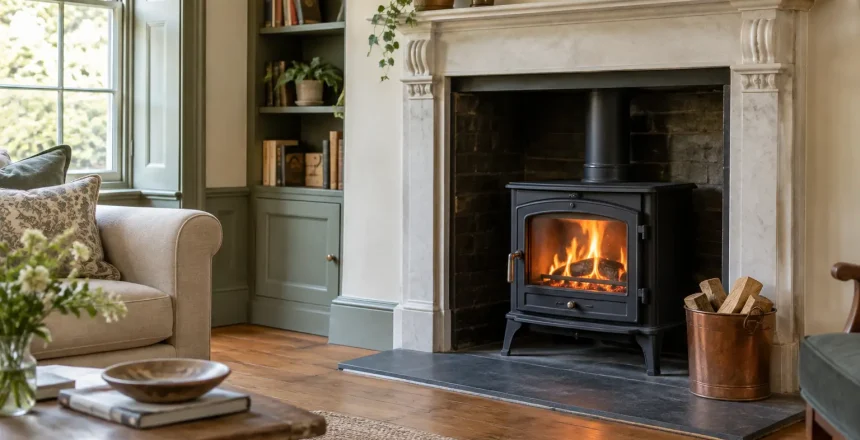
A period fireplace can be the making of a room, but it can also conceal decades of soot, uneven brickwork and a chimney that is not ready for modern use. The best stoves for period homes are not simply the most traditional-looking models. They are the stoves that suit the room, work safely with the property’s construction and deliver useful heat without overwhelming the space.
Whether you own a Victorian terrace, an Edwardian semi, a cottage or a Georgian property, the right choice starts with the building itself. Its fireplace opening, chimney route, room size and ventilation all matter as much as the appearance of the stove.
What makes a stove right for a period property?
Older homes often have features worth preserving: original chimney breasts, decorative surrounds, quarry-tiled hearths and generous inglenooks. A stove should complement these details rather than compete with them. Equally, an appliance that looks perfect in a showroom may be too large, too powerful or unsuitable for the existing chimney.
Period homes also tend to lose heat differently from newer houses. Solid walls, suspended timber floors, single glazing and draughts can make a room feel cold, yet fitting an oversized stove is rarely the answer. Too much heat can make the main living room uncomfortable and encourage the stove to be run at a low temperature, which is not good operating practice.
A proper site survey allows an installer to assess the fireplace, flue route, hearth and required clearances before recommending a stove. This prevents a decision being based on style alone and gives you a clear plan for a compliant installation.
The best stoves for period homes by property style
There is no single stove that suits every older property. However, a few broad styles consistently work well when matched carefully to the setting.
Traditional cast-iron stoves
A traditional cast-iron stove is often the natural choice for Victorian and Edwardian homes. Its shaped body, framed door and classic proportions sit comfortably within an original fireplace opening, particularly where there is a tiled or stone surround. Black is the familiar finish, though subtle graphite and charcoal shades can soften the look without losing authenticity.
Cast iron retains heat well, which can provide a pleasant, steady warmth after the fire has settled. The trade-off is visual weight. In a small front room or narrow terrace, a particularly ornate or large model can dominate the fireplace. Choosing a compact design with a wide viewing window often gives the best balance of character and light.
Clean-lined steel stoves
Not every period home needs a reproduction-style appliance. A simple steel stove can look excellent in a renovated cottage, an arts-and-crafts house or a period property with a more contemporary interior. The contrast between clean lines and original brickwork can feel deliberate rather than out of place.
This approach works especially well where the old fireplace has been opened up to reveal brick or stone. Keep the stove proportions modest and avoid filling every inch of the opening. Some breathing room around the appliance lets the original structure remain part of the design.
Compact stoves for smaller rooms
Many period properties have modest reception rooms. A compact stove with an appropriately low heat output is often more useful than a larger statement model. It can take the edge off a chilly room, create a focal point and remain comfortable to sit near during an evening.
Output should be calculated properly rather than guessed from room dimensions alone. Insulation levels, ceiling height, open doorways and the amount of glazing all affect heat demand. A HETAS registered engineer can help establish a sensible output at survey stage.
Larger stoves for inglenooks and open-plan spaces
Farmhouses, country cottages and some Georgian homes may have deep inglenooks or larger living spaces. These can accommodate a physically larger stove, but the appliance must still be sized for the heat requirement, not just the opening. A deep fireplace can make a small stove look lost, yet a high-output stove may quickly make the room too hot.
In some cases, bringing the stove forward within the opening improves both heat delivery and appearance. The flue arrangement, non-combustible surfaces and clearances must all be considered as part of the installation design.
Wood burning or multi-fuel: which is the better choice?
For many homeowners, a dedicated wood burning stove is the straightforward option. It is designed around burning dry, seasoned wood and offers the familiar flame picture people want from a period fireplace. Using properly dried fuel is essential for efficient burning and cleaner operation.
A multi-fuel stove may suit households that want the flexibility to use approved smokeless fuel as well as wood. The better option depends on how you plan to use the stove, what fuel is conveniently available and the manufacturer’s instructions. Do not choose a multi-fuel model solely because it sounds more versatile. A wood burner is often the better fit where wood will be the main fuel.
If your home is in a Smoke Control Area, the stove and fuel choice need particular attention. You may need a DEFRA exempt appliance to burn wood legally. This is one reason a survey and professional recommendation are more valuable than buying on appearance alone.
Respecting original fireplaces without compromising safety
An original fireplace opening is not automatically suitable for a new stove. Historic brickwork can be uneven, the lintel may need assessment, and the chimney may require a correctly specified liner before it can be used safely. These are normal considerations in older buildings, not reasons to abandon the project.
The hearth is equally important. Current requirements cover its construction, size and the protection it provides to the surrounding floor. A well-designed hearth can be sympathetic to the age of the property, using materials and proportions that sit naturally with the room while meeting the necessary standards.
Listed buildings and homes in conservation areas may need additional thought. Internal work does not always require consent, but original features, external flue routes and alterations to the fabric of the building can be sensitive. Check the position with your local authority before work begins, particularly where the proposal changes a notable historic element.
Chimney choice matters as much as stove choice
A period chimney can look sound from the fireplace while hiding issues further up the flue. A professional assessment identifies whether the chimney is suitable for lining and whether its route, condition and termination can support the planned appliance. Lining is commonly used to create a correctly sized, efficient flue for a modern stove.
Where there is no usable chimney, a twin-wall stainless steel chimney system can make a stove possible in many period homes. This can be a practical route for extensions, converted rooms or properties where the original fireplace has been removed. The system needs careful planning so that it is safe, compliant and as visually discreet as possible.
Ventilation should never be overlooked. While many older homes are naturally draughty, others have been improved with new windows, insulation and sealing work. A stove may need a dedicated air supply depending on its output and the property. This is assessed as part of a compliant installation, not added as an afterthought.
A sensible way to choose your stove
Start with the room and the fireplace, then narrow down the style. Bring measurements and photographs to your survey, but remain open to recommendations once the chimney and hearth have been assessed. The ideal stove is one that feels proportionate in the opening, provides the right heat output and can be installed to current standards.
It is also worth thinking about how the room is used. A stove in a family living room may need a clear view of the flames and easy day-to-day operation. In a formal drawing room, visual symmetry with the original surround may take priority. Both approaches can work well when the technical design is right.
At Stove Specialists UK, a HETAS registered engineer can manage the process from survey and stove choice through to installation and certification, giving homeowners clear advice without the guesswork. The aim is not to force a modern appliance into an old fireplace. It is to create a warm, safe focal point that looks as though it belongs there.