
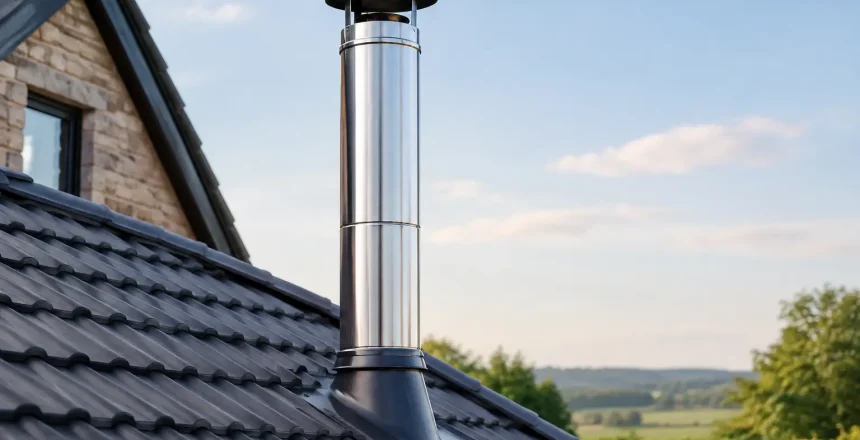
A wood burner does not need an existing chimney to become a safe, attractive centrepiece. The best twin wall chimney systems make a stove possible in extensions, new-builds, garden rooms and properties where a traditional chimney is unsuitable. However, the right system is not simply the shiniest stainless steel pipe. It must be correctly specified for the stove, the route through the building and the requirements of Building Regulations.
For homeowners, that is the difference between a stove installation that looks tidy and performs well, and one that creates unnecessary cost, disruption or compliance issues later. A proper survey and a HETAS registered installation team turn a technically demanding job into a straightforward, fully managed project.
What makes a twin wall chimney system a good choice?
Twin wall chimney systems are insulated stainless steel flues designed to carry stove gases safely from the appliance to a suitable termination point. Unlike a flexible liner, which is fitted inside an existing masonry chimney, twin wall flue creates a complete chimney route where no usable chimney is available.
Each section has an inner stainless steel wall, high-temperature insulation and an outer stainless steel casing. This construction keeps flue gases warmer than a single-skin connection pipe can. Warmer gases rise more effectively, helping the chimney establish a reliable draw while reducing the likelihood of excessive cooling within the flue.
The visual result can be as discreet or as prominent as the property allows. Some installations run internally through floors and exit through the roof. Others pass from the stove through an external wall before rising up the outside of the house. Neither route is automatically better. An internal route often supports stronger flue performance because more of the chimney remains within the heated building, while an external route may avoid work through upper rooms. The best option depends on the layout, available clearances and the overall finish you want.
How to compare the best twin wall chimney systems
It is tempting to compare systems by price per metre, but that tells only a small part of the story. A complete system needs to work as one tested arrangement, with compatible sections, supports, wall brackets, weathering details and terminal. Mixing unrelated products can compromise certification and makes it harder to demonstrate that the installation follows the manufacturer’s instructions.
Insulation and material quality
Look for a purpose-made, insulated system suitable for solid-fuel appliances. High-grade stainless steel and a properly insulated construction are essential because a stove flue operates at demanding temperatures. The system should be selected for the intended use, not merely because it appears similar to a lower-cost product designed for another application.
The thickness and quality of insulation influence how well the flue retains heat. This matters most on long external runs or in exposed locations. Better thermal performance can help the stove light more easily, maintain a steadier draw and reduce the chance of smoke entering the room when the door is opened.
Correct flue diameter
The chimney diameter must suit the appliance manufacturer’s requirements. A larger flue is not always an upgrade, and a smaller flue is not a money-saving shortcut. Incorrect sizing can affect draw, combustion and the way the stove performs day to day.
Most domestic stove installations use a flue diameter determined by the stove outlet and its stated specification, with particular rules applying to certain appliances and installations. Your installer should confirm this during the survey rather than making assumptions from the room size or the appearance of the stove.
A sensible, direct route
A chimney works best when it has enough effective height and a route that avoids unnecessary direction changes. Bends can be accommodated where needed, but every change in direction must be planned carefully. The aim is to give gases a clear path upwards while keeping the installation practical for the building.
This is why a site survey matters. Ceiling heights, roof construction, joist positions, wall types and neighbouring structures all affect the route. What appears to be a simple external installation may require careful planning around eaves, windows and the terminal position. Equally, an internal route may be the neatest solution, but it needs suitable clearances and fire-stopping where it passes through floors or the roof.
Tested clearances and support
Twin wall systems must be installed with the clearances stated by their manufacturer. These gaps protect combustible materials within walls, ceilings and roof spaces. They are not optional finishing details and should never be reduced simply to make a route fit.
The chimney also needs proper structural support. Vertical sections carry considerable weight, especially on taller installations. Correct brackets, load-bearing supports and roof details keep the flue stable in wind and ensure it remains safely aligned. A competent installer will explain where these elements are required and make the finished route look considered rather than improvised.
The installation choices that affect performance
The best twin wall chimney systems are only as good as the design behind them. Before any fitting begins, the installer should assess the stove output, room volume, ventilation needs, proposed hearth, building construction and chimney route. This is particularly important in modern homes, where improved insulation and airtightness can affect how combustion air is supplied.
A stove should also be positioned with suitable distances from combustible surfaces and in line with the appliance instructions. The hearth and surrounding area need to meet the relevant requirements, while the flue connection must be made with the correct transition from the stove to the insulated chimney. These details protect the household and allow the stove to operate as intended.
Termination height is another area where shortcuts cause problems. The chimney must finish in a position that allows smoke to disperse appropriately and meets the applicable rules in relation to the roof and nearby features. A terminal that is too low, too close to an obstruction or poorly positioned for the site can lead to poor draw or nuisance smoke.
Why compliance should be part of the quote
A twin wall chimney is a safety-critical part of a stove installation. In England and Wales, solid-fuel work must comply with Building Regulations. Using a HETAS registered installer means the work can be self-certified where applicable, and you should receive the relevant notification and certificate once the installation is complete.
This paperwork matters when you sell your property, arrange insurance or simply want confidence that the installation has been completed to recognised standards. It also gives you a clear record of what has been installed and who was responsible for the work.
A thorough quote should account for more than the stove and visible length of flue. It should cover the proposed route, all necessary installation work, hearth requirements, building penetrations, weatherproofing, compliance and certification. If a price seems unusually low, ask what is included, what has been allowed for and whether a site survey has taken place.
Questions worth asking before you choose
Before agreeing to any installation, ask the installer to talk you through the proposed chimney route in plain English. You should understand whether the flue will run internally or externally, why that route is suitable and how it will be supported. It is also sensible to ask which system will be used, how clearances will be maintained and what certification you will receive at completion.
For a complete comparison, make sure you have answers to these practical points:
- Is the flue diameter matched to the chosen stove and its manufacturer instructions?
- Will the route provide sufficient height and minimise unnecessary bends?
- How will floors, walls or the roof be safely penetrated and weatherproofed?
- Does the quote include all work needed for a compliant, finished installation?
- Will the installation be completed and certified by a HETAS registered engineer?
A tailored system is usually the best system
There is no single twin wall chimney system that is right for every UK home. A compact single-storey extension, a detached garden room and a two-storey property with a complex roofline each present different challenges. The best outcome comes from choosing a quality insulated system and having it designed around the appliance and building, rather than forcing the building to suit an off-the-shelf route.
At Stove Specialists UK, we walk homeowners through the options before work begins, from stove position and flue route to hearth creation and final certification. Whether you are creating a new focal point in a home without a chimney or planning a more straightforward installation, clear advice and a properly managed survey are the strongest starting point.
A well-planned twin wall chimney should give you more than a route for smoke to leave the property. It should give you the confidence to enjoy your stove, knowing the installation has been designed for safe, efficient everyday use.