
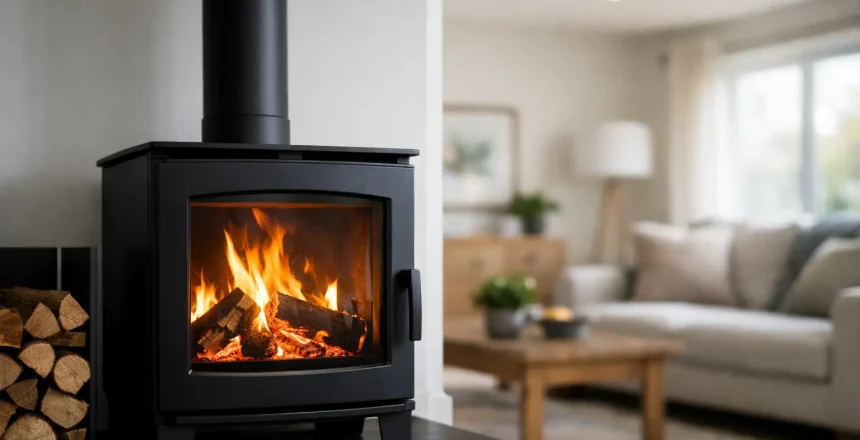
A lot of homeowners ask the same question when they buy a newer property or look at a room with no fireplace breast: can you have a log burner without a chimney? The short answer is yes. The more useful answer is yes, but it needs to be designed and installed properly so the stove can vent safely, comply with Building Regulations and work as it should.
This is where many people get caught out. A log burner does not need a traditional masonry chimney, but it does still need a safe route to take combustion gases out of the property. In most no-chimney installations, that route is created with an insulated twin wall flue system. Done correctly, it gives you the look and performance of a stove in spaces where people often assume it is not possible.
Can you have a log burner without a chimney in the UK?
Yes, you can have a log burner without a chimney in the UK, provided the installation includes a compliant flue system and meets the relevant building and safety requirements. In practice, that usually means a wood burning stove connected to a twin wall insulated stainless steel flue that runs internally, externally, or a mixture of both depending on the property layout.
This matters because the stove itself is only one part of the system. The flue, the hearth, the clearances to combustible materials, the ventilation requirements and the final certification all have to work together. If one element is wrong, the installation may be unsafe, inefficient or non-compliant.
For homeowners, that means the question is less about whether it can be done and more about what type of system your home needs.
What replaces a chimney?
In a home without an existing chimney, a twin wall flue system usually replaces it. This is a factory-made insulated chimney system designed to carry smoke and gases from the stove to the outside air while keeping temperatures controlled along the route.
The flue can often be taken up through the ceilings and out through the roof, or out through an external wall and then up the outside of the property. Which route is best depends on the room position, roof structure, property type and the visual finish you want.
An internal route can look neater and may help flue performance because it keeps more of the flue within the warm envelope of the house. An external rise can be a practical solution where internal disruption needs to be kept down. Neither is automatically right or wrong. It depends on the building and on getting the design correct from the start.
What a no-chimney stove installation involves
A proper no-chimney installation is more than fitting a stove in the corner and adding a pipe. The stove must sit on a suitable hearth, the connecting flue pipe and twin wall system must be sized correctly, and the termination point must meet the required clearances.
The room itself also needs to be assessed. Some homes, especially newer and more airtight properties, may need dedicated ventilation. Distance to walls, beams, plaster finishes and other nearby materials all have to be checked carefully. This is one of the main reasons a survey is so important.
For some customers, the best option is a straightforward freestanding stove with a vertical flue. For others, some building work is needed to create the right setting and safe spacing. It is not unusual for a project to involve hearth creation, flue boxing, wall protection or adjustments to suit the appliance chosen.
Can any room have a log burner without a chimney?
Not every room is automatically suitable, but many are. Ground floor reception rooms, open-plan spaces, extensions, garden rooms and newer houses without fireplaces can often accommodate a stove if the flue route can be installed safely.
The key question is whether there is a viable route for the flue and enough space around the appliance for safe operation. Roof lines, upstairs rooms, joists, windows, neighbouring boundaries and internal layouts can all affect what is possible.
This is why off-the-cuff advice is rarely enough. Two houses on the same street can require very different solutions. One may allow a simple internal rise through the roof, while the next may need a carefully planned external system to avoid structural obstacles.
The main trade-offs to understand
A no-chimney stove installation can be an excellent solution, but it helps to go in with realistic expectations. The biggest trade-off is cost. If you already have a sound chimney, using it may be more straightforward than building a new flue system from scratch. If you do not have a chimney, the twin wall system becomes an essential part of the project and that affects the overall budget.
There is also the visual side. Some homeowners like the look of a visible flue running through the room. Others want it kept as discreet as possible. Both can usually be achieved, but the property layout will influence the end result.
Then there is planning around the building itself. Roof penetrations, wall exits and flue heights need to be handled correctly. None of this is a problem when managed properly, but it does mean the installation should never be treated as a quick DIY-style upgrade.
Why professional design and HETAS installation matter
When people ask can you have a log burner without a chimney, they are often really asking whether it can be done safely and legally. The answer is yes, if the work is carried out to the correct standard.
A HETAS registered installer will assess the appliance, flue route, hearth, ventilation and compliance requirements as one complete system. That matters because every installation has to satisfy Building Regulations, and once the work is complete, certification provides evidence that it has been installed properly.
This is not just paperwork for the sake of it. Certification can be important for home insurance, future property sale questions and your own peace of mind. A professionally managed installation also reduces the risk of poor draw, smoke spillage and avoidable safety issues.
For homeowners, the value is simple: you want the stove to look right, perform well and be signed off correctly without hassle.
Choosing the right stove for a home with no chimney
The stove should suit both the room and the flue system. Bigger is not always better. An oversized appliance can make a room uncomfortably hot and may not run as efficiently as intended. A smaller stove, correctly matched to the space, often gives a better result.
It is also worth thinking about how you plan to use it. Some customers want a stove as a focal point and occasional heat source. Others want it to play a more serious role in home heating. That affects stove output, placement and the type of installation recommended.
A good installer will walk you through these choices in plain English. The aim is not to sell the biggest unit possible. It is to recommend a setup that is safe, compliant and practical for the way you live.
Common concerns homeowners have
One of the most common worries is whether a stove without a chimney will look like an afterthought. In reality, many of the best-looking installations are in homes that never had a fireplace to begin with. A well-positioned stove with a neatly planned flue and proper hearth can look entirely at home.
Another concern is disruption. There will be work involved, but in many cases it is less invasive than people expect, particularly when the flue route is planned well from the outset.
Homeowners also ask about legality, especially in newer properties. Again, the issue is not whether the house has a chimney. The issue is whether the installation is designed and signed off correctly.
Is a log burner without a chimney worth it?
For many households, yes. If you want the warmth, character and comfort of a real stove but your property has no chimney, a twin wall flue system can make it entirely achievable. It opens up options in rooms that would otherwise be ruled out and allows you to create a proper focal point without relying on an existing fireplace.
The deciding factors are usually budget, layout and choosing the right installer. A cheaper shortcut at the start can become expensive if the system is poorly designed or fails to meet the required standards. A properly specified installation, on the other hand, gives you a heating feature that is attractive, effective and built to last.
At Stove Specialists UK, this is exactly the kind of project we help homeowners with every day. If your house does not have a chimney, that does not mean a log burner is off the table. It simply means the installation needs the right plan behind it.
If you are considering a stove in a no-chimney property, the best next step is a proper survey and honest advice based on your home rather than guesswork. The right setup can be simpler than you think, and far better than trying to make the wrong one fit.