A stove installation is only as good as the route that safely carries smoke and gases away. When homeowners compare a chimney liner vs twin wall system, the right answer usually comes down to one practical question: do you already have a suitable chimney, or does the stove need a completely new flue route?
Both options can provide an efficient, compliant solution for a wood burning or multi-fuel stove. They do very different jobs, however, and choosing by price alone can lead to a system that does not suit the property, the appliance or the planned location of your stove.
What is a chimney liner?
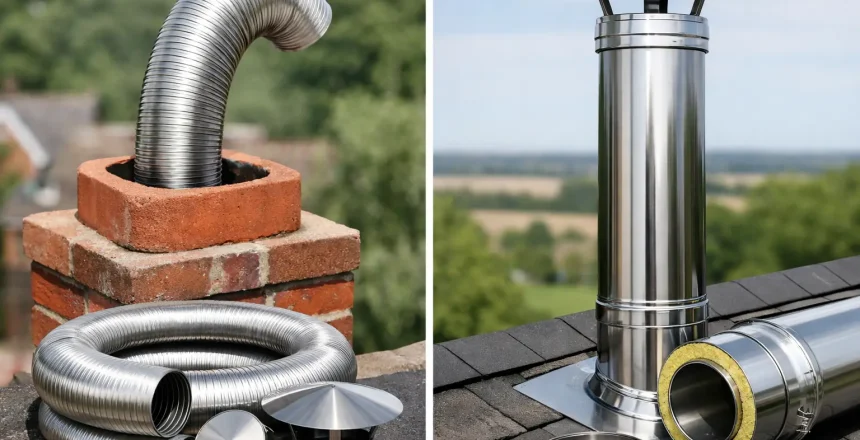
A chimney liner is a flexible stainless steel flue installed inside an existing masonry chimney. It creates a continuous, correctly sized route from the stove to the chimney pot, helping the stove draw properly and keeping combustion gases contained.
This is the usual choice where a property has a traditional chimney breast and fireplace opening. The visible character of the original fireplace can be retained, while the working flue inside is brought up to the standard required for a modern stove installation.
Older chimneys were often built for open fires. Their internal route may be oversized, uneven or affected by years of use. A liner gives the new stove a dedicated flue sized to the appliance manufacturer’s requirements. It can also improve draw, reduce the amount of heat lost into the chimney structure and make the installation more predictable.
A liner does not turn any chimney into an automatic yes. Before installation, a professional survey should confirm the chimney route, fireplace construction, terminal position and whether the system can be installed in line with Building Regulations. The stove output, fuel type and proposed hearth all matter too.
When a liner is usually the best fit
A chimney liner normally makes most sense if you have a usable masonry chimney directly above the proposed stove position. It is particularly suitable for homeowners replacing an open fire with a log burner, creating an inglenook installation or updating a traditional fireplace as a practical heating feature.
It can be the more discreet option because the main flue route is hidden within the chimney. From inside the room, the finished result can look clean and in keeping with the property, without a new external flue running up the outside wall.
What is a twin wall system?
A twin wall system is a purpose-made insulated stainless steel chimney system. Unlike a liner, it does not rely on an existing masonry chimney. It creates a complete flue route for properties with no chimney, for new-build homes, extensions, garden rooms and stove positions away from the original fireplace.
The name describes its construction. There are two layers of stainless steel with insulation between them. This helps keep flue gases warmer as they rise, supports effective draw and protects surrounding building materials when installed to the required clearances.
Twin wall can run internally through floors and the roof, externally up an outside wall, or use a planned combination of both. The final route depends on the layout of the house, structural details, the desired stove location and what can be installed safely and neatly.
When twin wall is the stronger option
Choose twin wall when there is no suitable chimney where you want the stove. It gives far more freedom over position, which can be valuable in an open-plan extension, a modern property or a room where the existing chimney is in the wrong place.
An external route can reduce disruption inside the home, while an internal route may help keep the flue warmer and can be visually integrated into the room design. Neither is automatically better. The best route is the one that meets clearance requirements, performs well and suits the property without unnecessary compromise.
Chimney liner vs twin wall system: the key differences
The most obvious difference is where each system sits. A liner goes inside an existing masonry chimney. Twin wall forms the chimney itself. That distinction affects the appearance, installation work, budget and level of flexibility available.
A lined chimney is generally the more natural choice when a sound, correctly positioned chimney already exists. It makes use of the structure you have and often keeps the installation visually traditional. Twin wall is the answer when the property needs a new route, not simply an improved route within an old chimney.
There is also a difference in what the installation team needs to assess. With a liner, the survey focuses on the existing chimney path and fireplace arrangement. With twin wall, the route must be carefully designed around wall or roof penetrations, support positions, safe distances from combustible materials and the height of the terminal.
Neither system should be selected without matching it to the stove. Flue diameter, appliance output, manufacturer instructions and the intended fuel all influence the specification. A flue that is too large, too small or poorly routed can affect performance, increase condensation and make lighting the stove more difficult.
Which option costs less?
A chimney liner can often cost less than a full twin wall system when the existing chimney is straightforward and suitable. Much of the route is already formed by the chimney stack, so there is less new visible chimney system to install.
That said, every property is different. A tall chimney, limited roof access, an awkward fireplace opening or additional building work can change the scope. Twin wall may involve more materials and installation planning, especially where it passes through a roof, but it can be the only sensible option in a home without a chimney.
The useful comparison is not simply the first price. Consider what is included: the survey, correct flue design, hearth requirements, installation, commissioning, carbon monoxide alarm and certification. A properly specified installation protects your home, supports stove performance and gives you clear evidence that the work has been completed compliantly.
Safety and compliance are not optional extras
A wood burner installation must comply with the relevant Building Regulations, including the requirements that apply to solid fuel appliances and flue systems. Clearances around the stove and flue, the hearth, ventilation where required, terminal position and carbon monoxide alarm provision all need to be addressed.
This is why a site survey is so valuable. Photographs and room measurements can be helpful for an initial quotation, but an installer needs to understand the full route and construction of the property before confirming the final recommendation.
Using a HETAS registered engineer gives homeowners added reassurance. Once the installation has been completed and commissioned, the work can be certified and notified correctly, giving you the paperwork expected for a compliant domestic stove installation.
Questions to ask before choosing
Before deciding between a liner and twin wall, establish whether the existing chimney is in the right place for the stove you want. Then consider whether you prefer a traditional fireplace installation or the freedom to position the stove elsewhere in the room.
It is also worth thinking about the route outside the property. A twin wall terminal will be visible, while a lined chimney generally uses the existing stack. In some homes, appearance and planning considerations may influence the preferred design just as much as cost.
Finally, be realistic about the appliance itself. A compact stove in a snug needs a different approach from a higher-output stove intended to heat a large living area. The flue system should support the appliance, not be treated as an afterthought.
For homeowners across the Midlands and surrounding areas, Stove Specialists UK can survey the property, explain the practical options and provide a fully managed, HETAS-compliant installation. The aim is simple: a stove and flue system that looks right, works properly and gives you 100% peace of mind from the first fire onwards.