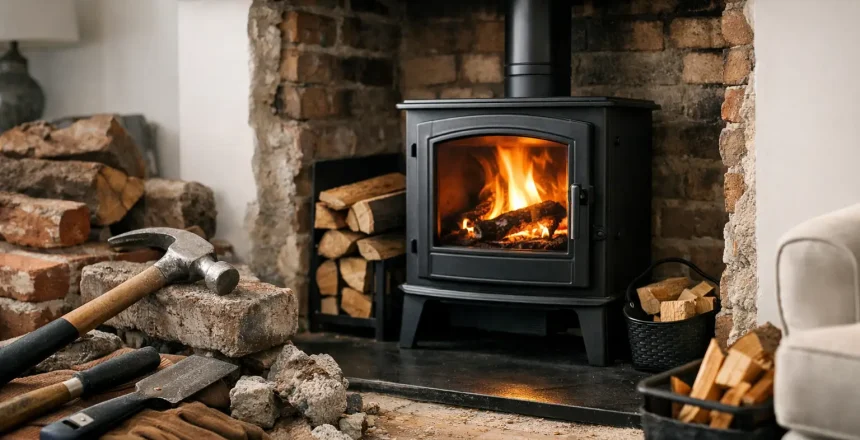
That open fireplace might look the part, but if it sends most of its heat up the chimney, it is not doing your home many favours. A fireplace conversion for wood stove installation can turn an inefficient feature into a practical heat source, but the work needs to be planned properly from the start.
For most homeowners, the real question is not whether a stove would look better than an open fire. It is whether the existing fireplace is actually suitable, what building work may be needed, and how to make sure the finished installation is safe, efficient and fully compliant. That is where specialist advice makes a real difference.
What a fireplace conversion for wood stove installation really involves
Many people assume the job is simply a case of placing a stove into the opening and connecting a flue. In reality, a proper conversion often includes several linked elements, and each one affects safety and performance.
The fireplace opening may need adjusting to suit the chosen stove and required clearances. The chimney usually needs to be checked and, in many cases, lined with a suitable flue liner. The hearth may need to be upgraded or newly constructed to meet current standards. Ventilation also has to be considered, especially in well-insulated homes where air supply is more restricted than it used to be.
This is why a fireplace conversion should be treated as a complete installation project rather than a cosmetic update. A stove that looks excellent on day one but has poor draught, incorrect clearances or non-compliant construction will quickly become a problem.
Is your existing fireplace suitable?
An old fireplace can be a strong starting point, but suitability depends on its condition, size and how the chimney performs. Some original openings are too large for the stove selected, which can leave the appliance looking undersized unless the chamber is altered. Others are too small and need opening up, which may involve building work around the recess and lintel.
The chimney condition is another key point. Older chimneys can suffer from internal deterioration, poor draw or previous alterations that are not visible until the site is inspected. Even where a chimney appears sound, that does not automatically mean it is suitable for direct stove connection without further work.
There is also the question of the room itself. A stove installation has to work safely within the property as it stands today, not as it did when the house was built. New windows, insulation upgrades and air-tightness improvements can all change how the appliance performs.
The flue is not the place to cut corners
A wood stove is only as good as the flue system serving it. In many fireplace conversion projects, the chimney needs a flexible stainless steel liner sized correctly for the appliance. This supports safe operation, improves draught and helps the stove burn fuel more cleanly.
In some homes, the existing chimney route is unsuitable or there may be no usable chimney at all behind the fireplace area. In those cases, a twin wall insulated flue system can provide a compliant alternative. That can make a stove possible even where the original setup is no longer viable.
This is one of the biggest it-depends areas in any conversion. Two fireplaces may look similar at first glance, yet one may be straightforward while the other needs a more involved flue solution. A proper survey removes guesswork and allows the installation to be designed around the property, rather than forced into it.
Hearths, clearances and chamber work
The visible finish matters, but the construction details underneath matter more. A compliant hearth is not optional, and the required size and projection depend on the stove type and installation arrangement. If the existing hearth is too small, too low or made from unsuitable materials, it will need to be altered.
The fireplace chamber often needs attention as well. Some chambers are opened up to create the right proportions for the stove. Others benefit from being reduced slightly for a neater fit and better visual balance. Heat-resistant boarding, chamber rendering and finishing materials may all form part of the work, depending on the design.
Clearances around the stove are equally important. Manufacturers set minimum distances to combustible and non-combustible surfaces, and those distances must be respected. This is not just about passing an inspection. It is about making sure the appliance can operate safely over the long term.
Choosing the right stove for the fireplace
A common mistake is choosing the stove on appearance alone. Size, output and flue compatibility all need to be matched to the room and the fireplace opening. Bigger is not always better. An oversized stove in a smaller room can lead to overheating and less comfortable day-to-day use.
The style of the property matters too. In some homes, a compact stove set neatly within an inglenook-style opening gives the best result. In others, a more contemporary model with a cleaner-lined chamber works better visually. The right recommendation should balance heat requirement, proportions, compliance and finish.
If you already have a stove in mind, that can still work, but it should be checked against the opening dimensions and installation requirements before any building work starts. That avoids expensive changes later.
What the installation process usually looks like
A well-managed project starts with a site survey. That is where the fireplace, chimney route, room size and structural details are assessed so the right installation method can be recommended. At this stage, any likely building work can also be identified.
Once the specification is agreed, the fireplace can be prepared. That may include opening up the recess, adjusting the chamber, fitting or upgrading the hearth, and preparing the route for the flue system. The stove and flue are then installed in line with current requirements, followed by commissioning and final checks.
When the work is carried out by a HETAS registered installer, the homeowner also benefits from formal certification for the completed installation. That is an important part of the process, not a paperwork extra. It confirms the work has been completed to the required standard and helps protect you when it comes to insurance and future property sale.
Legal compliance matters more than most homeowners think
A fireplace conversion for wood stove use is not just a design upgrade. It is a heating appliance installation governed by clear safety and building requirements. That includes hearth construction, flue specification, distances to materials, ventilation and commissioning.
Trying to treat it as a simple fireplace makeover can create costly issues later. Non-compliant work may need to be corrected, and in some cases the whole installation may need substantial alteration to make it safe. It is far better to get the specification right at the outset and have the work completed properly.
For homeowners, the practical benefit is peace of mind. You want to light the stove knowing it has been installed safely, performs as it should, and has been signed off correctly.
Cost, disruption and what affects the final price
The cost of a conversion varies because the hidden work varies. A straightforward installation into a sound existing fireplace with a suitable chimney will usually cost less than a project that needs a new hearth, significant chamber alterations and a more complex flue arrangement.
Property age, chimney condition and access can all affect the job. So can the finish you want. A simple, practical setup may suit one household perfectly, while another wants a more decorative chamber and hearth finish to make the stove a centrepiece.
As for disruption, most homeowners are pleasantly surprised when the work has been planned well. The key is using an installer who manages the project properly, explains what is needed in advance and keeps the work moving without unnecessary delays. That is the difference between a stressful build and a hassle-free installation.
When a conversion makes the most sense
A stove conversion is often the right move when you already have a fireplace that is underused, inefficient or visually dated. It can also make sense if you want a more controllable heat source and a stronger focal point in the room.
That said, not every fireplace should be converted in exactly the same way. Some period features are better suited to a sympathetic approach. Some rooms benefit from a smaller stove than expected. Some homes need more flue and ventilation work than the fireplace itself. Good installation advice is about recommending what works best for the property, not forcing a standard package onto every home.
For homeowners across areas such as the West Midlands, Oxfordshire and surrounding counties, this often comes down to wanting one company to handle the full process properly. That includes survey, advice, installation work and certification, without leaving you to coordinate multiple trades.
A well-planned fireplace conversion gives you more than a better-looking room. It gives you a stove that works safely, heats effectively and feels like it belongs in the home from the moment it is lit.