
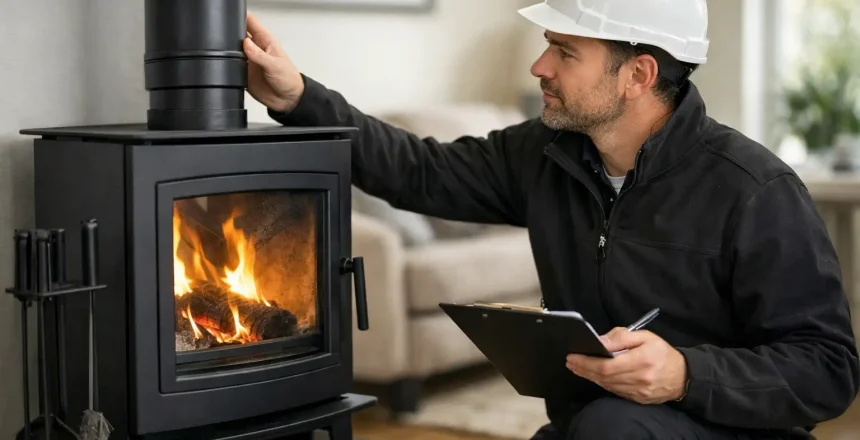
A new stove can transform a room, but the finished result should offer more than warmth and a great focal point. It must also be safe, legal and properly documented. This guide to HETAS stove certification explains what the certificate means, why it matters to homeowners and what should happen between your first survey and lighting your stove.
For most homeowners, the reassuring route is straightforward: use a HETAS registered installer who can assess the property, complete the installation to the relevant standards and notify the work once it is complete. That gives you clear evidence that the installation has been handled professionally, without leaving you to untangle building regulations yourself.
What HETAS stove certification actually means
HETAS is the UK body that approves heating appliances, fuels and installers for solid fuel systems. A HETAS registered engineer has demonstrated competence in the installation of wood burning stoves, multi-fuel stoves, flues and chimneys.
When people refer to a “HETAS certificate”, they usually mean the compliance certificate issued after a HETAS registered installer has completed and self-certified the work. The installation is notified to the relevant local authority building control department, and a certificate is normally sent to the homeowner afterwards.
This is not simply a receipt, a product warranty or a manufacturer approval. It is evidence that the completed installation has been assessed against the relevant building regulations. That distinction matters. A high-quality stove still needs the correct flue arrangement, clearances, hearth and ventilation for the property in which it is fitted.
Certification does not mean every home needs the same solution. A traditional chimney, a new-build property and an extension without a usable chimney can all require very different approaches. The aim is always the same: a properly designed route for fumes to leave the property safely and for the stove to operate as intended.
Why certification matters when selling, insuring or improving your home
A stove installation is not a cosmetic change. It involves combustion, high temperatures and a flue system that passes through or alongside the building. Building regulations are there to reduce risks from fire, carbon monoxide and unsafe discharge of combustion gases.
Your HETAS compliance certificate creates a useful paper trail. Keep it with your property documents, alongside the stove instructions and commissioning information. It can be requested by a solicitor during a sale, and it may be relevant if an insurer asks for proof that heating work was carried out correctly.
Missing documentation can create unnecessary questions later. It does not automatically mean an installation is unsafe, but it can make a sale more complicated and may require further checks. Having the correct certificate from the outset is the simpler, more reassuring option.
There is also a practical benefit. A registered installer will consider the whole system, not just whether a stove fits into an existing fireplace opening. This includes whether the chimney is suitable, whether a liner is needed, how the flue will terminate, and whether the room requires permanent ventilation.
The route from survey to certificate
A professional installation begins well before fitting day. At survey stage, the engineer should discuss how you plan to use the stove, inspect the proposed location and identify any building work needed to create a compliant installation.
For a property with an existing chimney, this may involve checking the chimney’s condition, dimensions and route. In some homes, a suitable liner can be installed within the chimney. Where there is no chimney, a twin wall stainless steel chimney system may provide a safe solution, subject to the property layout and required clearances.
The survey also helps determine the right stove output. Bigger is not always better. An oversized stove in a well-insulated room can make the space uncomfortably hot and may encourage inefficient low-temperature burning. A correctly specified stove is more likely to provide controlled, enjoyable heat.
Once the design is agreed, the installer can complete the required works. Depending on the home, this could include creating or upgrading a hearth, fitting a flue system, carrying out chimney works or making good the immediate installation area. The finished stove should then be commissioned, with the homeowner shown how to operate it safely.
After completion, a HETAS registered installer can self-certify the work through the appropriate notification process. You should receive your certificate after the installation has been registered. Timescales can vary, so ask your installer what to expect and retain all documents when they arrive.
What a HETAS engineer will check
Every property is different, but certification relies on a number of critical checks. The engineer will assess whether the chosen appliance is appropriate for the room and whether the installation meets the requirements for safe operation.
The hearth must provide adequate protection from heat and falling embers. Its construction and dimensions depend on the stove and installation arrangement, so this should never be treated as a one-size-fits-all detail. The stove also needs suitable clearances from combustible materials, including nearby timber features and finishes.
The flue and chimney arrangement is equally important. It must be correctly sized, securely installed and routed to encourage effective draw. The termination point needs to sit in an appropriate position so fumes can disperse safely. A poorly planned flue route can affect performance and create avoidable concerns for the household and neighbouring properties.
Ventilation is another area where professional advice matters. Modern homes are often more airtight than older properties. Some installations need permanent air ventilation to provide enough combustion air, particularly where the stove output is higher or the property has been upgraded for energy efficiency.
Finally, the system is tested and commissioned. This gives the installer the opportunity to confirm that smoke is drawing correctly through the flue and that the homeowner understands the stove controls, suitable fuel and everyday safe use.
HETAS certification versus building control approval
There are two recognised routes for notifying a domestic solid fuel installation. The most convenient is usually to appoint a HETAS registered installer, who can self-certify eligible work and arrange notification after completion.
The alternative is to apply to local authority building control before work begins. This route can be appropriate in certain circumstances, but it generally places more administration and responsibility on the homeowner. Building control may inspect the work, and fees can apply.
What should not happen is an installation being completed with no notification route at all. A verbal assurance that a job is “fine” is not a replacement for formal compliance documentation. Before booking, ask clearly who will notify the installation and how you will receive the certificate.
Questions worth asking before you book
A good installer will welcome practical questions. Ask whether they are currently HETAS registered, whether the quoted work includes certification and whether they will survey the full chimney or flue route before confirming the final specification.
It is also sensible to ask what building work is included, whether the selected stove is suitable for a smoke control area, and what ventilation or hearth requirements apply in your home. If you are supplying your own stove, confirm that the installer is happy to fit it and that its dimensions, output and installation instructions have been reviewed first.
Price matters, but a quote should be judged on scope as well as the headline figure. A low figure can be less attractive if it leaves you arranging chimney lining, hearth work, flue installation or certification separately. A fully managed service gives you one accountable team and a clearer route to completion.
A certificate is the final reassurance, not the starting point
HETAS stove certification should be viewed as the outcome of careful planning and competent installation. It reflects the decisions made at survey stage, the quality of the flue and hearth work, and the checks completed before the stove is handed over.
For homeowners across the Midlands and surrounding counties, Stove Specialists UK provides a fully managed, HETAS-led installation service for both existing chimney and no-chimney projects. The right advice at the beginning can prevent costly uncertainty later and leave you with a stove you can enjoy with genuine peace of mind.