
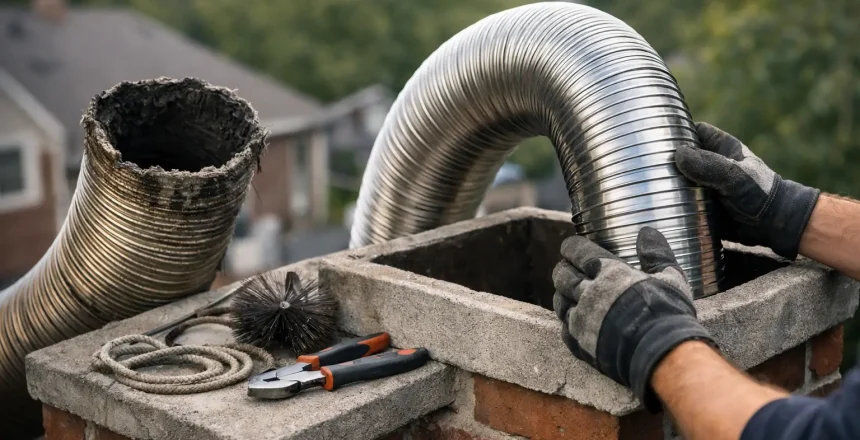
If your stove is working well, it is easy to assume the chimney liner above it is doing the same. In reality, one of the most common homeowner questions is how often should chimney liners be replaced, and the honest answer is not by calendar alone. A liner should be replaced when its condition, fuel use, appliance type, and installation history show it is no longer safe or suitable.
For most UK homes with a stainless steel flexible flue liner connected to a wood burning or multi-fuel stove, a typical lifespan is often somewhere between 10 and 20 years. That is a useful guide, not a promise. Some liners last longer with correct installation and proper use, while others need replacing sooner because of poor burning habits, oversized appliances, damp chimneys, or corrosion from the wrong fuel.
How often should chimney liners be replaced in practice?
In practice, replacement is usually based on condition rather than age alone. A liner may still be serviceable after 15 years if it has been correctly sized, professionally installed, and used with seasoned wood. Another may need replacing much earlier if it has been exposed to excessive condensation, slumber burning, or mineral fuels that are too harsh for its grade.
That is why a professional inspection matters. Homeowners often want a simple number, but safe recommendations come from what the liner is actually doing inside the chimney. If the liner is deteriorating, leaking fumes, or no longer matches the appliance, replacement should not be delayed just because it has not reached a certain age.
Clay and pumice systems can last much longer than flexible stainless steel liners, but they still need assessing if there are signs of failure or if the appliance connected to them has changed. The same applies to rigid systems and twin wall flues. Different materials age differently, and the fuel being burned makes a big difference.
What affects chimney liner lifespan?
The biggest factor is the way the stove is used. Burning wet wood creates more tar and condensation. Those deposits sit inside the flue, increasing the risk of liner deterioration and poor draw. Slumbering a stove for long periods can have a similar effect because cooler flue gases encourage condensation.
Fuel type matters just as much. Wood-only use is generally kinder to the right grade of liner than regular multi-fuel use. Some fuels produce more aggressive deposits and can shorten the working life of a liner if the specification is not suitable.
Installation quality is another major factor. A liner that is the wrong diameter, poorly supported, or incorrectly connected to the stove can suffer from ongoing performance problems. In many cases, what looks like a liner reaching the end of its life is actually the result of a poor original setup.
Sweeping and routine inspection also influence lifespan. A chimney that is maintained properly gives problems fewer chances to develop unnoticed. It is far better to spot early signs of wear during routine servicing than to wait for staining, smoke issues, or failed tests.
Signs a chimney liner may need replacing
Most homeowners do not see the liner itself, so the warning signs tend to show up elsewhere in the stove system. If the stove becomes harder to light, smoke spills into the room, or the draw suddenly worsens, the flue should be checked. Those issues do not always mean replacement is needed, but they should never be ignored.
Visible tar seepage around the chimney breast or fireplace opening can point to a liner problem. Persistent strong odours from the chimney, especially when the stove is not in use, can also suggest condensation and internal flue issues. In more serious cases, there may be evidence that fumes are not being safely contained.
If a liner fails an inspection or test, replacement becomes a safety matter, not a maintenance choice. That is especially important where a new stove is being fitted into an older chimney. A liner that was once accepted for a previous appliance may no longer be suitable for a newer, more efficient stove.
How often should chimney liners be replaced when fitting a new stove?
This is where many homeowners get caught out. If you are changing the appliance, it is not safe to assume the existing liner can stay. The new stove may require a different diameter, a different grade of liner, or a full reassessment of the chimney setup.
Sometimes the existing liner is sound and correctly matched. Sometimes it is not. Age is only one part of that decision. Compliance, appliance output, flue size, route, and the fuel you plan to burn all matter.
When we assess a new installation, we look at the full system rather than one component in isolation. That approach avoids the false economy of fitting a new stove onto a flue arrangement that is already nearing the end of its safe working life.
Why replacement timing is not one-size-fits-all
Two homes can have apparently similar stoves and completely different liner life. One may use kiln-dried or properly seasoned logs, burn hot and clean, and have regular chimney sweeping. The other may rely on damp fuel, run the stove low for long periods, and go too long between inspections. The difference inside the flue can be significant.
Property type plays a part too. Older chimneys can be colder and more exposed, which may increase condensation. Homes with difficult chimney routes or external stacks can place greater demands on the liner than a simpler internal chimney arrangement.
That is why broad claims such as every liner lasts 15 years are not particularly helpful. They give a rough expectation, but they are not a basis for a safe decision. A proper inspection will always tell you more than age alone.
Should you replace a liner before it fails?
In many cases, yes. Waiting for outright failure can create avoidable safety risks and often means greater disruption later. If inspection shows clear deterioration, heavy corrosion, poor compatibility with the appliance, or recurring performance issues linked to the flue, a planned replacement is the sensible option.
This is especially true if you are investing in a new stove installation and want 100% peace of mind. A replacement carried out at the right time gives you confidence that the whole system is working as it should, rather than hoping an ageing liner will keep going for another season.
There is a cost consideration, of course. Homeowners naturally want to avoid replacing anything before necessary. But there is also a trade-off between stretching lifespan and maintaining a fully compliant, dependable stove system. The right decision balances both.
Inspection, compliance and peace of mind
A chimney liner is not something to guess about. It should be assessed by a competent installer who understands flue sizing, appliance requirements, and current regulations. For stove owners in the UK, that often means using a HETAS registered engineer who can judge whether the liner remains safe and suitable.
This is particularly important during property improvements, house purchases, or when bringing an existing fireplace back into use. A chimney may look fine from the room, but that tells you very little about the condition of the liner above.
At Stove Specialists UK, we always recommend looking at the chimney as part of the full installation picture. That means giving homeowners clear advice, explaining whether a liner is still fit for purpose, and making sure any new stove setup is compliant from day one.
A realistic rule of thumb for homeowners
If you want a practical benchmark, think of 10 to 20 years as the common range for many stainless steel liners, then treat that as a prompt for closer attention rather than an expiry date. If your liner is in that age bracket, if your stove use has been heavy, or if you are changing appliances, it is a sensible time to have it professionally assessed.
If the liner is older and there is no clear installation record, inspection becomes even more important. Homeowners are often surprised to learn that the liner installed years ago was never the ideal type for the stove now connected to it.
The safest answer to how often should chimney liners be replaced is this: replace them when a proper inspection shows they are no longer safe, efficient, or suitable for the appliance they serve. If you are unsure, getting expert advice now is far easier than dealing with a failed system in the middle of the heating season.
A well-installed stove should feel straightforward to use and reassuring to own, and the flue liner is a big part of that confidence.