
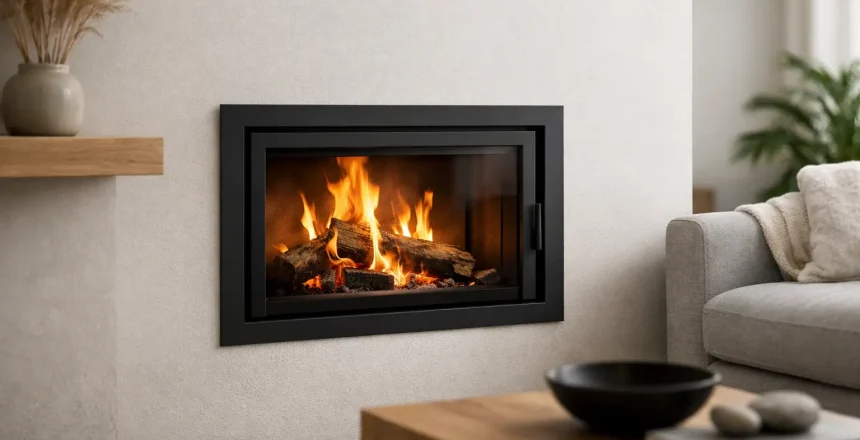
If you want the warmth of a real fire without a stove projecting too far into the room, an inset log burner is often the first option worth considering. It gives you the cleaner lines of a built-in feature, while still delivering the comfort, flame picture and efficiency people want from modern wood burning. For many homeowners, that balance between appearance and practicality is exactly the appeal.
An inset stove sits within a fireplace opening or false chimney breast rather than standing fully out on the hearth. That sounds simple enough, but the suitability of your home depends on more than whether there is a chimney in place. Fireplace depth, surrounding materials, flue route, ventilation and compliance all matter, and they matter from the start rather than as an afterthought.
Why choose an inset log burner?
The main reason is visual. An inset appliance creates a neater, more integrated finish than a freestanding stove. In period homes, it can make better use of an existing fireplace recess. In newer homes, it can help create a focal point without taking up as much floor space.
That space-saving benefit is often underestimated. In smaller lounges, garden rooms and open-plan areas, every bit of usable room matters. A stove that sits back into the wall can make furniture layout easier and reduce the feeling that the fire dominates the whole room.
There is also a practical side. A properly specified inset model can provide efficient heat output and controlled combustion, especially compared with an open fire. You still get the character of burning logs, but usually with far better performance and less wasted heat.
That said, inset is not automatically the better choice for every property. Some homes are better suited to a freestanding stove, particularly where fireplace dimensions are limited or where the desired heat output calls for a different installation arrangement.
What makes an inset log burner suitable for your home?
The first question is whether you have an existing chimney breast and fireplace opening, or whether you are creating a new feature wall. Both can work, but the installation route is different.
If your property already has a fireplace recess, the opening may need altering to accommodate the appliance safely and neatly. That can involve building work to achieve the right height, width and depth, as well as making sure the chamber is prepared with suitable non-combustible materials.
If there is no usable chimney, an inset stove may still be possible with a twin wall insulated flue system and a purpose-built housing. This is common in extensions, newer homes and rooms where a traditional chimney simply does not exist. It often surprises homeowners that a lack of chimney does not rule out a stove – it just changes the design and installation approach.
The other major point is heat requirement. A room that needs modest background warmth may suit a smaller inset model very well. A large open-plan space is different. In that case, you need to look carefully at output, airflow and how the stove will perform in real use rather than choosing on looks alone.
Fireplace opening, chamber and hearth requirements
One of the biggest mistakes people make is assuming a stove will fit because the brochure dimensions look close enough. In practice, an inset installation needs proper clearances, appropriate chamber construction and a compliant hearth arrangement.
The recess itself must be large enough not only for the appliance, but also for safe installation and operation. The internal chamber must be finished in materials suitable for the temperatures involved. The hearth size and projection must meet current requirements, and its appearance should work with the overall room design.
This is where a site survey matters. What looks like a straightforward existing fireplace can hide uneven masonry, awkward flue alignment or insufficient depth. Those details affect both the finish and the safety of the installation.
Flue lining and chimney considerations
An inset log burner relies on the right flue setup to perform properly. If you have a masonry chimney, it will usually need assessing to confirm condition, route and suitability for lining. In many cases, a new liner is required to match the appliance and provide a safe, efficient passage for flue gases.
If the chimney is oversized, damaged or unsuitable in its current state, simply connecting a new stove to it is not the answer. Poor draft, smoke issues and long-term safety concerns can follow. A correctly specified flue system is not an optional extra – it is central to how well the stove works.
Where no chimney exists, a twin wall stainless steel system can often provide a compliant route. The key is designing that route carefully so it works technically and looks right externally and internally. There is always a balance between performance, building layout and visual impact.
Ventilation and room air supply
Modern stoves burn far more efficiently than old open fires, but they still need the right air supply. Depending on the appliance and the property, additional ventilation may be required to keep the installation compliant and the stove operating as intended.
This becomes especially relevant in newer or upgraded homes with better insulation, draught-proofing and sealed windows. A room that feels comfortable and energy efficient can also be a room with less natural air leakage. That is good for heating bills, but it means ventilation has to be considered properly when fitting a stove.
A professional assessment should also take into account extractor fans and the broader airflow of the property. These details can affect stove performance more than many people expect.
Appearance matters – but so does heat distribution
Inset stoves are popular because they look smart, but the best results come when design and heating performance are considered together. A flush, built-in look can be very effective in contemporary rooms. In more traditional settings, a deeper recess and a more defined chamber can preserve character while still giving you the benefits of a modern appliance.
The trade-off is that an inset stove generally sits further back, so heat projection into the room can feel different from some freestanding models. That does not mean it performs poorly. It means the appliance choice, recess design and room size need to work together.
If your main aim is to create a visual focal point with dependable supplementary heat, an inset model often makes excellent sense. If your priority is pushing as much direct heat as possible into a very large space, it is worth comparing options rather than assuming inset is the strongest performer.
Installation is not just about fitting the stove
A compliant stove installation usually involves more than placing the appliance into an opening. There may be building work to reshape the recess, create or upgrade the hearth, install or line the flue, and finish the chamber so it is ready for safe use.
This is why many homeowners prefer a fully managed service. Instead of coordinating separate trades and hoping everything lines up, the process is planned from survey through to final certification. It removes guesswork and helps avoid the common situation where a nice-looking design turns out to be impractical once installation begins.
For homeowners across areas such as the West Midlands, Oxfordshire and surrounding counties, this can be particularly useful when properties vary from older period homes to modern builds with no existing chimney structure.
Compliance, certification and peace of mind
With any solid fuel appliance, legality and safety should lead the decision. An inset stove must be installed to current regulations, with the correct flue arrangement, safe distances to combustible materials and suitable ventilation where needed.
This is where using a HETAS registered installer makes a real difference. You are not just paying for the stove to be fitted. You are paying for the installation to be assessed properly, completed to the right standard and formally certified. That matters for safety, for home insurance, and for confidence that the job has been done correctly.
At Stove Specialists UK, that is exactly how we approach it – practical advice first, compliant installation throughout, and a fully managed service designed to give homeowners 100% peace of mind.
What affects the overall cost?
The appliance itself is only one part of the budget. The final cost depends on the stove chosen, the condition of the existing chimney, whether a new flue system is needed, the amount of building work required and the finish you want around the fireplace opening.
A simple installation into a suitable existing recess will generally cost less than creating a new inset feature in a property with no chimney. Neither is necessarily the wrong choice. It just means quotes should be based on the real work involved, not a rough guess.
Good installers will walk you through what is required and why. That clarity helps you compare options properly and avoid cheap-looking estimates that leave out essential elements.
Is an inset log burner the right choice?
If you want a stove that looks built in, saves space and gives a clean, finished appearance, it is often a very strong option. It suits homeowners who care about both heating performance and how the fireplace sits within the room. It also works well where an old fireplace needs updating without losing its place as the focal point.
But it is not only about style. The best inset installations are the ones planned carefully around the property, the flue route and the heat requirement. Get those right, and you end up with a stove that looks as though it was always meant to be there.
If you are weighing up whether an inset design will work in your home, the most useful next step is not guessing from photos – it is getting proper advice based on the room, the chimney and the finish you actually want.