
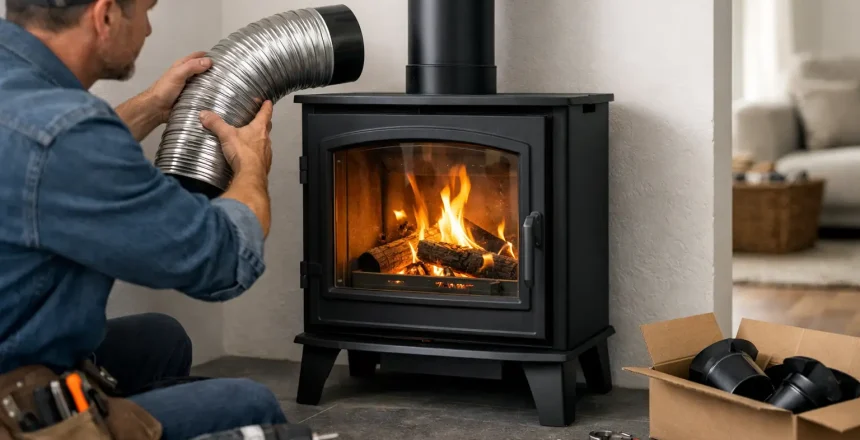
A wood burning stove can transform a room, but the question most homeowners ask before buying one is simple: is it easy to install a wood burning stove? The honest answer is that it can look straightforward from the outside, yet a compliant UK installation involves far more than placing a stove in a fireplace and connecting a flue. Safety, building regulations, chimney condition, ventilation and certification all matter.
For some homes, the work is fairly direct. If you already have a suitable chimney breast, a sound flue route and enough space for the correct hearth and clearances, the project may be relatively smooth. In other homes, installation quickly becomes more involved, especially where the chimney needs lining, the opening needs altering, or there is no chimney at all.
Is it easy to install a wood burning stove in the average home?
In the average UK home, installing a wood burning stove is usually not a simple DIY job. That is not because the stove itself is especially complicated, but because the full system has to work safely together. The appliance, flue, chimney or twin wall system, hearth, air supply and surrounding building materials all need to meet current standards.
This is where many people underestimate the job. A stove that looks neatly fitted can still be unsafe if the flue size is wrong, the chimney is unsuitable, the hearth dimensions are incorrect, or required distances to combustible materials have not been met. The visible finish is only one part of the installation.
A proper survey often reveals details that affect both the method and the cost. Chimney draw, access through the property, register plate requirements, wall and floor construction, and whether additional building work is needed all come into play. That is why an installation that seems easy online can be quite different in a real home.
What actually makes stove installation difficult?
The biggest factor is not the stove. It is the route the smoke takes out of the house.
If your property has an existing chimney, that chimney still needs to be checked. Older chimneys are often unsuitable for direct use without a liner. Some are oversized for modern stoves, which can affect performance. Others may have defects or construction issues that make them unsuitable until further work is carried out.
If there is no chimney, the stove can still often be installed using a twin wall insulated flue system. This is an excellent solution, but it is not a shortcut. The flue route has to be carefully designed, supported correctly, and positioned to meet clearance and termination requirements. In practical terms, a no-chimney installation can be just as technical as a fireplace installation, sometimes more so.
Ventilation is another area that gets overlooked. Depending on the stove output and the property itself, a dedicated air vent may be required. In newer or more airtight homes, this becomes even more important. Without proper airflow, the stove may not burn as it should, and the installation may not comply.
Then there is the hearth. The hearth must be the right size, thickness and construction for the appliance and location. It also needs to suit the room layout and comply with current regulations. Many homeowners focus on the stove style first, then discover the base it sits on needs just as much planning.
Why UK regulations make this a specialist job
A wood burning stove installation in the UK is controlled by Building Regulations. That is a good thing. A stove is a heating appliance with live fire, hot surfaces and combustion gases, so proper standards protect both the property and the people living in it.
The main legal requirements cover the suitability of the flue, safe distances from combustible materials, ventilation, hearth construction and the safe discharge of combustion products. Once the installation is complete, it should also be signed off correctly. In practice, that normally means using a HETAS registered installer who can self-certify the work.
This matters for more than paperwork. Certification provides evidence that the installation has been completed to recognised standards. That can be important for insurance, for future house sales, and for your own peace of mind. If work is carried out incorrectly or without the proper route to compliance, fixing it later can be far more costly than getting it done properly from the start.
When it may be more straightforward
Some installations are genuinely more straightforward than others. If you have a sound existing chimney, a suitable fireplace opening, easy access, and a stove correctly matched to the room and flue, the process is often quite efficient. In these cases, the project may mainly involve preparing the opening, fitting the appropriate flue liner, installing the stove and hearth, and carrying out final safety checks and certification.
This is the kind of installation many people picture when they ask if it is easy to install a wood burning stove. And in fairness, with the right property and the right installer, it can be a smooth and hassle-free job.
But even the easier installations benefit from a professional survey. What looks like a ready-made fireplace can still have hidden issues such as poor flue condition, inadequate chamber dimensions or unsuitable surrounding materials.
When it becomes more complex
The more changes the property needs, the less “easy” the installation becomes.
Opening up a blocked fireplace can reveal unexpected building work. A property without a chimney may need a full twin wall system designed from scratch. A new-build or extension may require careful planning around room layout, external flue runs and clearances. In some homes, the best stove position is not the one first imagined because the flue route would not be practical or compliant.
Listed buildings and conservation areas can also require extra care. While many stove projects are entirely achievable, these properties need a more considered approach so that the finished installation works both practically and legally.
The key point is that complexity does not mean impossibility. It simply means the project needs proper design and experienced fitting rather than guesswork.
DIY or professional fitting?
This is where the answer becomes very clear. For most homeowners, professional fitting is the sensible route.
A DIY approach may appear to save money at first, but stove installation is not just a practical task. It is a compliance task. If the stove, flue or ventilation is wrong, the consequences can include smoke problems, poor burning performance, overheating of nearby materials, carbon monoxide risk, or a non-compliant installation that creates issues later.
Using a HETAS registered installer removes much of that risk. You get informed advice on stove suitability, a properly planned flue system, work completed to recognised standards, and the certification needed at the end. Just as importantly, you get a process that is managed properly from survey to completion.
For many homeowners, that is the real value. It is not only about fitting the stove. It is about having the whole installation handled in a way that is safe, legal and built to last.
What a professional installation process usually looks like
A proper installation starts with a survey. This is where the property is assessed, the stove type and output are considered, and the flue route is checked. At this stage, any required building work can also be identified so there are fewer surprises later.
Next comes the installation plan itself. That includes the hearth arrangement, chimney lining or twin wall system, ventilation, and the exact positioning of the appliance. If the home needs a more bespoke solution, this is where experience makes a real difference.
The fitting stage is then carried out in line with the agreed design. Once installed, the appliance and flue system are tested and checked. Finally, the installation is certified. For the customer, that means one clear process rather than trying to coordinate separate trades and hope everything joins up properly.
This is why a fully managed service appeals to so many homeowners. It takes a technically demanding job and turns it into a much more straightforward experience.
So, is it easy to install a wood burning stove?
If by easy you mean quick, low risk and suitable for most DIY attempts, then no, not really. If by easy you mean achievable with the right property, the right planning and the right installer, then yes, absolutely.
That distinction matters. A wood burning stove is one of those home improvements where the result should feel effortless once complete, but the installation behind it needs care, technical knowledge and proper certification. The best outcome is not just a stove that looks good on day one. It is a stove that burns well, complies fully and gives you confidence every time you light it.
If you are considering a stove for your home, the most useful first step is not guessing how simple it might be. It is getting clear advice on what your property actually needs, so you can make the right decision with 100% peace of mind.