
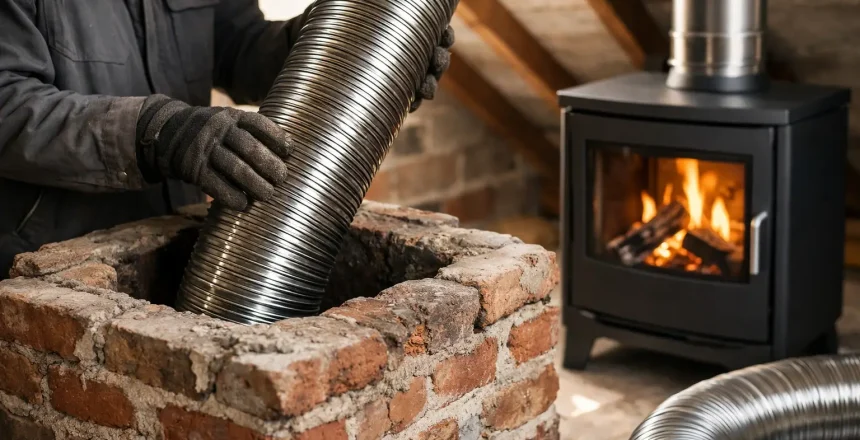
A period fireplace can be one of the best places for a wood burning stove, but the chimney above it may have been unused for decades. Lining an old chimney safely is not simply a matter of dropping a metal tube down the stack. It starts with establishing whether the chimney is suitable, choosing the correct flue size and installing a complete system that carries combustion gases out of the property reliably.
For homeowners, the goal is straightforward: a stove that looks right in the room, heats efficiently and meets the standards expected for a safe UK installation. A professional survey removes the guesswork before work begins.
Why an old chimney usually needs a liner
Many older chimneys were built for open fires. Their flues can be oversized, uneven, porous or coated with years of soot deposits. An open fire sends a large volume of warm air up a broad chimney, whereas a modern stove works best with a correctly sized, consistently drawing flue.
A stainless steel flexible liner creates a continuous route from the stove connection to the top of the chimney. This helps the flue gases rise as intended, reduces the chance of leakage into the building and supports a more predictable draw. It also helps protect the chimney structure from the condensates created when wood fuel is burned.
That does not mean every chimney has the same solution. A sound, correctly sized flue may be assessed differently, while a chimney with awkward bends, a shared flue arrangement or a very tall stack needs more detailed planning. The appliance manufacturer’s instructions, the property itself and Building Regulations all matter.
The survey comes before lining an old chimney safely
A proper chimney survey is the point where a safe installation is won or lost. The engineer will inspect the fireplace opening, chimney breast, stack, hearth area and route the new flue will take. They will also consider the stove output you need for the room, because selecting an oversized appliance can lead to poor operation and unnecessary stress on the installation.
The existing chimney should be checked for its route, condition and likely obstructions. Older flues can contain loose debris, old closures or bends that are not obvious from inside the room. A visual inspection and, where appropriate, a camera survey help establish what is possible before a liner is specified.
Ventilation is assessed at this stage too. Modern homes can be particularly airtight after insulation and window upgrades. A stove needs adequate combustion air, and the installation must not create a risk from extracting fans or other appliances that may affect the flue draw.
This is why an estimate based only on a photograph can be misleading. Photos are useful for an initial conversation, but the chimney and room need to be understood in person before a final recommendation is made.
Choosing the correct liner diameter
The liner diameter must suit the stove and its manufacturer’s instructions. For many solid-fuel installations, 150mm is the usual minimum flue diameter. Some exempt appliances may be installed with a 125mm flue where the manufacturer permits it and the installation meets the relevant requirements.
Reducing the flue size simply to make a liner easier to fit is not a sensible shortcut. A flue that is too small can restrict the flow of gases and make the stove harder to operate cleanly. Equally, an excessively large flue can cool gases too quickly and weaken draw. The correct answer is based on the appliance, chimney route and technical guidance, not a one-size-fits-all rule.
What a professionally lined chimney installation involves
Once the design is agreed, the fireplace opening may need careful preparation to accommodate the stove and its connection. The liner is normally lowered from the chimney pot down through the flue, with the correct orientation followed so its internal joints guide condensates back towards the appliance rather than allowing them to escape into the chimney.
At the top of the stack, the liner needs a secure termination that supports it properly and keeps rain and debris from entering the flue. At the fireplace end, the connection between the stove and liner must be sealed and accessible in the right way. A closure plate is fitted within the opening to separate the chimney void from the room and help prevent heat loss and debris falling behind the stove.
The chimney is not just a tube for smoke. It is part of a complete system that includes the appliance, hearth, flue connection, liner, terminal, ventilation and carbon monoxide alarm. Each element must work together.
Where an old chimney is not suitable for a flexible liner, there may be another compliant route. A twin wall insulated chimney system can be designed to run internally or externally, subject to the property layout and clearances. This can be a practical option for extensions, new-build rooms or homes where the original chimney cannot provide a suitable flue path.
Safety details that should never be treated as optional
The visible stove is only one part of the project. The less visible details are what protect the household over the long term. A professional installation considers clearances from combustible materials, the hearth dimensions and construction, the chimney route, suitable ventilation and the safe discharge point above the roofline.
A carbon monoxide alarm is required in the room where a new or replacement fixed solid-fuel appliance is installed. It should be positioned in line with the applicable guidance and tested as part of the handover. This alarm is an essential safeguard, but it is not a substitute for correct flue design and installation.
The installer should also commission the stove. That means checking the draw, confirming that combustion gases are travelling safely through the flue and explaining how to use the appliance effectively. Burning dry, properly seasoned wood is vital. Wet logs create more smoke, more deposits and less useful heat, whatever liner has been installed.
Certification matters when the work is complete
In England and Wales, solid-fuel stove work must comply with Building Regulations. A HETAS registered installer can self-certify eligible work and provide the appropriate compliance documentation. This gives you a clear record for your property and helps demonstrate that the work was completed to the required standard.
You should also receive practical handover information, including the appliance instructions and guidance on the fuel to use. Keep the certification in a safe place. It can be useful for future property transactions and provides reassurance that the installation was handled correctly from the start.
Common mistakes homeowners can avoid
The most expensive errors usually begin with an assumption that an old chimney is automatically ready for a stove. It may look substantial from outside, but the internal flue condition and route are what determine whether it can be used safely.
Another mistake is choosing a stove by appearance alone. A compact room can easily be overheated by an appliance with too much output, encouraging the owner to turn it down excessively. That can contribute to inefficient burning and a poor flue performance. Sizing the stove for the heat demand of the room produces better results.
It is also worth resisting the temptation to treat chimney work as a separate, minor job. The liner, stove, hearth and ventilation should be planned together. When one contractor is responsible for the full installation, there is a clearer line of accountability and less risk of incompatible decisions being made along the way.
Finally, do not assume that a liner removes the need for ongoing care. The flue should be swept by a competent chimney sweep at appropriate intervals, typically at least annually for wood burning, with frequency adjusted for how the stove is used and the fuel burned. Regular sweeping helps maintain clear passage for gases and gives early warning of developing issues.
A safer route to a warmer home
A well-lined chimney allows an older fireplace to become a dependable focal point for modern heating, without compromising on safety or compliance. Stove Specialists UK can assess the full installation, explain the practical options and provide a HETAS registered service from survey through to certification.
If you are considering a stove in a period property, start with the chimney rather than the appliance brochure. A clear survey and the right liner design give you the confidence to enjoy the fire, not worry about what is happening above it.