
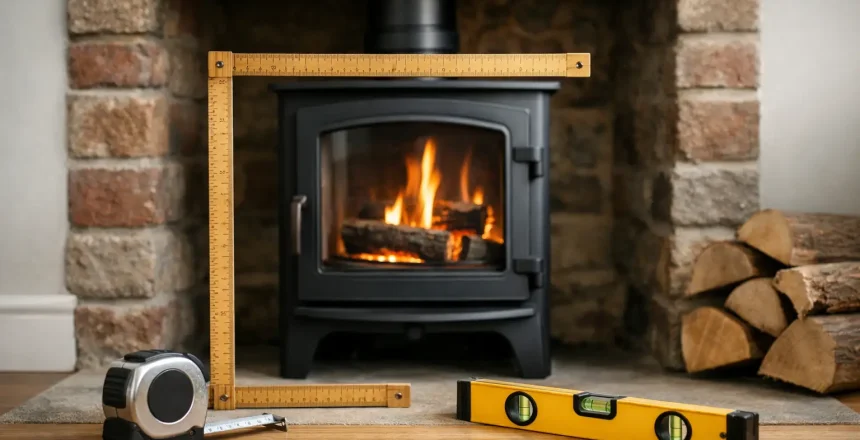
A fireplace can look generous enough for a stove, right up until the survey starts and the measurements say otherwise. The log burner fireplace opening is one of the first things that decides whether your installation will be straightforward, need building work, or call for a different stove choice altogether.
For homeowners, this matters for more than appearance. The opening affects clearances, heat performance, chamber finish, hearth proportions and, most importantly, whether the installation can be completed safely and in line with UK regulations. Get it right and the stove looks properly framed, works efficiently and gives you long-term peace of mind. Get it wrong and you can end up forcing a stove into a space that was never suitable.
Why the log burner fireplace opening matters
The fireplace opening is not simply a hole in the chimney breast. It is the structural and visual setting for the stove. It needs to accommodate the appliance itself, allow for the correct distance to surrounding materials, and leave enough room for installation works such as the flue connection and chamber preparation.
A smaller opening can sometimes be enlarged, but that depends on what is above it and how the existing fireplace was built. An oversized opening can also create issues if the stove looks lost in the chamber or if the proportions make the installation feel unfinished. In most homes, the best result comes from matching the stove output and dimensions to the room and then shaping the opening around that plan, not the other way round.
What size should a log burner fireplace opening be?
There is no single standard size because stoves vary widely. Some compact models are designed for modest inglenooks or narrower chimney breasts, while larger appliances need much more width and height around them.
What matters is the relationship between the stove and the recess. The appliance must fit physically, but it also needs the clearances specified by the manufacturer. Those clearances are not optional. They help control heat transfer to nearby surfaces and affect safe operation.
In practical terms, we look at four things. First is the stove width, height and depth. Second is the required air gap around the appliance. Third is the flue route above the stove. Fourth is the chamber finish, because some materials and construction methods are more suitable than others.
This is why rough measurements taken by eye are rarely enough. A fireplace opening that seems large may still be unsuitable once a register plate, flue pipe position and non-combustible lining are factored in.
Width, height and depth all matter
Width is usually the first figure customers focus on, but height can be just as important. If the lintel is too low, the stove and flue connection may not sit comfortably within the recess. Raising a lintel is possible in some cases, though it becomes part of the building work rather than a simple fit.
Depth is often overlooked. Some fireplaces are shallow, especially where older decorative openings were reduced years ago. If the stove projects too far forward, it can affect hearth sizing and the overall finish. That is not always a deal breaker, but it needs planning from the start.
Fireplace opening clearances and heat safety
A log burner operates at high temperature, so the opening around it must be treated as a safety zone, not just a design feature. Combustible materials too close to the stove or flue can create a serious risk.
This is where professional assessment matters. Timber beams, plasterboard, decorative surrounds and hidden construction details all need checking. Some fireplaces look solid but have combustible materials where you would not expect them. A proper survey identifies that before installation starts.
Manufacturers set minimum distances to combustibles for their stoves, and those figures vary. There is no safe shortcut here. If the opening is too tight, the answer may be enlarging the recess, changing the chamber finish, or selecting a more suitable stove.
The chamber finish affects performance and appearance
The inside of the fireplace opening, often called the chamber, needs a finish that can cope with heat and give a clean, durable result. It also shapes how the stove sits visually in the room.
For some homes, a simple rendered chamber works well and keeps the focus on the appliance. In other properties, a more characterful recess may suit the building. The right choice depends on the stove style, the room and how the opening is proportioned. What matters most is that the finish is suitable for the heat involved and prepared properly as part of the installation.
Can an existing fireplace opening be enlarged?
Often, yes. But it depends on the structure.
Many customers are opening up a blocked or reduced fireplace and are unsure what sits behind the plaster. Sometimes the original recess is still there and just needs exposing and making good. In other cases, previous alterations have changed the opening size substantially, and more involved building work is needed.
If the opening needs to be wider or higher, the structural support above it has to be considered carefully. That usually means checking the lintel and making sure any change is carried out correctly. A fireplace is not an area for guesswork or cosmetic-only alterations.
There is also a practical judgement to make. Enlarging the opening may create the right visual impact, but if the room only needs a modest heat output, a very large recess with a small stove can look out of balance. The best installations feel intentional, with the stove and chamber sized to suit each other.
What if there is no chimney opening yet?
Some homeowners use the phrase log burner fireplace opening when they are planning a completely new feature rather than reopening an old fireplace. That is perfectly possible.
A stove does not always depend on a traditional chimney breast. Where the property layout allows, a new opening can be created as part of a fresh installation using the right flue system and hearth arrangement. This approach is common in homes that want the look and feel of a fireplace even though no original chimney opening exists.
The design options can be very good, but the same principles still apply. The opening must suit the stove, the flue route must be planned properly, and all distances to surrounding surfaces have to be correct.
Building regulations and compliance
This is the point where many installations go off track when handled without specialist oversight. A stove fitting is not just about getting the appliance in place. It must comply with building regulations, and the fireplace opening is part of that wider compliance picture.
The hearth must be suitable. The chamber and surrounding materials must be appropriate. The flue arrangement must be correct. Ventilation requirements may also apply depending on the stove and the property.
For homeowners, the practical benefit of using a HETAS registered installer is simple: the job is assessed, fitted and certified properly. That saves uncertainty and gives you confidence that the finished installation meets the required standard.
Choosing the stove to suit the opening
Sometimes customers start with a particular stove in mind and ask whether the fireplace can be adjusted around it. Other times, the opening already dictates the size range available. Both approaches can work.
The sensible route is to balance three things – the room’s heating requirement, the physical opening, and the look you want. A stove that is too large for the recess can create fitting problems and overpower the room. A stove that is too small may leave the opening looking empty and may not give the result you expected.
This is why a survey is so valuable. It allows proper recommendations based on actual dimensions, not catalogue assumptions. In many cases, a customer has more than one good option once the opening, hearth and flue route are looked at together.
Common mistakes with a log burner fireplace opening
The most common issue is assuming the visible recess is ready for a stove when it has only ever housed an open fire or decorative insert. The second is measuring the front opening but not accounting for depth restrictions or the flue connection above.
Another mistake is focusing only on the stove body and forgetting the surrounding heat clearances. A very tight fit may look neat on paper but fail the practical and safety test. There is also the temptation to keep original materials in place for character, even when they are too close to heat-sensitive areas.
None of these issues mean the project cannot go ahead. They simply mean the installation needs the right plan.
What to expect from a professional survey
A proper survey should do more than confirm whether a stove can fit. It should assess the opening, chimney or flue route, hearth requirements, chamber condition and any building work needed to create a safe, finished result.
This is also the stage where realistic advice saves time and money. If the opening can be adapted easily, that should be clear. If it would be more sensible to choose a different stove size or reshape the design, that should be explained plainly. The aim is a hassle-free installation, not an awkward compromise hidden behind a nice brochure photo.
For many households, that level of guidance is what turns the idea of a stove into a practical home improvement rather than a drawn-out building project.
A well-planned fireplace opening gives a log burner the setting it deserves. If you start with the right measurements, the right clearances and the right installation advice, the finished stove will not just look the part – it will be safe, compliant and ready to enjoy for years to come.