
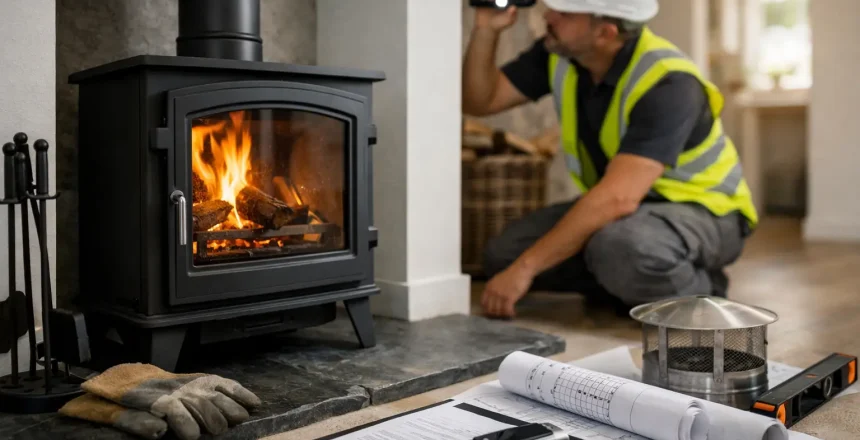
A log burner can transform a room, but the part that matters most is the bit you do not always see – the flue route, the hearth, the clearances and the paperwork that prove the job is legal. When homeowners search for log burner installation regulations UK requirements, they are usually trying to answer one simple question: can this be installed safely and signed off properly? The short answer is yes, but only if the design, fitting and certification all line up.
What do the UK regulations actually cover?
In practical terms, the rules are there to make sure a stove burns safely, draws properly and does not put the property or the people in it at risk. A compliant installation is not just about placing a stove in an opening and connecting a pipe. It involves the construction of the hearth, the suitability of the chimney or twin wall system, safe distances from combustible materials, adequate air supply and correct commissioning.
The main legal framework for domestic stove installations in England and Wales sits under Building Regulations, particularly Approved Document J, which covers combustion appliances and fuel storage systems. Scotland and Northern Ireland have their own building standards, but the same principle applies – the installation must be safe, suitable for the property and formally approved.
That is why homeowners are often advised to use a HETAS registered installer. A competent installer can self-certify the work and issue the correct certification once the job is complete. If a non-registered person carries out the installation, you would usually need Building Control involvement. That can add time, cost and uncertainty, especially if the work has not been designed properly from the start.
Log burner installation regulations UK homeowners should know first
The first point is that not every stove suits every room or chimney. This is where many problems begin. A stove that is too large can overheat the space and perform poorly. A chimney that looks serviceable from the fireplace opening may still need lining, alterations or a completely different flue approach.
The regulations are designed around performance as well as safety. If the stove cannot draw correctly, if fumes are at risk of spilling into the room, or if heat is being transferred too close to combustible materials, the installation is not compliant. This is why a proper survey matters before any fitting starts.
In most homes, the installation will need to consider five core areas: the appliance itself, the flue system, the hearth, ventilation and certification. Get those right and the rest of the process becomes much more straightforward.
Flue and chimney requirements
A stove must discharge safely through a suitable flue. In some properties that means lining an existing chimney. In others, particularly newer homes or rooms without a chimney breast, it means installing a twin wall insulated flue system routed internally or externally.
The flue size must match the stove and the fuel type. The route, height and termination point all affect how well the stove performs. A poor flue design can lead to weak draw, smoke issues and difficulty lighting or maintaining the fire. Regulations also control how the flue passes through floors, ceilings, roofs and walls, because these junctions are critical for fire safety.
This is one of the main areas where experience counts. What works well in a period property with a masonry chimney may be completely different from what is needed in a new-build extension or an open-plan room.
Hearth rules
The hearth is not just a decorative slab. It is a protective surface designed to reduce the risk of heat transfer and stray embers affecting nearby flooring. The required size and thickness depend on the stove, the temperature beneath it and the exact installation arrangement.
Some modern appliances are designed so that the base does not reach a high enough temperature to require a constructional hearth in the traditional sense. Others do. That is why a one-size-fits-all answer rarely helps. The correct hearth specification depends on the appliance data and the floor construction beneath it.
Distance to combustible materials
Clearances are a big part of compliance. Timber beams, plasterboard with combustible backing, stud walls, flooring and decorative finishes all need to be considered. The required distance can vary significantly depending on the stove model and whether heat shielding or recess construction is part of the design.
This is where many DIY plans fall apart. Something may look tidy on paper but still fall short once the manufacturer instructions and Building Regulations are applied together. Both matter.
Ventilation and air supply
A stove needs enough air to burn properly. In some homes, especially more modern and airtight ones, additional ventilation may be required. This is not optional where the installation demands it.
Without adequate air supply, the stove may burn poorly and could create safety concerns, including poor combustion and fume risk. The requirement depends on the stove output and the property itself. Older draughty houses and newer sealed homes behave very differently, so this part always needs to be assessed on site.
Smoke control areas and appliance choice
One point that often catches homeowners out is the difference between owning a stove and being allowed to use it in a particular way. Many towns and cities in the UK have smoke control areas. If your property is in one, you usually need to burn authorised fuel or use an exempt appliance approved for that setting.
That does not stop you having a log burner, but it does affect which model is suitable and how it should be operated. If you are unsure, it is worth confirming this early, because appliance choice should reflect both the room and the local rules.
Do you need planning permission?
Usually, no. Most internal stove installations in houses do not require planning permission. However, there are exceptions. Listed buildings, conservation areas and certain external flue arrangements can change the position.
This is a good example of where legal compliance is broader than just Building Regulations. The installation might be technically safe but still need planning consent because of the property type or appearance of the external works. If there is any doubt, it is better to check before installation day rather than after the flue is already on the wall.
Certification matters more than many homeowners realise
Once the stove is installed, the job is not really finished until it has been commissioned and certified correctly. Certification is the formal proof that the installation complies with the relevant standards. It can be important for home insurance, future property sales and general peace of mind.
A HETAS registered installer can certify the work directly. That makes the process simpler for the homeowner and avoids the need to manage separate approval routes. It also means the person fitting the system is working within a recognised competent person scheme.
For many customers, this is where the value of a fully managed service becomes clear. The regulations are manageable when handled properly, but they can quickly become stressful if different trades are making assumptions about who is responsible for what.
Why a survey is the safest starting point
No article on log burner installation regulations UK requirements would be complete without saying this clearly: compliance starts with the survey, not the stove brochure. Until the property has been assessed, nobody can reliably confirm the exact flue system, hearth build-up, ventilation needs or route to certification.
That is especially true in homes with blocked fireplaces, unusual room layouts, no existing chimney or recent renovation work. Even straightforward-looking installs can involve hidden issues once the opening is exposed or the flue route is checked.
A proper survey should look at the room size, stove location, chimney condition where relevant, route for the flue, suitable hearth arrangement, safe clearances and the practical building work needed to complete the installation. That gives you an installation plan that is based on facts rather than guesswork.
The practical takeaway for homeowners
If you are thinking about installing a log burner, the safest approach is to treat the regulations as part of the design, not a box-ticking exercise at the end. The right appliance, installed in the wrong way, is still the wrong installation. Equally, a well-planned system can work beautifully even in properties where homeowners initially assume a stove is not possible.
At Stove Specialists UK, we see this every day in homes that need anything from a simple fireplace installation to a full twin wall system in a room with no chimney. The common thread is always the same – when the job is surveyed properly, fitted correctly and certified by a HETAS registered engineer, the whole process becomes far more straightforward.
If you are at the early stage, the most useful next step is not guessing which stove will fit. It is getting clear advice on what your property can support, what the regulations require, and how to achieve a safe, legal installation with 100% peace of mind.