
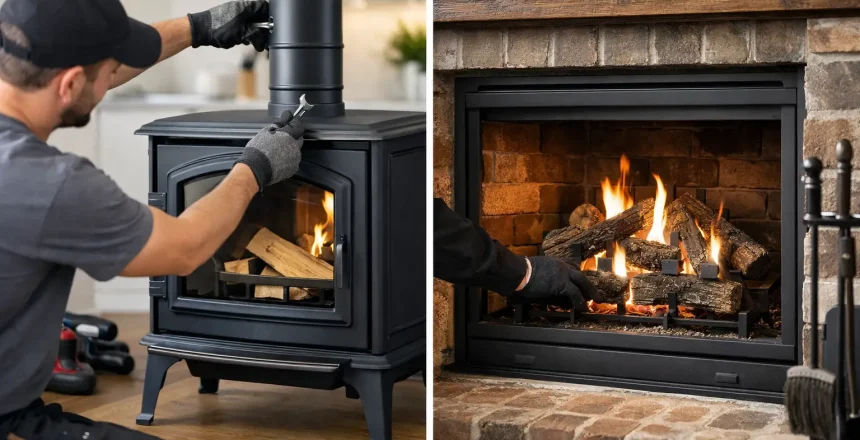
If you are weighing up stove installation vs fireplace conversion, the real question is not which option sounds simpler. It is which one suits your home, your chimney, your budget and the finish you want once the work is done. Two properties can look similar from the outside and need completely different solutions once a proper survey starts.
For many homeowners, the decision begins with a visual idea. You may have an old open fireplace and want a more efficient stove. Or you may have no usable fireplace at all and want to add a stove as a new focal point. Both routes can work very well, but the building work, flue requirements and overall cost can vary more than people expect.
What stove installation vs fireplace conversion really means
A fireplace conversion usually means taking an existing fireplace opening or chimney breast and adapting it for a stove. That might involve opening up a blocked fireplace, altering the chamber, installing a suitable hearth, fitting a flue liner and making the opening safe and compliant for the appliance you have chosen.
A stove installation is a broader term. It can include a fireplace conversion, but it can also mean creating a completely new stove system where there is no existing fireplace to use. In that case, the installation may rely on a twin wall insulated flue system rather than a traditional chimney.
That distinction matters because many homeowners assume a conversion is always cheaper and easier. Sometimes it is. Sometimes an old chimney creates more work than a new flue route would have done.
When a fireplace conversion makes the most sense
If your home already has a chimney breast and a fireplace that can be reopened or adapted, a conversion often feels like the natural choice. It tends to suit period homes, cottages and houses where the original fireplace character is part of the appeal.
The biggest advantage is visual. A converted fireplace can give you that built-in look many homeowners want, with the stove sitting neatly within the opening and the hearth designed to match the room. In the right property, it can look like it has always belonged there.
There can also be practical advantages. An existing chimney route may reduce the amount of visible flue inside the room, and the final result often feels more integrated than a freestanding installation with an external flue system.
That said, old fireplaces are not always straightforward. Once the opening is exposed, it is common to find uneven brickwork, damaged chambers, outdated hearths or chimneys that are not suitable in their current condition. A proper conversion often needs more than simply sliding a stove into the opening. There may be structural work, new lintels, chamber preparation and a correctly specified liner to bring everything up to standard.
When a new stove installation is the better route
If there is no chimney, no usable fireplace, or the existing layout does not suit the room, a new stove installation can be the better option. This is especially common in newer homes, extensions, garden rooms and properties where the original fireplace has been removed entirely.
A twin wall flue system allows a stove to be installed without relying on a masonry chimney. That gives you more flexibility over positioning. You may be able to place the stove where it works best for the room rather than where the old fireplace happens to be.
This route can also avoid some of the uncertainty that comes with older structures. With a new flue system, the specification is built around the appliance and the property layout from the outset. That can make planning more straightforward, especially where access to the old chimney is poor or its condition is questionable.
The trade-off is that the flue design becomes a more visible part of the installation. Some homeowners are happy with that, particularly in modern interiors. Others prefer the traditional appearance of a stove set into a fireplace opening.
Cost differences depend on hidden work
People often ask which option is cheaper, but there is no honest one-size-fits-all answer. A simple fireplace conversion in a sound chimney can be cost-effective. A complicated conversion in an older property can quickly involve more labour and materials than expected.
Likewise, a brand-new stove installation with a twin wall system may seem like the bigger job, yet it can be more predictable because the work is not dependent on the unknown condition of an old chimney.
The main cost drivers tend to be the same in both cases: the stove itself, the flue system, hearth requirements, any chamber or wall alterations, roof access and the level of finishing work needed around the installation.
This is why a survey matters. Quoting from photos alone can miss the details that affect price and timescale. A dependable installer should be clear about what is known, what needs checking and where extra building work may be required.
Compliance is not the part to cut corners on
Whether you choose a fireplace conversion or a brand-new stove installation, the finished system must be safe and legally compliant. That includes suitable clearances, the correct flue arrangement, proper ventilation where required, a compliant hearth and installation in line with current regulations.
This is where professional installation becomes more than a convenience. It is about protecting your home and ensuring the appliance performs as it should. Poorly planned stove installations can lead to smoke issues, poor draw, overheating of nearby materials and serious safety risks.
A HETAS registered engineer can assess the property, recommend the right route and certify the completed installation. For homeowners, that gives proper peace of mind and avoids the uncertainty that comes with trying to piece together advice from different trades.
Choosing based on your home, not just the look
A fireplace conversion often wins on character. If you want a traditional focal point and your property has the right features to support it, it can deliver an excellent result. It suits homeowners who want the stove to feel anchored within the architecture of the room.
A new stove installation often wins on flexibility. If your home does not have a suitable chimney, or if the room layout would work better with the stove elsewhere, it opens up options that a fireplace-led approach cannot.
The best choice usually comes down to four questions. Is there an existing chimney and is it usable? Do you want a built-in fireplace look or more freedom over stove position? How much building work are you comfortable with? And do you want the most predictable route to a compliant installation, or are you happy to adapt the plan as hidden details are uncovered?
Stove installation vs fireplace conversion for different property types
In older homes, conversions are often appealing because they preserve original features and work with the style of the property. In Victorian and Edwardian houses, for example, a stove within an opened fireplace can look entirely at home.
In newer builds, a dedicated stove installation is often more practical. There may be no chimney to use, and the room layout may suit a corner installation or a central feature wall better than a traditional fireplace position.
In renovated properties, it can go either way. Some have old chimneys that are ideal for conversion. Others have chimney breasts that were altered years ago, making a fresh flue system the cleaner and safer option. This is exactly why experienced installation advice matters.
What a managed installation should give you
Homeowners generally want the same thing regardless of route – a safe, attractive stove installation without unnecessary hassle. That means clear advice from the start, realistic pricing, proper handling of the building work and formal certification at the end.
A fully managed service is especially valuable where there are several moving parts, such as chimney lining, hearth construction, fireplace opening work or a new twin wall flue system. Instead of trying to coordinate multiple trades yourself, you have one specialist team responsible for getting the whole job right.
That is where companies such as Stove Specialists UK bring real value. The aim is not just to fit a stove, but to guide you towards the option that works best for your property and complete it to a standard you can trust.
If you are unsure which route fits your home, start with the practical view rather than the ideal picture in your head. A good survey can tell you very quickly whether the better answer is to make use of what is already there or build a new stove system around how you actually live.