
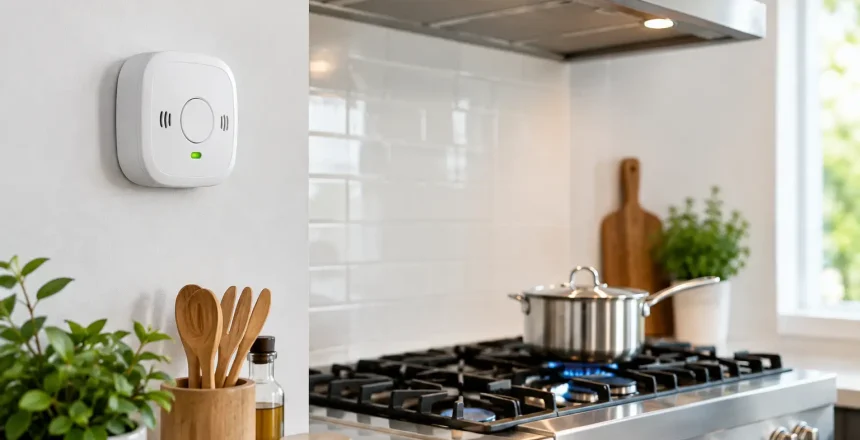
A carbon monoxide alarm is a small device with a serious job: warning your household about a gas you cannot see, smell or taste. If you are asking where to fit a carbon monoxide alarm for a wood burner or multi-fuel stove, the answer starts with the room containing the appliance – but the exact position within that room matters just as much.
A poorly positioned alarm may be slower to detect a problem, create nuisance alerts or be difficult to hear. A correctly fitted alarm supports a safe, compliant stove installation and gives everyone in the property valuable early warning.
Where to fit a carbon monoxide alarm for a stove
For a solid-fuel stove, fit a carbon monoxide alarm in the same room as the appliance. This is the fundamental requirement for new or replacement fixed combustion appliances under Building Regulations guidance in England.
As a practical rule, the alarm is normally positioned between one and three metres horizontally from the stove. It should be close enough to detect carbon monoxide promptly, without being so close that normal heat, fumes during lighting, or airflow around the stove affects its operation.
Most carbon monoxide alarms can be installed on a wall or ceiling, depending on the manufacturer’s instructions. Carbon monoxide mixes readily with air, so it is not a case of placing the unit at floor level or right up at ceiling height simply because it is a gas. The alarm’s fitting instructions always take priority, as approved models have specific requirements for clearance, orientation and fixing.
Where the manufacturer permits a ceiling position, leave at least 300mm from walls, light fittings and other obstructions. For wall fitting, keep the alarm high up, above doors and windows, while maintaining the clearances stated by the manufacturer. It must be easy enough to test regularly and to see its display or status indicator.
Positions to avoid
The best location is not always the most convenient-looking one. Do not place a carbon monoxide alarm directly above the stove, immediately beside the flue pipe, or in the path of strong heat. These areas can be hotter than the alarm is designed to tolerate and may not provide a reliable reading of the room air.
Avoid putting it next to an extractor fan, air brick, open window or doorway where strong draughts could delay detection. Equally, keep it away from bathrooms and other damp areas unless the particular alarm is specifically approved for that environment.
Kitchens can present a judgement call. If a stove is installed in an open-plan kitchen-diner, the alarm still needs to be in the same open space as the stove. However, it should be positioned away from direct cooking steam and grease where possible. A HETAS registered engineer can assess the room layout and identify a sensible, compliant position during the installation survey.
Do not hide an alarm behind curtains, furniture, shelving or decorative features. You should be able to hear it clearly from sleeping areas. If the room is separated from bedrooms by several closed doors, additional alarms elsewhere in the home can provide greater reassurance, but they do not replace the alarm required in the stove room.
The alarm must meet the correct standard
Placement is only one part of the decision. Choose a carbon monoxide alarm marked to BS EN 50291-1, the standard for carbon monoxide alarms used in residential premises. The product should be suitable for use with solid-fuel appliances and installed exactly as its manufacturer directs.
For a new stove installation, the alarm should be fixed in its final position before the work is signed off. Your installer will also check that it is working as part of a properly managed installation. This is one of the small but essential details that contributes to a 100% Peace of Mind installation.
Battery-powered alarms are common and can be appropriate, particularly models with a sealed long-life battery. Mains-powered options may suit some properties, but they still need to be installed in accordance with the product instructions and relevant electrical requirements. The right choice depends on your property and the alarm model, not simply on whether a socket is nearby.
Why a stove room needs its own alarm
Wood and smokeless fuels burn safely when the stove, flue system and ventilation have been correctly designed and fitted. Carbon monoxide can nevertheless be produced when combustion is incomplete. Causes can include restricted airflow, unsuitable fuel, a blockage in the flue route, or a stove being operated in a way that prevents proper combustion.
Carbon monoxide exposure can cause headaches, dizziness, nausea, confusion and breathlessness. Symptoms may be mistaken for flu, tiredness or a general illness, especially in colder months. That is why an audible alarm is vital. It warns you about a potential danger before you have to rely on symptoms.
A carbon monoxide alarm is not an optional finishing touch to a stove project. It is a core safety measure, alongside correct appliance selection, a suitable flue arrangement, appropriate ventilation and professional installation.
Carbon monoxide alarms are not smoke alarms
It is easy to confuse the two, but they perform different jobs. A smoke alarm detects smoke particles from fire. A carbon monoxide alarm detects carbon monoxide gas produced by incomplete combustion. A home with a stove should have suitable smoke alarms as well as a carbon monoxide alarm, but one device should not be expected to do both jobs unless it is specifically designed and certified as a combined unit.
For most homeowners, separate alarms are simpler to understand and position correctly. Smoke alarms are generally located on escape routes such as hallways and landings, while the carbon monoxide alarm belongs in the room with the stove. Your property layout may call for more than the minimum, particularly in larger homes or open-plan spaces.
Testing and responding to an alarm
Once fitted, test the alarm using its test button at the interval stated in the instructions, usually every month. Keep the instructions somewhere accessible, check the expiry date on the unit, and replace it when the manufacturer says its working life has ended. An alarm that looks fine on the wall may no longer be reliable if it is beyond its stated service life.
If the carbon monoxide alarm sounds, take it seriously. Open doors and windows if it is safe to do so, leave the property, and keep everyone outside in fresh air. Do not ignore symptoms or re-enter simply because the alarm stops. If anyone feels unwell, or there is immediate danger, call 999. Arrange for the cause to be investigated by a suitably qualified professional before using the stove again.
Professional placement removes the guesswork
Every stove room is different. Ceiling height, chimney position, airflow, open-plan layouts and the location of doors and windows can all affect the most sensible place to fit an alarm. The manufacturer’s guidance remains the final authority, but an experienced installer can make sure it is applied properly in your home.
Stove Specialists UK fits and certifies stove installations with the wider safety picture in mind, from the first survey through to the final checks. When your stove is being planned, ask where the carbon monoxide alarm will be located rather than treating it as an afterthought. That simple question helps create a warmer home without compromising the safety of the people in it.