
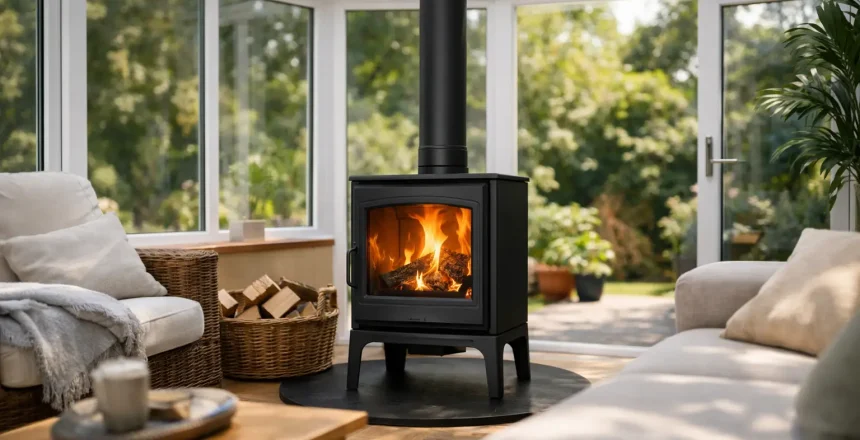
A conservatory can look ideal for a stove until you start asking the practical questions. It is a glazed room, often lighter-built than the rest of the house, sometimes open to another living space, and usually affected by bigger temperature swings. That means a wood burner in conservatory settings is possible in some homes, but it is never a case of simply choosing a stove and fitting a flue.
For most homeowners, the real issue is not whether a stove would look good there. It is whether the room is suitable, whether the installation can be made compliant, and whether the end result will heat the space properly without creating safety or building regulation problems. That is where proper survey work matters.
Is a wood burner in conservatory spaces allowed?
In many cases, yes, but it depends on the construction of the conservatory and how the stove system is designed. A conservatory is not automatically ruled out, but it does need much more careful assessment than a standard living room with a masonry chimney.
The first point is structural suitability. Many conservatories were built as lightweight glazed extensions rather than as full masonry rooms. Floors, walls and roof lines may not be suitable for supporting the clearances, hearth, flue route and heat protection measures required for a stove. If the room has dwarf walls and glazing above, the appliance position becomes especially important because stove manufacturers set minimum distances from combustible and heat-sensitive materials.
The second point is compliance. A stove installation in a conservatory still has to meet the same legal and safety standards as anywhere else in the home. That includes hearth requirements, flue design, air supply, distances to combustibles and final certification. If those elements cannot be achieved properly, the installation should not go ahead.
Why conservatories need extra care
A conservatory is rarely as straightforward as it looks. In winter, these rooms can be cold and lose heat quickly through glazing. In summer, they can become extremely warm. That affects how useful the stove will be and how comfortable the room feels once it is lit.
There is also the issue of nearby materials. uPVC frames, trims, lightweight wall panels and certain roof components may all be sensitive to prolonged heat exposure. Even where a stove technically fits, the surrounding construction may limit appliance size or location. Choosing too large a stove can make the room uncomfortable while increasing the challenge of meeting safe separation distances.
Ventilation is another area where homeowners can be caught out. A modern stove needs the right air supply to operate safely and efficiently. Conservatories can be oddly draughty in some places and tightly sealed in others. If the room opens into the main house, the wider layout has to be considered too, especially where extractor fans or airtight improvements affect air movement.
The biggest factors that decide whether it will work
The success of a wood burner in conservatory installations usually comes down to five things: room construction, appliance size, flue route, hearth arrangement and ventilation. None of those should be guessed.
Room construction tells you whether there is a safe and practical place to install the stove. Appliance size matters because conservatories are often smaller than people think from a heating point of view. A stove that is too powerful will not make the room cosier – it can make it unusable.
The flue route is often the deciding factor. In homes without an existing chimney, a twin wall insulated flue system may be the best option. That can make a conservatory installation possible, but it needs to be planned carefully through the roofline or externally, with the correct clearances and termination height.
The hearth must be suitable for the appliance and the floor beneath it. In some conservatories, floor construction needs checking before any build-up is proposed. Ventilation then ties the whole system together by ensuring the stove burns safely and performs as it should.
Choosing the right stove for a conservatory
Smaller is often better. Many conservatories suit a compact wood burning stove rather than a larger feature appliance. The aim is steady, controllable heat, not sheer output. Oversizing is one of the most common mistakes homeowners make when they picture a stove in a bright glazed room.
You also need to think beyond headline kilowatt figures. The shape of the room, amount of glazing, ceiling height and whether the conservatory is open-plan with the house all affect stove choice. A room that feels large visually may not behave like a large insulated room from a heating perspective.
For some homes, a conservatory is better served by a stove positioned close to the connecting wall with the house, particularly if the space is semi-open to the main living area. In others, a central visual position may work better, but only if the clearances and flue route remain compliant.
Flue options for a wood burner in conservatory rooms
This is where technical experience becomes critical. If there is no existing chimney, the installation will usually require a twin wall stainless steel flue system. That system has to be designed around the conservatory roof, the main building, nearby windows and overall terminal position.
With glazed extensions, the route must avoid creating heat issues for roof components or awkward weathering details that compromise the build. It also needs to be visually sensible. A good installation should not just pass compliance checks. It should look like it belongs there.
Sometimes the best answer is a route rising internally and then continuing outside. In other cases, an external route from the outset is more practical. There is no single answer for every property, which is why a proper site survey is so important.
Building regulations and certification matter
A stove in a conservatory is not a decorative project. It is a controlled heating appliance installation. That means the finished work must comply with building regulations and should be signed off properly through a competent person scheme such as HETAS.
For homeowners, that matters for safety, legal compliance and future property paperwork. If an installation has not been carried out correctly, it can create problems later when selling the home or dealing with insurers. More importantly, poor flue design, inadequate clearances or unsuitable ventilation can create serious operational risks.
That is why a fully managed installation is usually the safest route. It allows the survey, design, building work, flue installation and certification to be handled as one joined-up job rather than a patchwork of assumptions.
When a conservatory stove is a good idea
A conservatory stove can work very well when the room is used regularly through the colder months, the structure is suitable, and the appliance is sized correctly. It can turn a seasonal room into a genuinely usable living space and create a focal point that feels far more inviting than background electric heat.
It is particularly effective where the conservatory forms part of everyday family life rather than being an occasional sitting area. If you eat there, read there, or use it as an extension of the kitchen or lounge, a stove can add both warmth and character.
It also suits homeowners who want a properly planned installation rather than a compromise. Where the flue route is achievable and the room has enough safe separation from glazing and other materials, the result can be excellent.
When it may not be the right option
Sometimes the honest answer is no. If the conservatory is too small, too lightweight in construction, too awkward for flue routing, or too restricted on clearances, forcing a stove into the space is not the right move.
Likewise, if the room is very rarely used in winter, the cost and complexity may not make practical sense. A good installer should be willing to say when another location in the home would be a better long-term choice.
That kind of advice saves homeowners from ending up with a stove that looked appealing on paper but never quite worked in daily use.
What to expect from a proper survey
A proper survey should look at the conservatory as a whole, not just the corner where the stove might sit. That includes floor construction, nearby materials, access, roof type, flue route, terminal position, ventilation requirements and the relationship between the conservatory and the main house.
You should come away with a clear recommendation, not guesswork. That may mean a supply-and-fit installation, an installation using a stove you have already chosen, or a recommendation to consider a different room if the conservatory is unsuitable. The key thing is that the advice is based on compliance and practical performance, not just whether a stove can physically be squeezed in.
For homeowners across areas such as the West Midlands, Oxfordshire and surrounding counties, that joined-up approach is often the difference between a stressful project and a straightforward one.
If you are considering a conservatory stove, start with the room, not the brochure. The right installation can transform the space, but only when the structure, flue design and safety details all line up properly.