
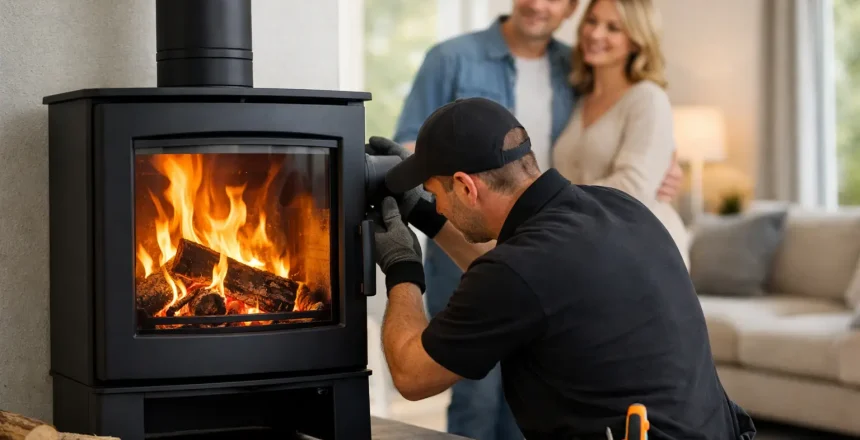
A stove can transform a cold, underused fireplace into a genuine focal point and a valuable source of heat. But choosing wood burner installers West Midlands homeowners can trust is about far more than selecting a stove that looks right in the room. The installation must be planned around your property, your chimney or flue route, Building Regulations and safe clearances from combustible materials.
A professionally fitted wood burner should feel straightforward from your first survey through to the final HETAS certificate. Whether you live in a period terrace with an original chimney breast, a rural property with a large inglenook, or a newer home with no chimney at all, the right installer will explain what is required clearly and manage the technical work without leaving you to coordinate multiple trades.
What a proper stove installation involves
A wood burner is a heating appliance connected to a system. The appliance, hearth, chimney or flue, ventilation and surrounding construction all need to work safely together. Looking at only the stove price can therefore give an incomplete picture of the project.
A thorough installation normally begins with a site survey. This is where the installer checks the proposed location, measures the fireplace opening or wall space, considers the route for the flue, and assesses whether the room and structure are suitable. It is also the best time to discuss how you intend to use the stove. A small living room used every evening has different heating needs from a large open-plan kitchen used mainly at weekends.
The survey should lead to a clear recommendation, not a one-size-fits-all answer. Stove output needs to be appropriate for the room. An oversized appliance can make a space uncomfortably hot, while an undersized one may not deliver the warmth you expect. Good advice takes account of room volume, insulation, glazing, ceiling height and how the rest of the home is heated.
Choosing wood burner installers in the West Midlands
The West Midlands includes a wide mix of property types, from city terraces and suburban semis to older cottages and converted buildings. That variety matters because a suitable installation route in one home may not be possible or cost-effective in another.
Start by asking whether the installer is HETAS registered and whether they will provide certification when the work is complete. HETAS registration demonstrates that the installer has been assessed as competent to fit solid fuel appliances and associated systems in line with the relevant requirements. It also means qualifying work can usually be self-certified, giving you the documentation you need for your records and future property sale enquiries.
You should also look for an installer who handles the full scope of work. This may include chimney lining, a twin wall stainless steel chimney system, flue installation, a compliant hearth, fireplace opening alterations and finishing building work. A fully managed service reduces delays and avoids the common problem of having a stove ready to fit but no safe, approved route for the flue gases.
Price matters, but it should be compared on a like-for-like basis. A lower quote may exclude key elements such as lining, a hearth, chimney work, certification or making good around the installation. A detailed written quotation helps you understand the actual project cost before work begins. If a supply-and-fit package is not right for you, ask whether the company can fit a customer-supplied stove, provided it is suitable for the planned installation.
Chimney, flue and hearth options explained
Homes with an existing chimney often need a new flexible liner installed within the chimney. This creates a dedicated route for the stove and helps provide a consistent, safe draw. The precise liner specification depends on the appliance, fuel type and chimney arrangement, which is why a survey is essential rather than optional.
Where there is no usable chimney, a twin wall insulated stainless steel system can make a wood burner possible. These systems can run internally through floors and the roof, or externally up the outside of the property where appropriate. The best route depends on the layout of the home, planning considerations, appearance and the clearance requirements around the system.
The hearth is equally important. It is not simply a decorative base. Its size, construction and positioning must provide the required protection for the floor and the area in front of the appliance. Clearances around the stove, the fireplace recess and any nearby timber or furnishings also need careful attention. This is where professional installation protects both the look of the finished room and the safety of everyone using it.
Ventilation can be another deciding factor. Modern homes are often well sealed, and some installations require a dedicated air vent to ensure the stove has sufficient combustion air. This may not be the most exciting element of a project, but it is a vital part of achieving safe, reliable operation.
Compliance is not paperwork for paperwork’s sake
A compliant installation is designed to reduce the risk of fire and carbon monoxide exposure while allowing the stove to operate as intended. Building Regulations cover matters including hearths, flue routes, terminal positions, ventilation and safe distances from combustible materials.
At completion, a HETAS registered installer should provide the appropriate certificate for qualifying work. Keep this with your household documents. It provides evidence that the installation has been completed by a competent person and can be useful when selling your property or dealing with insurers.
If you are in a smoke control area, the stove and fuel choice need extra consideration. Many urban areas have restrictions, and homeowners should ensure they understand the local rules before choosing an appliance. A reputable installer can explain the practical implications during the survey, helping you make a suitable choice from the outset.
Questions worth asking before you book
A good installer will welcome sensible questions and answer them in plain English. Before committing, ask who will carry out the survey and fitting, whether the quotation includes every required element, and what certificate you will receive at the end. It is also useful to ask how long the work is likely to take and whether finance options are available if you are planning a larger project.
Be open about your property and your expectations. Mention any previous fireplace alterations, unusual roof layouts, limited parking, listed-building status or concerns about dust and disruption. The more information an installer has before quoting, the more accurate their recommendation is likely to be.
It is reasonable to expect workmanship assurance as well as clear pricing. Stove Specialists UK provides a 100% Peace of Mind installation approach, with HETAS-led work, free quotations and a 100% satisfaction guarantee. That reassurance is especially valuable when the work involves several elements, from the hearth and flue route to the final sign-off.
Plan for the result you want to live with
The best time to consider the finished appearance is before installation starts. Think about the height of the stove, the style and depth of the hearth, the finish around the fireplace opening and where logs will be stored safely away from the appliance. These decisions affect everyday use as much as the first impression.
A wood burner installation is a long-term addition to your home, so do not feel pressured into the quickest option. Choose an installer who surveys carefully, explains the trade-offs honestly and takes responsibility for compliance from start to finish. With the right advice and certified fitting, you can look forward to a warmer room, a more inviting home and confidence each time you light the stove.