
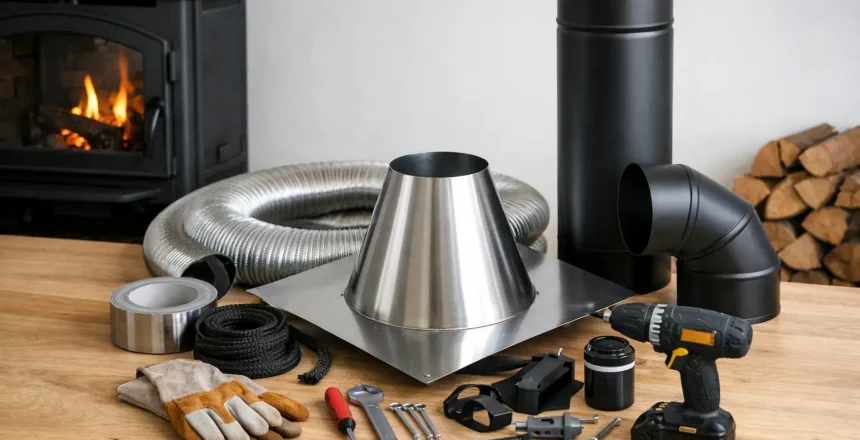
If you have been looking at a wood burning stove installation kit, you have probably noticed the same pattern. The product descriptions make the job sound straightforward, yet the real installation depends on the property, the route for the flue, the stove output, the hearth and the rules that apply in your home. That gap matters, because a stove is not a decorative upgrade alone. It is a heating appliance that must be installed safely, legally and in a way that performs properly for years.
What a wood burning stove installation kit usually includes
In simple terms, a wood burning stove installation kit is a packaged set of core installation materials intended to connect a stove to a suitable flue system. What is included varies, and that is where many homeowners get caught out. One kit may be aimed at an existing chimney, while another is designed for a property that needs a new twin wall flue route.
For a traditional fireplace opening with a usable chimney, the kit may cover the main flue connection from stove to liner and some of the components needed at chimney level. For homes without a chimney, the setup is different. In that case, the installation often relies on an insulated twin wall system routed internally or externally through the building.
The important point is that a kit is only part of the picture. It does not automatically confirm that your fireplace opening is suitable, that the chimney is sound, that the distances to combustible materials are correct, or that the finished job will comply with Building Regulations.
Why the right stove installation kit depends on the house
This is where a practical survey becomes more valuable than a quick online purchase. Two homes can have the same stove model and need very different installation methods.
An older property may have an existing chimney breast but need a new liner, closure plate work and a correctly sized hearth. A newer home may have no chimney at all, which means planning the flue route carefully through ceilings, loft spaces and the roof or an external wall. A timber-framed setting calls for even more attention to clearances and shielding.
Room size also matters. A stove that is too large can make the room uncomfortable and may not burn as cleanly as intended. A stove that is too small may not deliver the heat output the homeowner expects. The installation kit has to match the appliance, but the appliance also has to match the room and the property.
The main elements behind a compliant installation
When people search for a wood burning stove installation kit, they are often really looking for a complete route to a finished installation. In the UK, that means thinking beyond the boxed materials.
Flue system
The flue is central to both safety and performance. If the property has a masonry chimney, a liner is often required to create the correct passage for the stove’s fumes. If there is no chimney, a twin wall insulated flue system is usually the answer. The diameter, route, height and termination all have to be suitable for the appliance and the building.
Hearth
The hearth is not just there for appearance. It needs to meet the required dimensions and provide proper protection. In some homes, the existing hearth is too small, in poor condition or sits at the wrong level, so new building work is needed before the stove can be signed off.
Distance to combustibles
This is one of the most commonly underestimated areas. Beams, mantel shelves, stud walls, skirting and decorative finishes can all be too close to the appliance or flue path. A professional installer will assess these details before work starts, not after the stove is in place.
Ventilation and air supply
Some installations require dedicated ventilation. This depends on the stove and the room. Modern homes can also behave differently because they are often more airtight than older buildings. Good combustion depends on the right air supply.
Certification
For most homeowners, this is the part that turns a job from a guess into peace of mind. A HETAS registered engineer can self-certify compliant work, which helps ensure the installation is legal, recorded properly and suitable for insurance and future property sale considerations.
Why buying a kit alone can lead to the wrong result
There is nothing wrong with wanting clarity on cost. Many homeowners start with the idea that a kit will give them a fixed answer. The problem is that a packaged kit can only assume certain conditions, and real homes rarely follow a standard template.
You may find that the fireplace opening needs adjustment, the chimney requires attention before lining, or the preferred flue route is not workable once the structure is inspected. In some cases, the stove you intended to fit is not the best match for the room or for the available chimney size.
That does not mean the project becomes difficult. It means the correct route is based on the survey, not on a generic box. A dependable installer will explain what is needed, why it is needed and what can be done to keep the job practical and cost-effective.
Wood burning stove installation kit or full installation service?
For most households, the better question is not which kit to buy, but what level of service removes the risk and hassle.
A full installation service covers the work that sits around the stove itself. That can include surveying the room, checking chimney condition, advising on the correct appliance size, creating or upgrading the hearth, installing the flue system, carrying out any required building works and providing certification once the job is complete.
This approach is especially useful if you want one company to manage the process from start to finish. It reduces the chance of mismatched materials, delays between trades and late-stage surprises on compliance.
If you already have a stove and want installation only, that can still be a sensible route. The key is that the engineer assesses the appliance and property together rather than assuming a standard kit will cover everything needed.
Common scenarios where homeowners need more than a standard kit
A fireplace installation in a period property can appear simple at first glance, but hidden issues are common. Older chimneys may have size, condition or access problems that only become clear during survey work.
Homes without chimneys need a completely different strategy. A twin wall flue system can make stove installation possible in many houses, extensions, garden rooms and new-build settings, but the route must be planned carefully to achieve safe distances and good draw.
Open-plan spaces can also be more complicated than expected. The right output has to suit how the room is used, and the visual position of the stove must still work with the flue route and the required safety clearances.
What to ask before choosing a stove installer
A good installer should be able to tell you not just what they will fit, but how they will make the full installation compliant. Ask whether they are HETAS registered, whether they can handle chimney lining or twin wall systems, whether they can carry out any hearth or fireplace building work required, and whether the final price includes certification.
It is also worth asking what happens if the survey reveals something different from the original assumption. Straight answers matter here. A professional company should explain any likely variables upfront, rather than giving a low initial figure and leaving key elements unclear.
For homeowners who want a hassle-free process, clear communication is almost as important as technical skill. You want to know who is responsible for the whole job and what the finished installation will involve.
The safest way to think about a wood burning stove installation kit
A wood burning stove installation kit is best seen as one part of a wider installation, not as a guarantee that the job is ready to go. The right flue components matter, but so do the survey findings, the stove choice, the hearth, the route through the building and the final certification.
That is why many homeowners choose a fully managed service rather than trying to piece together the project themselves. Companies such as Stove Specialists UK approach the work in that way – starting with what the property needs, then supplying and fitting a compliant system that suits the home properly.
If you are planning a stove, the most useful first step is not guessing which kit looks closest. It is getting clear advice based on your actual property, so the finished result is safe, legal, efficient and built to give you confidence every time you light it.