
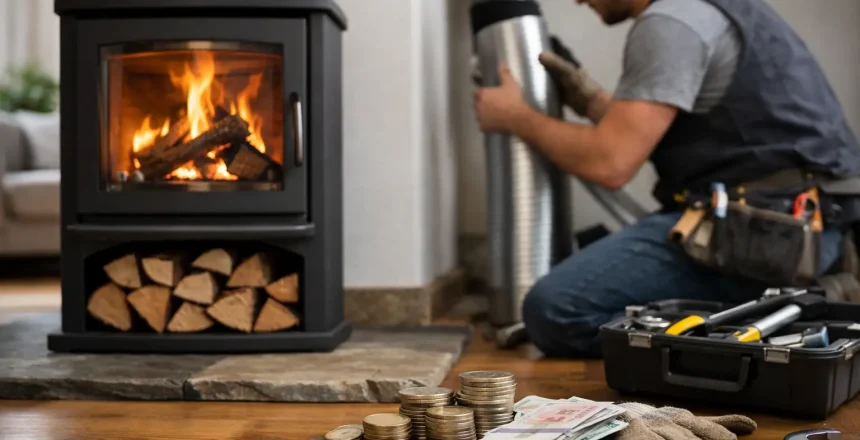
The quote usually becomes real when you discover the stove itself is only part of the job. If you are asking how much wood burning stove installation costs, the honest answer is that it depends on the property, the chimney setup, and what is needed to make the installation safe, legal and ready to use.
For most UK homeowners, the total cost can range from around £1,500 for a more straightforward installation to £4,500 or more for a complex project. That is a wide range, but there is a good reason for it. One home may already have a suitable chimney opening and a sound flue route, while another may need a new twin wall system, hearth works and structural alterations before a stove can be installed correctly.
How much wood burning stove installation in the UK?
A simple way to think about pricing is to break the project into the main elements. There is the appliance itself, then the installation work, then any building works needed to meet current regulations and manufacturer requirements.
A basic fireplace installation using an existing chimney breast and a flexible flue liner will often sit somewhere around £1,500 to £3,000 including labour and core materials, depending on the stove chosen. If you are supplying your own stove, the figure may come down, but only if the appliance is suitable and approved for the intended setup.
If the property does not have a usable chimney, costs tend to rise. A new twin wall insulated flue system can push a project into the £3,000 to £5,500 range or beyond, especially if the flue route is long or the installation needs more labour to pass through floors, ceilings or the roofline neatly and compliantly.
What matters most is not getting the lowest number on paper. It is getting a complete figure that covers the full job, including certification. A cheap quote that leaves out critical items can quickly become an expensive installation.
What affects wood burning stove installation cost?
The biggest factor is the route for the flue gases. If there is an existing chimney and it is in suitable condition, the installation is usually simpler. In many cases, a liner will still be required, along with a register plate, vitreous pipe and the correct terminal arrangement. Even then, access can affect labour. A tall property or awkward stack can increase the time and equipment needed.
If there is no chimney, a twin wall system offers an excellent solution, but it is naturally more material-heavy. The length of flue run, the number of bends, where it exits the property and how it is supported all influence the cost.
The fireplace opening also matters. Some homeowners have an open fire they want to replace with a stove. Others are opening up a blocked chimney breast and do not yet know what condition it is in behind the plasterboard or infill. Once exposed, there may be a need for a new lintel, chamber preparation, heat-resistant finishes or a revised opening size to suit the chosen appliance safely.
Hearth requirements can add to the budget too. A hearth is not simply decorative. It must be the correct size and arrangement for the stove and installation type. Some homes need only a straightforward hearth fitting, while others need a new construction hearth created from scratch.
Ventilation is another point that affects price in some properties. Depending on the appliance output and the home itself, dedicated air supply may be needed. This is one of those areas where professional assessment matters, because it is about safe combustion as much as compliance.
Typical price ranges by installation type
For a straightforward installation into an existing chimney with limited alteration work, many homeowners can expect a starting point of roughly £1,500 to £2,500. That would generally suit a more standard setup where the fireplace is already in place and the flue route is relatively uncomplicated.
A mid-range project, where there is some chamber or hearth work alongside the stove fitting and chimney lining, often lands between £2,500 and £3,500. This tends to be where many period properties and fireplace conversions sit.
For a more involved installation, such as a home without a chimney needing a full twin wall flue system, costs often begin around £3,000 and can move well beyond £5,000 depending on the route and finish. New-build properties and rooms being converted into stove spaces commonly fall into this bracket.
These are guide prices, not fixed tariffs. The gap between one quote and another often comes down to what is included rather than who is more expensive.
What should be included in the price?
A proper quotation should set out more than just fitting labour. You want to know whether the price includes the survey, the flue system or liner, closure plate, connection pipework, hearth work if needed, commissioning, testing and HETAS certification.
This is where homeowners can get caught out. Some quotes appear cheaper because they exclude building works or assume the chimney is ready when it may not be. Others may not include finishing work around the opening. A dependable installer will walk you through what the property needs and explain what is optional and what is required for a compliant installation.
If you are comparing estimates, compare them line by line. It is the only fair way to judge value.
Why cheaper is not always better
A wood burning stove is a live heating appliance connected to a flue carrying very hot gases out of your home. The installation has to be right. Cutting corners on the liner, the flue route, the hearth or the ventilation can lead to poor performance, smoke issues and compliance problems.
There is also the legal side. In England and Wales, stove installations must comply with Building Regulations. Using a HETAS registered installer means the work can be self-certified correctly, which gives you the paperwork you need and real peace of mind. That matters for safety, future property sales and confidence that the appliance has been installed as intended.
A lower upfront quote may look appealing, but if it does not include proper design, compliant materials and certification, it is not better value.
How to budget for wood burning stove installation
Start by deciding whether you want supply and fit or installation only. If you already have a stove in mind, check that it is suitable for the room size, flue arrangement and intended use before assuming it will reduce the project cost. The wrong appliance can create delays or require changes elsewhere in the installation.
It also helps to leave some room in the budget for the unknown, especially if an old fireplace is being opened up. Hidden issues are not guaranteed, but they are common enough in older homes that sensible homeowners plan for them.
Finance can make a difference too. For many households, spreading the cost of a full installation is more practical than trying to strip the specification back to reach a lower figure. A well-planned, fully compliant job is usually the better long-term decision.
Getting an accurate quote without guesswork
Photos can help at the early stage, but a site survey is the best way to price the work properly. An experienced installer will look at the chimney or proposed flue route, measure the space, assess the hearth position, check clearances and explain what is required to complete the job safely.
This is also the time to ask practical questions. Will the stove sit neatly within the opening? Is a chimney liner appropriate? Would twin wall be the better option? Are building works likely? Clear answers at this stage make the whole project more straightforward.
At Stove Specialists UK, that is exactly how we approach it – practical advice, a clear quote and a fully managed installation designed around the property rather than a one-size-fits-all price.
The right stove installation should feel like a solid upgrade to your home, not a guessing game on cost. If you start with a proper survey and a compliant plan, you will have a much clearer idea of the real budget and a far better result when the fire is finally lit.