
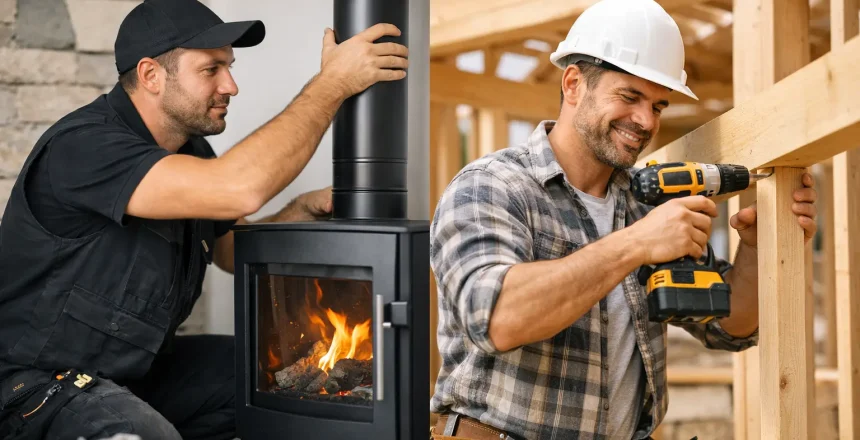
A fireplace opening can look straightforward until the work begins. The choice between a stove installer or general builder affects more than the finished appearance: it affects fire safety, Building Regulations compliance, certification and whether your new stove performs as it should.
A good general builder may be highly capable of creating an opening, fitting a hearth or carrying out structural alterations. But a wood burning or multi-fuel stove is not simply a building project. It is a heating appliance connected to a flue system, with strict requirements for clearances, ventilation, hearth construction and safe discharge of combustion gases. For most homeowners, the safest and least stressful route is a stove specialist who can manage the complete job and provide the correct certification at the end.
Stove installer or general builder: what is the difference?
The distinction comes down to responsibility and specialist knowledge. A general builder is usually engaged to complete construction work: opening up a chimney breast, forming an inglenook, plastering, brickwork or making good around a fireplace. These skills are valuable, particularly in older homes where the original fireplace has been closed off or where significant alterations are needed.
A HETAS registered stove installer specialises in the appliance and flue system as a whole. They assess whether the proposed stove is suitable for the room, calculate the correct flue arrangement, check chimney condition, establish safe distances to combustible materials and install the appliance in line with current requirements. Where the installation is eligible for self-certification, they can also notify the work and issue the relevant HETAS certificate.
That certificate is not a minor piece of paperwork. It provides evidence that the installation has been completed by a competent person and is particularly useful when selling a property, arranging insurance or demonstrating compliance to a surveyor.
Why stove installations need specialist oversight
Stoves create intense heat, and the visible appliance is only one part of the installation. The chimney or insulated twin wall system, hearth, surrounding construction, air supply and termination point must all work together safely.
A stove that is too large for the room can make the space uncomfortably hot and encourage inefficient burning. An incorrectly sized or poorly routed flue can affect draw, causing smoke to enter the room or making the stove difficult to control. Inadequate clearances around the appliance can expose nearby materials to sustained heat. These are not details to leave to guesswork.
A specialist survey considers the property before work is priced. This includes the room size, existing chimney route, chimney condition, roof access, wall and floor construction, ventilation needs and the type of fuel you intend to burn. If your home has no usable chimney, a professional installer can design a twin wall stainless steel chimney system that is appropriate for the building and appliance.
This joined-up approach avoids a common problem: building work is completed first, only for the selected stove or flue system to require changes later. A well-planned installation starts with the technical requirements and then shapes the fireplace design around them.
Compliance is a practical issue, not just a legal one
In England and Wales, solid fuel stove installations must comply with Building Regulations. A HETAS registered installer can generally self-certify qualifying work, meaning you do not need to arrange a separate Building Control inspection for the installation. If an installer is not registered under a competent person scheme, Building Control approval may be needed instead.
There may also be local considerations. Many towns and cities include smoke control areas, where you must use an approved appliance or authorised fuel. A specialist can explain what applies to your address and help you choose an installation that suits local rules as well as your heating aims.
The result is 100% peace of mind that the work has been designed with safety and compliance in mind from the outset.
When a general builder is the right choice
There are situations where a general builder has an important role. If you are renovating a room, removing a redundant chimney breast section, constructing a new fireplace surround or making substantial decorative changes, their wider construction experience can be useful.
The key is coordination. The builder should work to an agreed stove specification and flue plan, not make decisions about heat clearances, liner selection, hearth requirements or appliance positioning independently. Ideally, the stove installer surveys first and confirms the dimensions and materials required before building work begins.
For example, a homeowner may want to open a boarded-up Victorian fireplace. A builder can carefully open and prepare the recess, while the HETAS installer confirms the opening is large enough for the chosen stove, checks the chimney route, installs the liner and commissions the appliance. Each trade handles the work it is best placed to do, with one clear technical plan.
If you appoint separate trades, make sure everyone has the same drawings, dimensions and timetable. The apparent saving from splitting the job can disappear if work has to be altered because the flue route, hearth depth or clearance requirements were not agreed beforehand.
The advantage of a fully managed stove installation
For many households, one specialist team is simpler. A full stove installation service can include the survey, advice on stove suitability, chimney lining or twin wall flue installation, hearth creation, fireplace alterations, fitting, commissioning and HETAS certification.
This provides a single point of responsibility. You know who is checking the chimney, who is carrying out the building work and who is responsible for the final installation standard. It also makes budgeting clearer, because the quotation can account for the work needed to complete a safe, compliant result rather than pricing only the appliance fitting.
At Stove Specialists UK, this is how we approach installations. Our HETAS registered engineers assess the whole project, whether you are fitting a customer-supplied stove into an existing fireplace or creating a completely new system in a property without a chimney. We can then recommend the most practical route, explain the work involved clearly and provide a free quote before you commit.
Questions to ask before choosing a contractor
Do not choose solely on the first price you receive. Ask who will be responsible for the flue design, whether the installer is HETAS registered, and whether certification is included in the quotation. You should also ask whether a site survey will be completed before work starts, especially if the chimney has not been used for some time or the property is being altered.
It is sensible to confirm exactly what the price covers. A clear quotation should identify the appliance installation, flue or chimney work, hearth and building works, commissioning and certification. Vague allowances can make it difficult to compare quotes fairly.
You should also be wary of anyone who promises to fit a stove without discussing ventilation, clearances, the chimney route or the type of property. These are fundamental checks, not optional extras. A professional will be happy to explain their recommendations in plain English and tell you where there are genuine choices on cost, finish or installation method.
Choosing the right route for your property
A straightforward installation in a sound, suitable chimney may only need a specialist stove installer. A renovation with a fireplace opening to form may benefit from both a builder and installer, provided the stove specialist leads on the technical requirements. For a new-build home, an extension or a house with no chimney, a full-service stove company is often the most efficient choice because the chimney system and building work need to be designed together.
There is no need to choose between good craftsmanship and proper compliance. The right team will give you both: a fireplace that looks at home in the room, a stove that heats efficiently and paperwork that confirms the installation has been completed properly.
Before any bricks are removed or a stove is ordered, arrange a professional survey. It is the simplest way to turn an attractive idea into a safe, compliant heating feature you can enjoy with confidence.